Easy Tamagoyaki Recipe (Japanese Rolled Omelet)
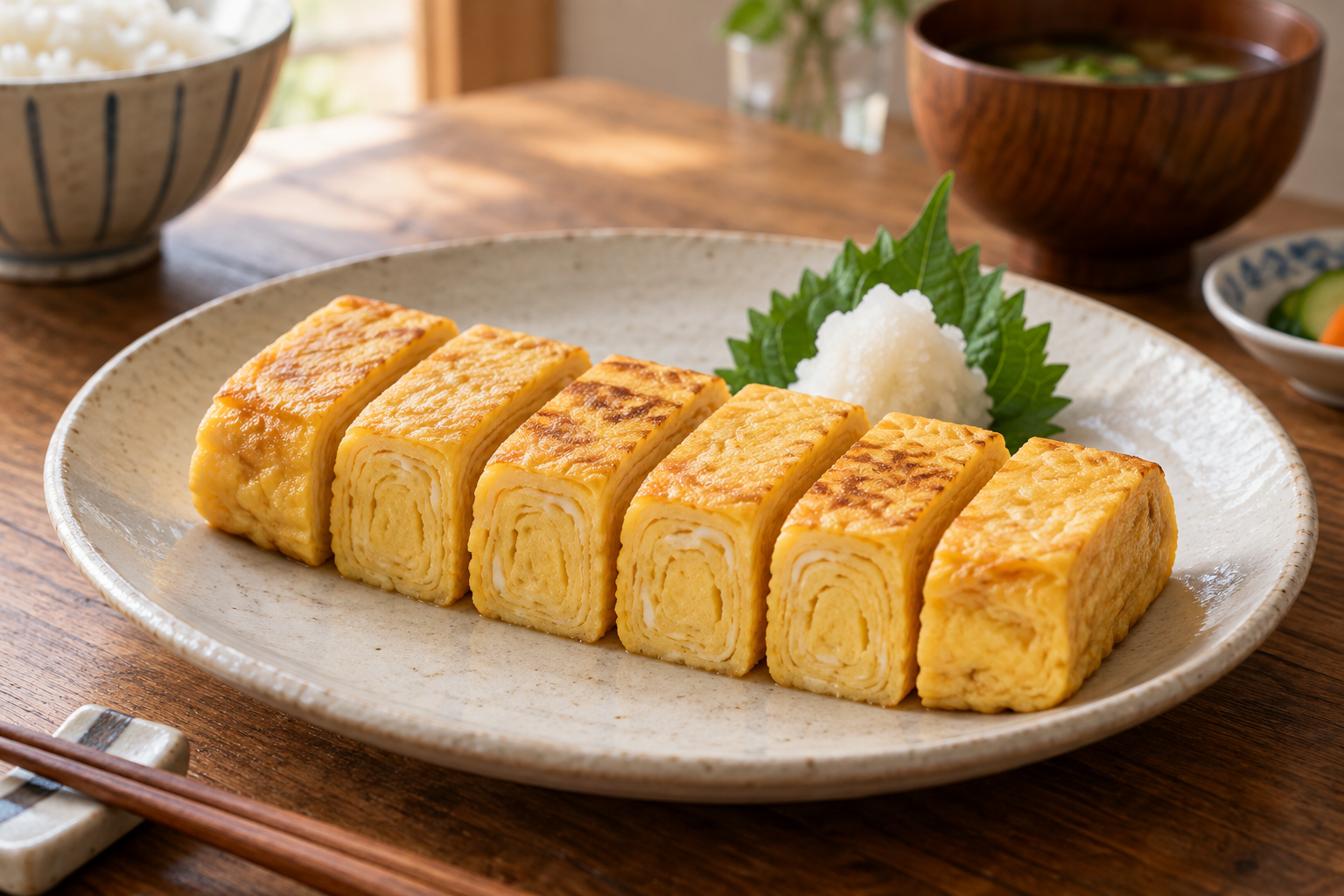
Tamagoyaki is a tender Japanese rolled omelet made by cooking several thin layers of seasoned egg. It is a familiar breakfast and bento dish in Japan, and its gently sweet-savory flavor makes it an approachable recipe for first-time cooks.
This beginner-friendly version uses four eggs and a small amount of dashi or water. A rectangular tamagoyaki pan gives the neatest shape, but a small nonstick round pan also works.
Recipe at a Glance
- Servings: 2
- Prep time: 5 minutes
- Cook time: 10 minutes
- Total time: 15 minutes
- Difficulty: Beginner-friendly
Ingredients
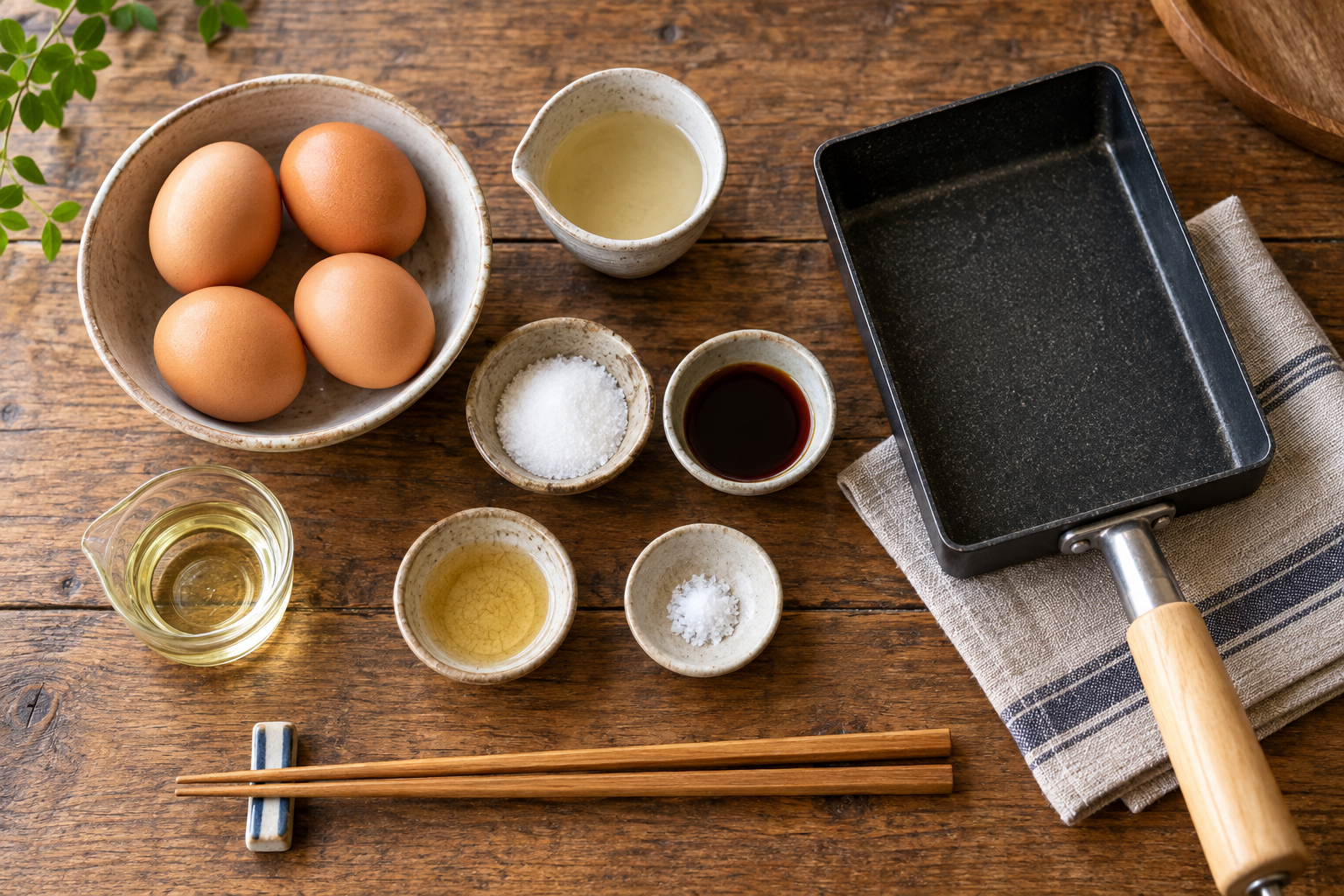
- 4 large eggs
- 1 tablespoon dashi or water
- 1 teaspoon sugar
- 1 teaspoon mirin, optional
- 1/4 teaspoon soy sauce
- 1 small pinch salt
- 1 to 2 teaspoons neutral oil, for the pan
Equipment
- Rectangular tamagoyaki pan or a small nonstick frying pan
- Bowl and chopsticks or a fork
- Silicone spatula or wide turner, optional but helpful for beginners
- Oil-soaked folded paper towel
How to Make Tamagoyaki
1. Mix the eggs gently
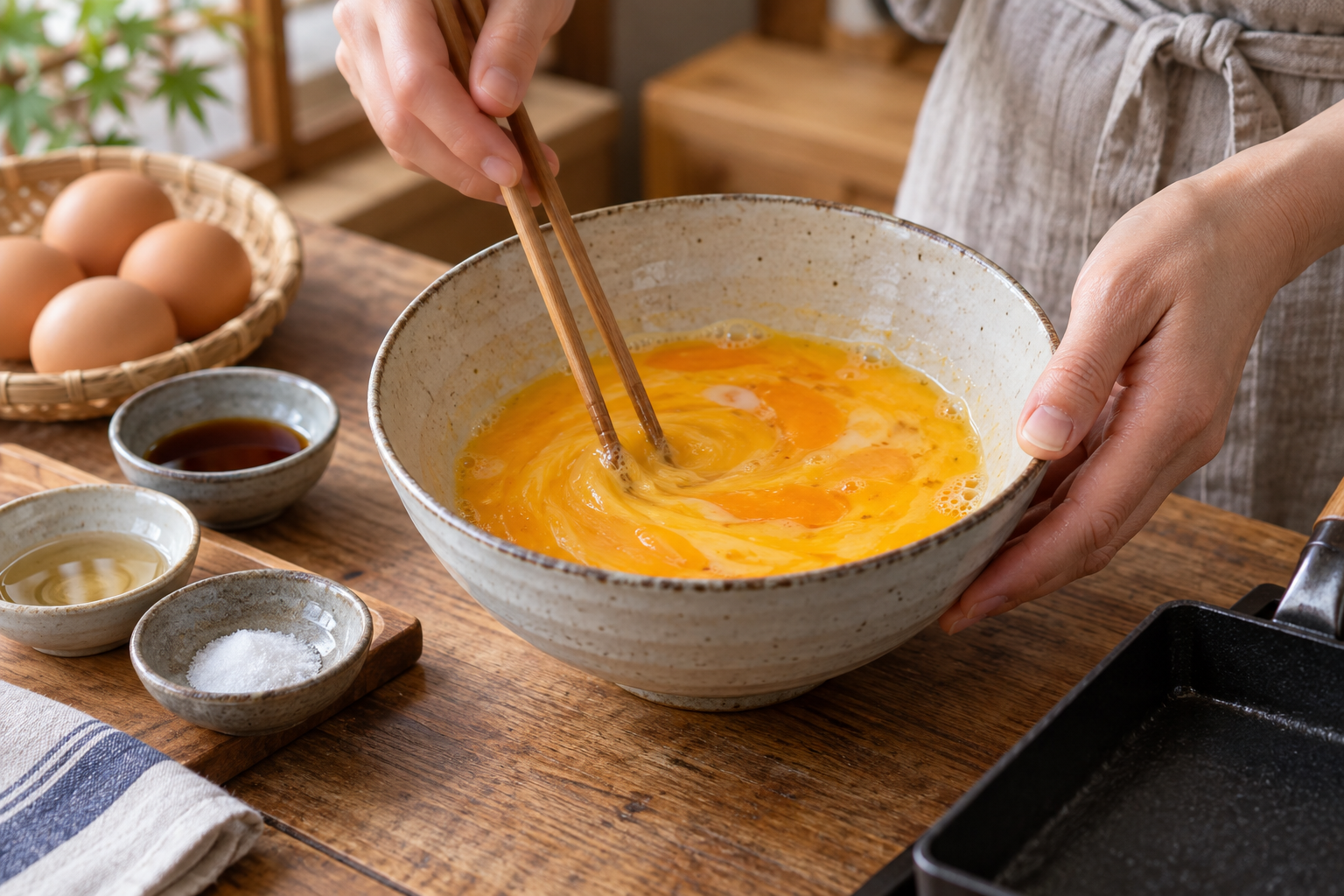
Crack the eggs into a bowl. Add the dashi or water, sugar, mirin, soy sauce and salt. Mix gently until the whites and yolks are combined. Avoid vigorous beating because too much foam can make the omelet uneven.
2. Cook the first thin layer
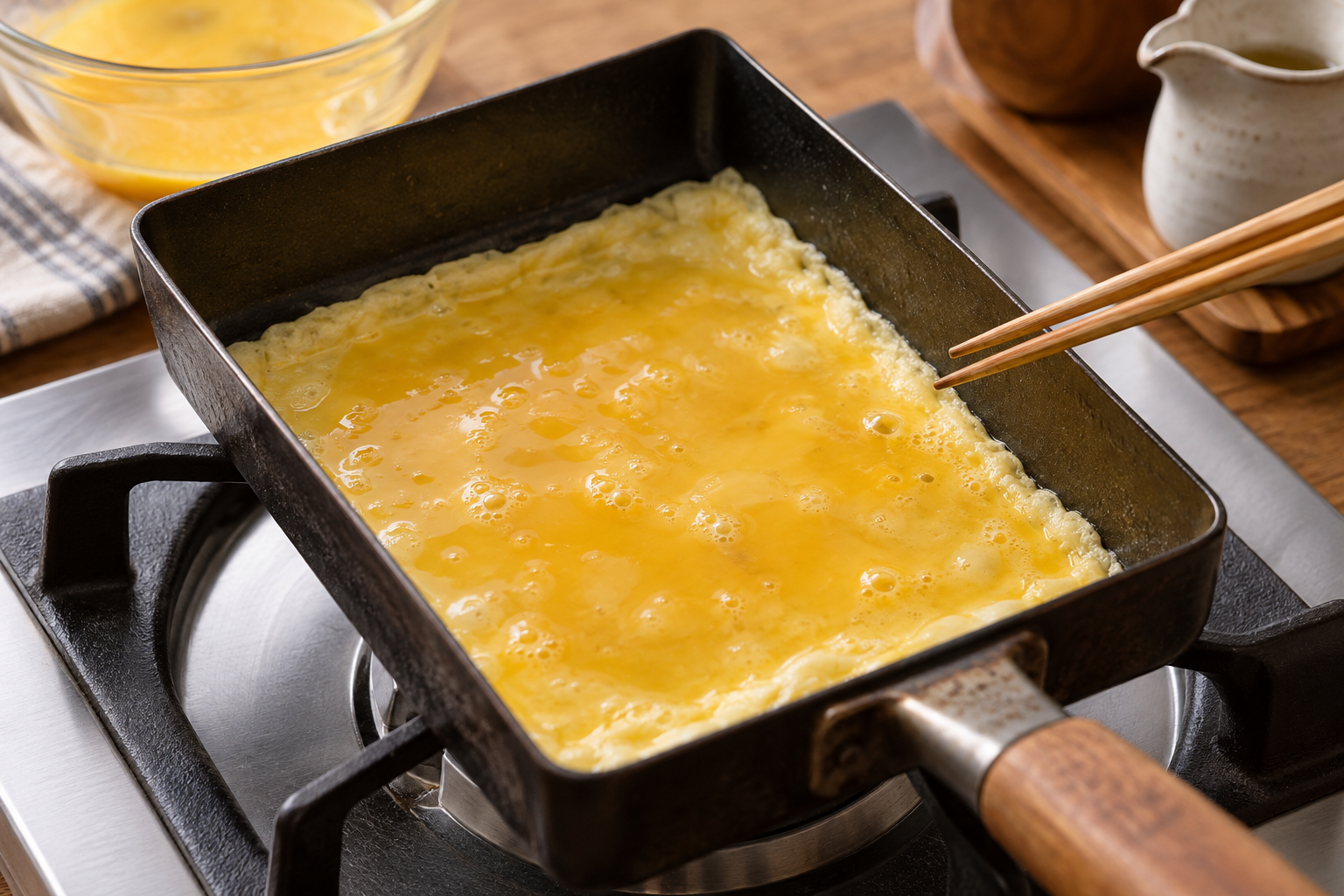
Heat the pan over medium-low heat. Wipe it with a thin, even film of oil. Pour in about one quarter of the egg mixture and tilt the pan so the egg covers the bottom. Pop any large bubbles. Let the layer cook until the surface is mostly set but still slightly glossy.
3. Roll the omelet
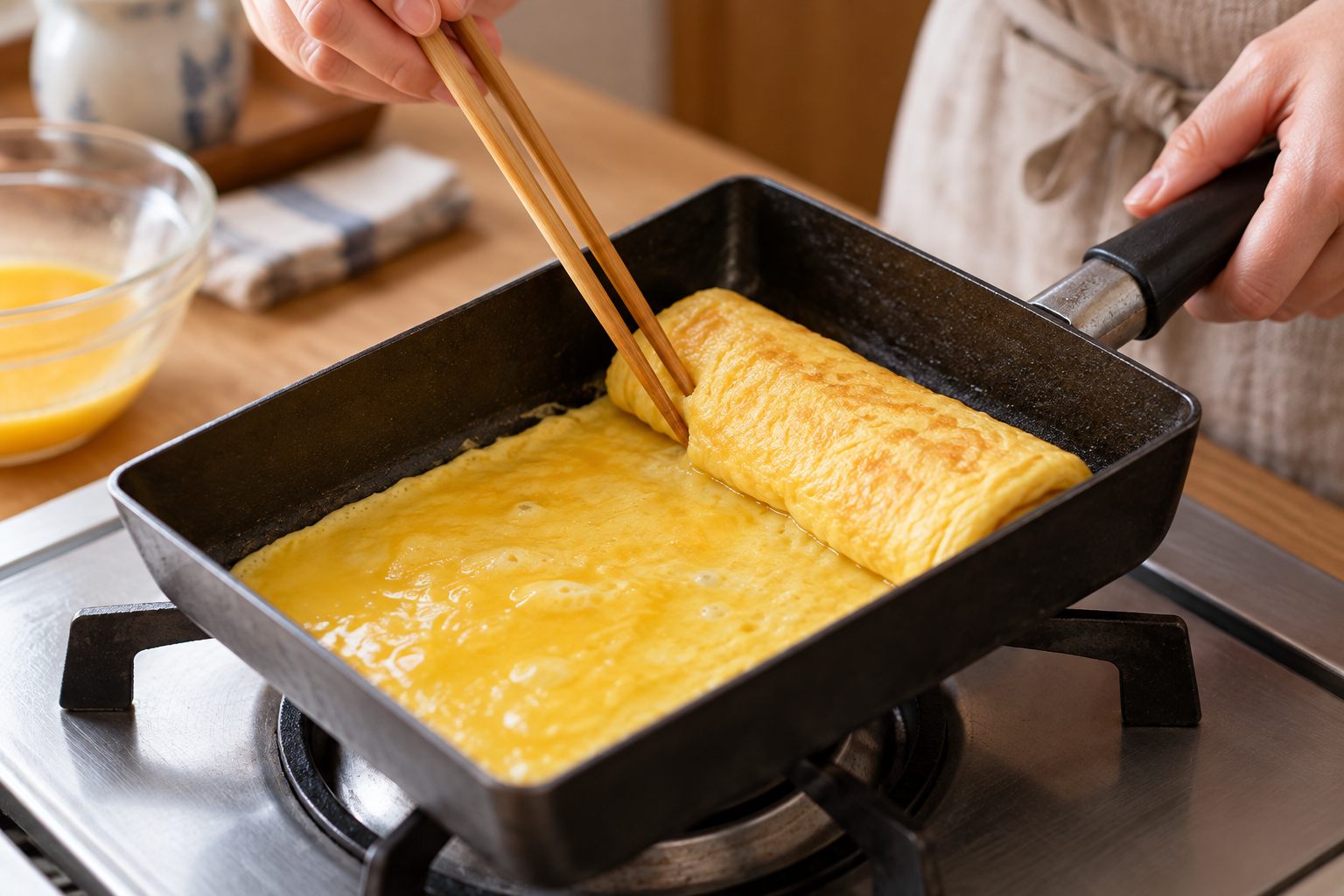
Starting at the far edge, lift and fold the egg toward you in two or three turns. Chopsticks are traditional, but a spatula is easier when you are learning. Move the roll to the far side of the pan.
4. Add more layers
Oil the exposed pan again. Pour in another quarter of the egg mixture, lifting the existing roll slightly so fresh egg flows underneath it. When the new layer is mostly set, roll the omelet toward you again. Repeat until all the egg mixture is used.
5. Shape, rest and slice
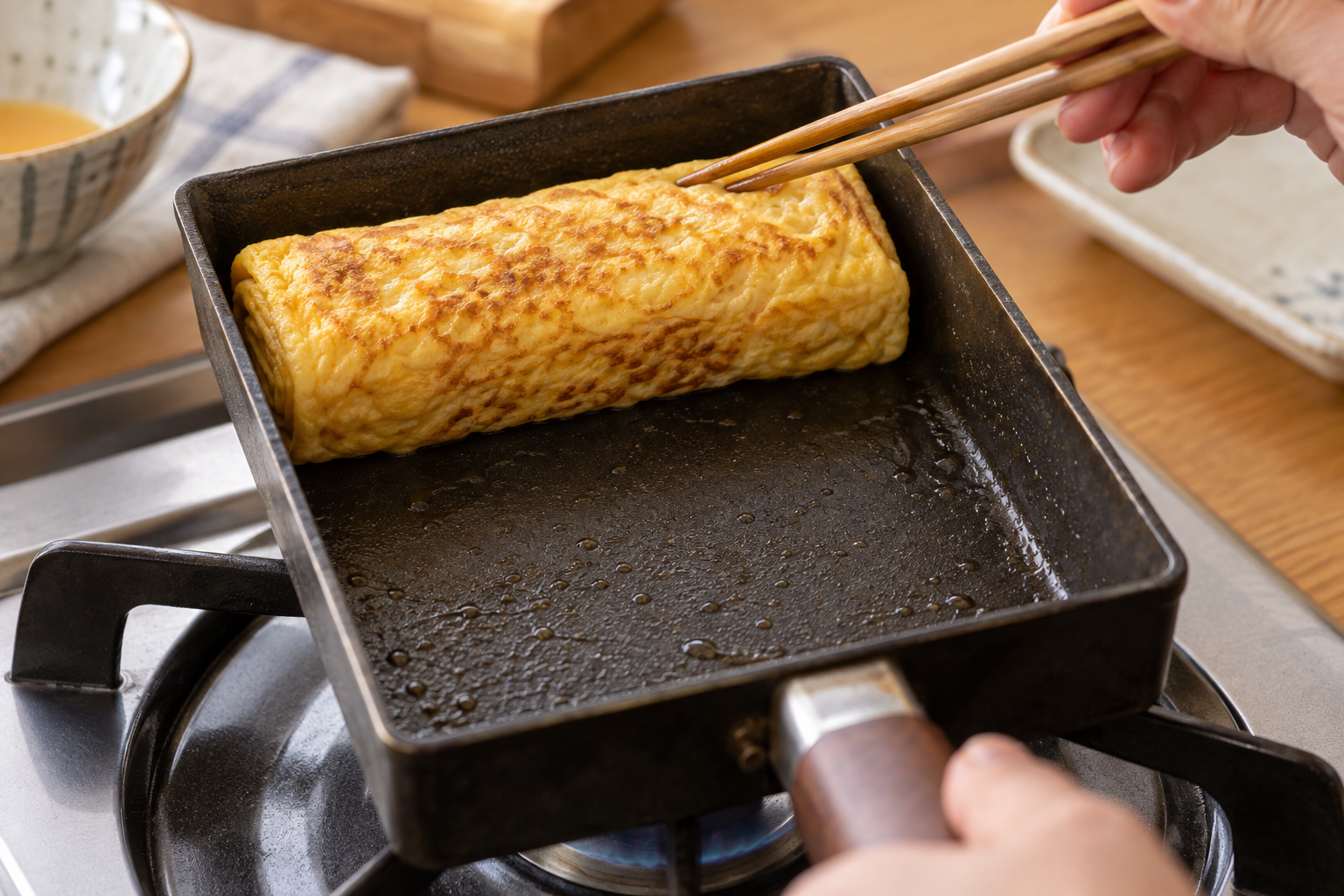
Gently press the finished omelet against the sides of the pan to square the edges. Transfer it to a cutting board and let it rest for 2 minutes. Slice into six even pieces and serve warm or at room temperature.
Tips for First-Time Cooks
- Keep the heat at medium-low. Sugar makes the egg brown quickly.
- Apply only a thin film of oil before every layer.
- Roll while the surface is still slightly moist so the layers stick together.
- Use a spatula if chopsticks feel difficult.
- If the first roll looks untidy, continue. Later layers usually improve the final shape.
Ingredient Substitutions
No dashi
Use the same amount of water. The flavor will be lighter but the texture will still be tender.
No mirin
Leave it out and add an extra 1/4 teaspoon sugar if you prefer a slightly sweeter omelet.
Less sweet tamagoyaki
Reduce the sugar to 1/2 teaspoon or omit it. Regional and family styles vary: Kanto versions are often sweeter, while Kansai-style rolled omelets commonly emphasize dashi.
No rectangular pan
Use a small nonstick round pan. Cook and roll the egg in the center, then trim only if presentation matters.
Common Problems and Fixes
The egg browns too fast
Lower the heat and briefly lift the pan away from the burner before adding the next layer.
The layers tear
Let each layer set a little longer, use a wider spatula and make slightly thicker layers.
The omelet sticks
Use a reliable nonstick pan and wipe on a fresh film of oil before every addition of egg.
The center is wet
After the final roll, cook the omelet gently on all four sides for another 30 to 60 seconds.
How to Serve Tamagoyaki
Serve it with steamed rice and easy miso soup for breakfast. It also fits naturally into a bento or alongside nikujaga for a comforting home-style meal.
For more background on regional styles and traditional preparation, see the Japanese Ministry of Agriculture, Forestry and Fisheries guide to tamagoyaki.
Storage and Reheating
Cool tamagoyaki promptly and store it in an airtight container in the refrigerator for up to 2 days. Reheat gently in the microwave in 10-second intervals, or enjoy it at room temperature in a bento packed with appropriate food-safety precautions. Freezing is possible, but the texture may become slightly spongy.
Frequently Asked Questions
Is tamagoyaki always sweet?
No. Sweetness varies by region and household. This recipe is mildly sweet, and you can reduce or omit the sugar.
Can I make it without a tamagoyaki pan?
Yes. A small nonstick round pan works; keep the egg in a compact strip as you roll.
Why add dashi or water?
A little liquid keeps the omelet tender. Dashi also adds savory depth.
Can I prepare it ahead?
Yes. Make it the night before, refrigerate it promptly and slice it after cooling.
Explore More Japanese Home Cooking
See what Japanese people actually eat at home or try Japanese curry rice and oyakodon next.
Have you made this tamagoyaki? Leave a comment with your preferred sweetness and any questions. Your experience can help other first-time cooks.
Build Your Japanese Pantry
Not sure which rice, miso, soy sauce or dashi to buy outside Japan? Start with our practical guide to the 12 most useful staples.