Japanese Pantry Essentials: 12 Ingredients for Easy Home Cooking
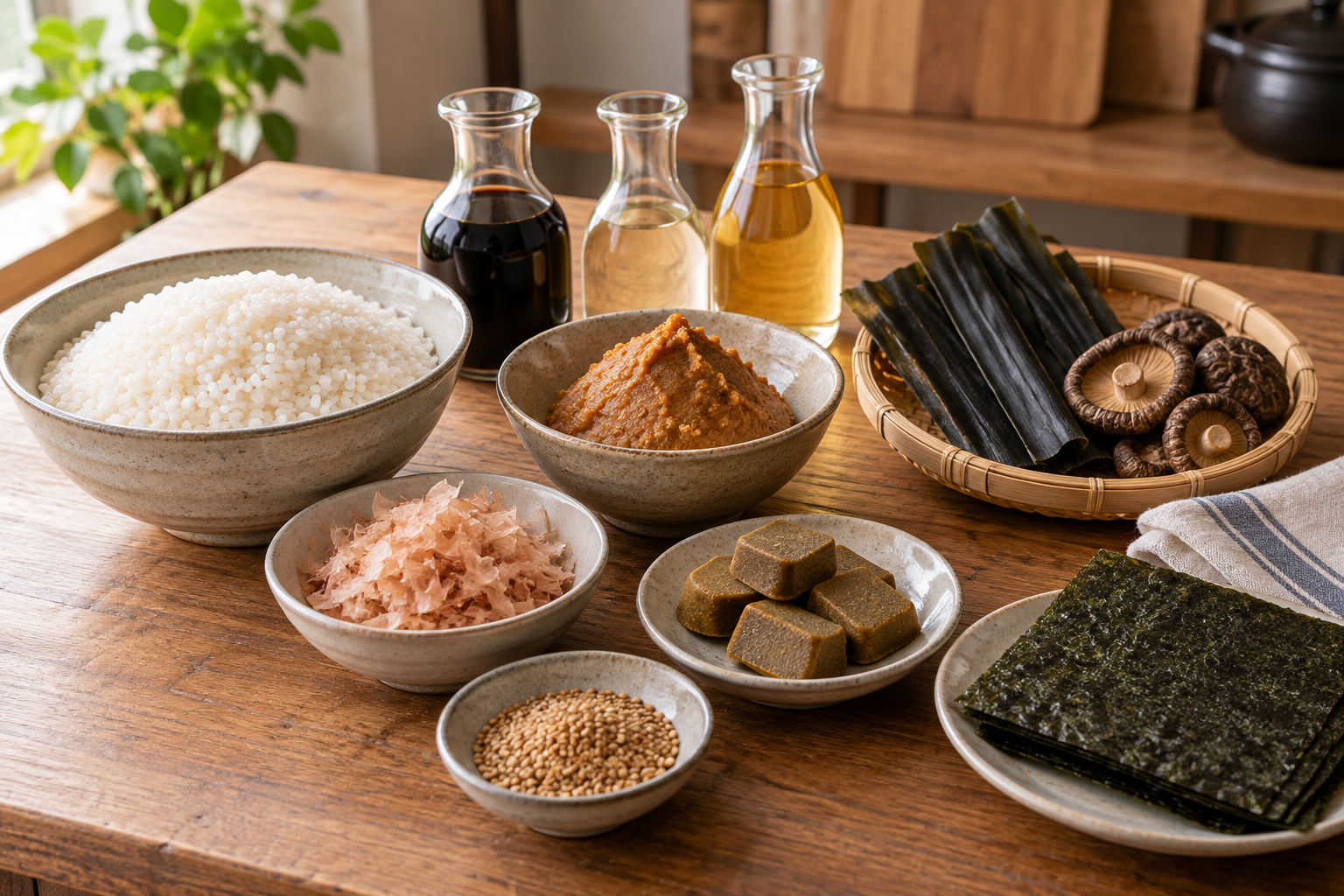
You do not need a cupboard full of specialty products to cook satisfying Japanese food at home. A small group of versatile staples can take you from a simple bowl of miso soup to curry rice, onigiri, teriyaki and many everyday side dishes.
This beginner-friendly guide explains what each ingredient does, what to look for when shopping outside Japan and which substitutions are reasonable. Start with the first six items, then add the rest as your cooking repertoire grows.
The Six Best Ingredients to Buy First
1. Japanese Short-Grain Rice
Japanese short-grain rice cooks up tender, glossy and pleasantly sticky. That texture is important for rice bowls and essential when shaping onigiri. Look for bags labeled Japanese short-grain rice or sushi rice. Calrose is a practical alternative when Japanese-grown rice is expensive or difficult to find.
Use it for salmon onigiri, oyakodon and Japanese curry rice.
2. Japanese Soy Sauce
Japanese soy sauce is the everyday source of saltiness, color and savory depth in many dishes. A standard all-purpose koikuchi soy sauce is the most useful first bottle. Choose a naturally brewed product when possible and compare sodium levels if salt intake matters to you.
Avoid assuming that every Asian soy sauce tastes the same. Chinese light soy sauce can work in an emergency, but its aroma and salt balance may differ.
3. Miso Paste
Miso is fermented soybean paste. Mild white miso is approachable and slightly sweet, while red or darker miso has a stronger, saltier flavor. Awase miso blends different styles and is a flexible everyday choice.
Refrigerate miso after opening and use a clean spoon. Do not boil it aggressively after adding it to soup, because prolonged high heat dulls its aroma. Begin with our easy miso soup with tofu and wakame.
4. Rice Vinegar
Japanese rice vinegar is mild and rounded. It is useful in sushi rice, sunomono, dressings and quick pickles. Buy unseasoned rice vinegar for the greatest flexibility. Seasoned sushi vinegar already contains sugar and salt, so it is not always interchangeable.
5. Mirin or Mirin-Style Seasoning
Mirin contributes gentle sweetness, shine and aroma. True hon mirin contains alcohol and may be sold in liquor sections depending on local law. Mirin-style seasoning is easier to find in some countries but may contain more sugar and salt. Read the label and reduce other sweeteners when necessary.
6. Dashi
Dashi is the light savory stock behind many Japanese soups and simmered dishes. Instant dashi granules are convenient for beginners. Kombu and dried shiitake make a useful plant-based stock, while kombu and katsuobushi create classic awase dashi.
If you use instant granules, start with less than the package suggests and adjust after tasting. Sodium levels vary widely.
Six More Ingredients That Expand Your Menu
7. Nori
Roasted nori sheets are used for onigiri, hand rolls and garnishes. Keep them tightly sealed with a food-safe desiccant because humidity quickly makes them soft. Crisp nori should snap rather than bend.
8. Wakame
Dried wakame expands dramatically in water, so a small bag lasts a long time. Soak only the amount you need and drain it well before adding it to soup or salad.
9. Toasted Sesame Seeds and Sesame Oil
Toasted sesame seeds add texture and aroma to vegetables, rice and noodles. Japanese-style toasted sesame oil is powerful; a small amount at the end of cooking is usually enough.
10. Panko Breadcrumbs
Panko has larger, airier flakes than many conventional breadcrumbs. It produces a light, crisp coating for tonkatsu, croquettes and fried seafood. Store an opened bag in an airtight container.
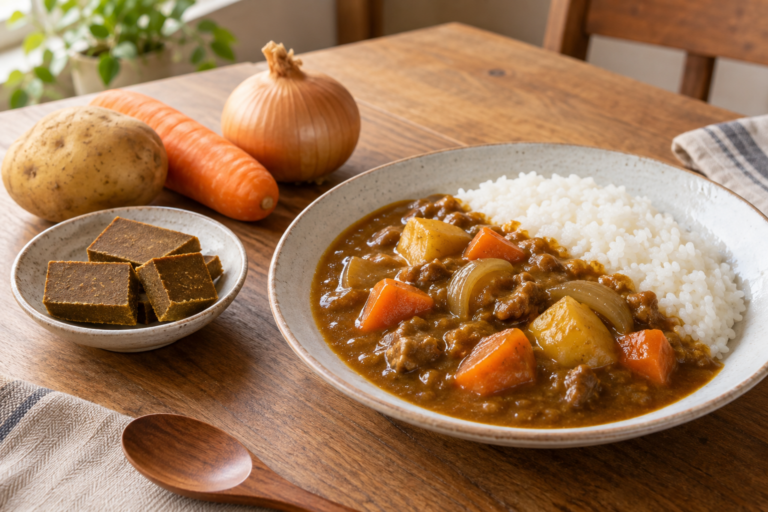
11. Japanese Curry Roux
Packaged curry roux turns meat and vegetables into a thick, comforting Japanese curry with very little guesswork. Heat levels vary by brand and country, so begin with mild or medium if cooking for a mixed group. The blocks contain seasoning and thickener; add them after the vegetables are tender and the pot is off vigorous heat.
Follow our Japanese curry rice recipe for beginners for the complete method.
12. Potato Starch
Potato starch, often labeled katakuriko, thickens sauces and creates a crisp coating for karaage. Cornstarch is the easiest substitute, although the finished texture is slightly different.
A Practical Starter Shopping List
For your first order, buy Japanese short-grain rice, soy sauce, miso, rice vinegar, mirin-style seasoning and instant dashi. Add nori if you want to make onigiri and curry roux if curry is your first main dish.
Choose small packages until you learn how quickly you use each ingredient. Large containers are not economical if flavor fades before you finish them.
How to Shop Safely Outside Japan
- Check the ingredient list rather than relying only on the English product name.
- Compare price per ounce or gram, not just the package price.
- Review allergen statements for soy, wheat, fish and sesame.
- Confirm the use-by date and the seller's storage conditions.
- Avoid damaged, leaking or unsealed packages.
- Remember that imported-product formulations can differ by country.
Storage Guide
Keep dry rice, nori, dashi granules, panko and starch sealed away from heat and moisture. Refrigerate opened miso. Follow the manufacturer's label for soy sauce, vinegar, mirin-style seasoning and sesame oil; refrigeration can help preserve quality after opening, particularly in a warm kitchen.
Frequently Asked Questions
Do I need every ingredient before cooking Japanese food?
No. Choose a recipe first and build your pantry gradually. Rice, soy sauce, miso and a form of dashi cover many beginner dishes.
Is sushi rice the same as Japanese short-grain rice?
In many overseas stores, sushi rice is the label used for Japanese-style short-grain rice. Check the grain description. Sushi rice can also refer to cooked rice already seasoned with vinegar, sugar and salt, so context matters.
Can I use regular vinegar instead of rice vinegar?
You can substitute a mild vinegar in some dressings, but distilled white vinegar is much sharper. Use less, dilute if necessary and adjust to taste.
Which miso is easiest for beginners?
White or awase miso is usually the most approachable. Its milder flavor works well in soup, marinades and dressings.
Are affiliate links going to change the price I pay?
Affiliate links generally do not change the shopper's price. When product links are added to this guide, we may earn a commission from qualifying purchases. Recommendations will remain based on relevance, ingredient quality, availability and value.
What to Cook Next
Put these staples to work with easy shogayaki ginger pork, nikujaga or browse 25 everyday Japanese home meals.
Have a question about an ingredient sold in your country? Leave a comment with the product name and country, and we will help you understand how it fits into Japanese home cooking.