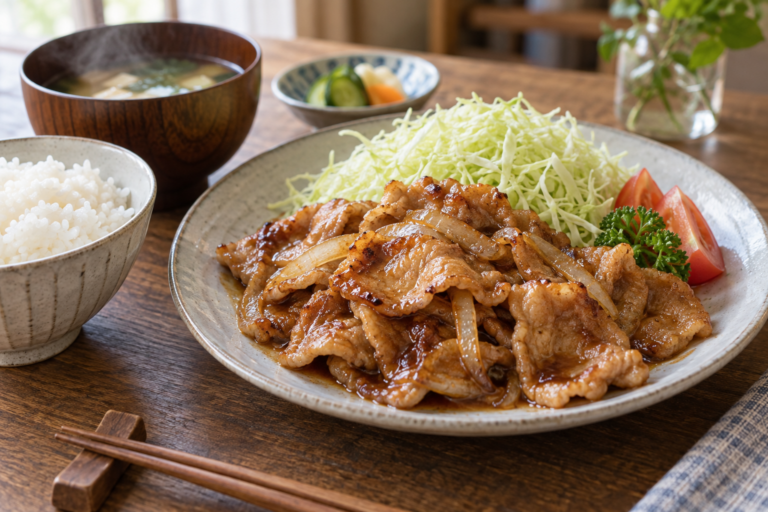
Easy Gyudon Recipe (Japanese Beef Rice Bowl)
Gyudon is a classic Japanese rice bowl topped with thinly sliced beef and onion simmered in a lightly sweet soy-dashi sauce. It is fast, comforting and especially useful when you want a complete weeknight meal without many pans.
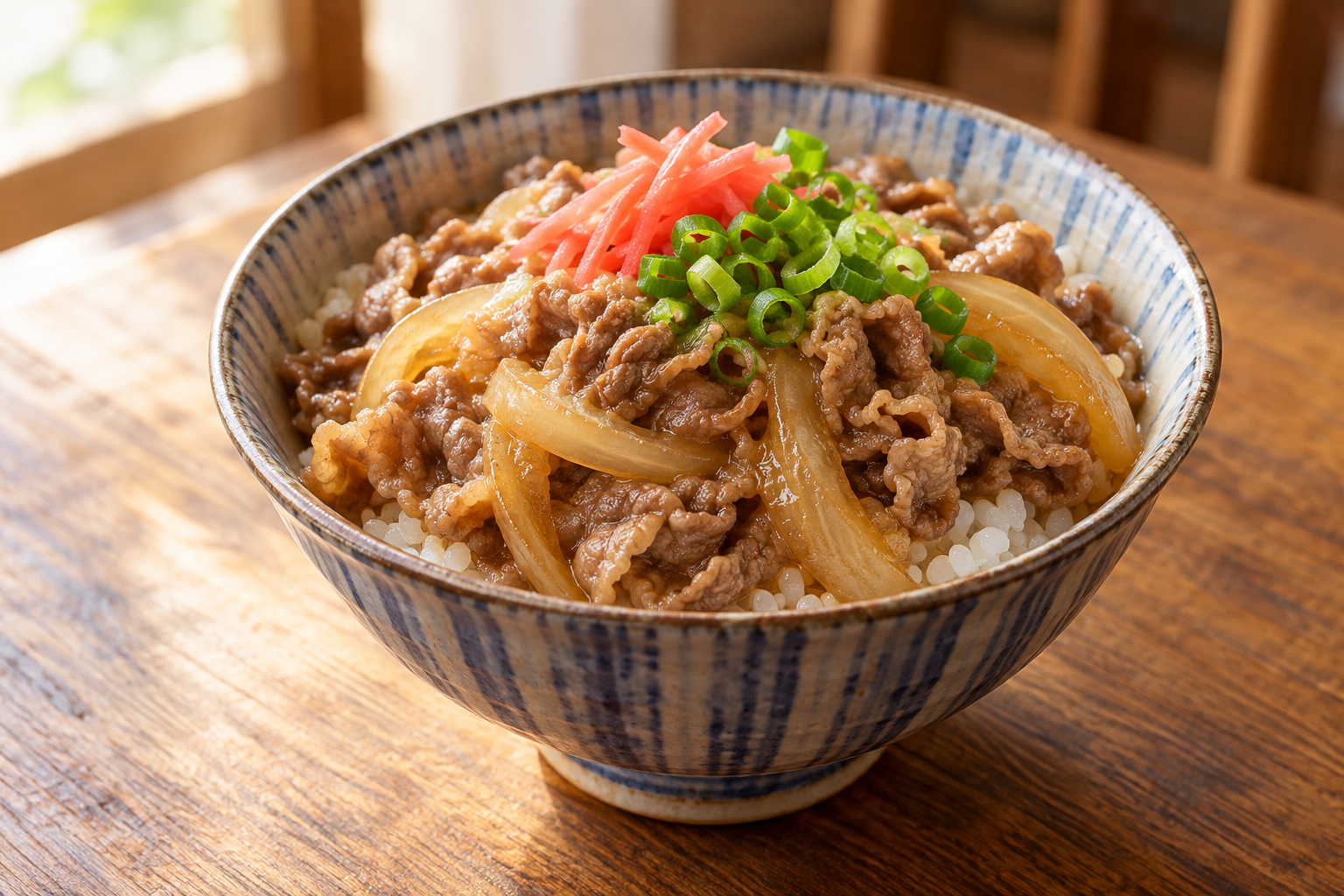
The step images are AI-generated illustrations of the cooking stages. Follow the written instructions and food-safety guidance when preparing the recipe.
Recipe at a Glance
- Serves: 2
- Prep time: 10 minutes
- Cook time: 15 minutes
- Total time: 25 minutes
Ingredients
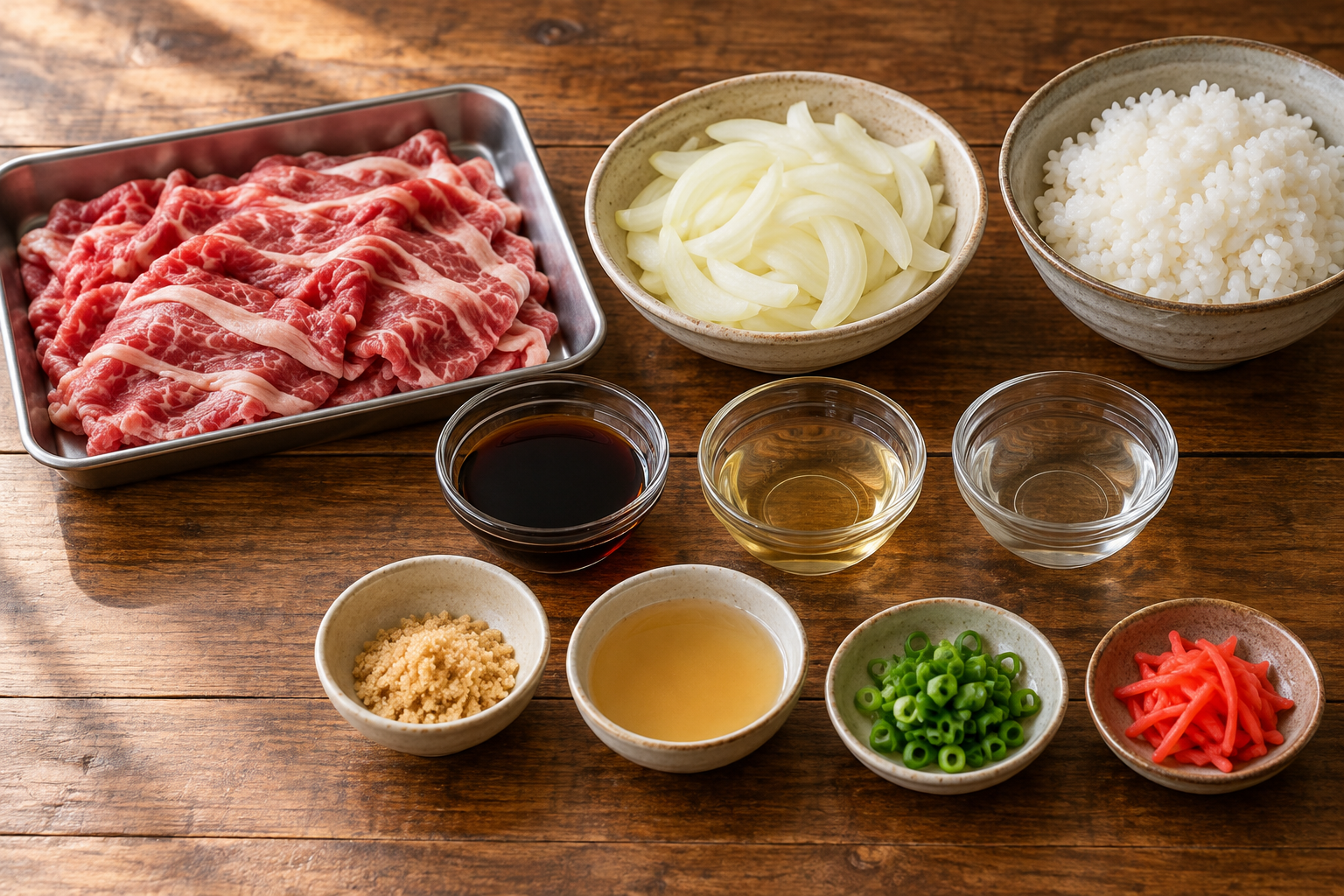
- 10 ounces (280 g) very thinly sliced beef chuck or ribeye
- 1 medium yellow onion, about 7 ounces (200 g), sliced into 1/4-inch wedges
- 3/4 cup (180 ml) dashi or water
- 2 tablespoons soy sauce
- 2 tablespoons mirin
- 1 tablespoon sake or water
- 1 tablespoon sugar
- 2 generous bowls warm cooked Japanese short-grain rice
- Sliced green onion, optional
- Beni shoga (red pickled ginger), optional
Partially freezing the beef for 30 to 45 minutes makes it easier to slice very thinly across the grain. Many Asian grocery stores sell beef already sliced for hot pot or sukiyaki.
How to Make Gyudon
1. Mix the seasonings
Stir the dashi, soy sauce, mirin, sake and sugar in a measuring cup until the sugar begins to dissolve.
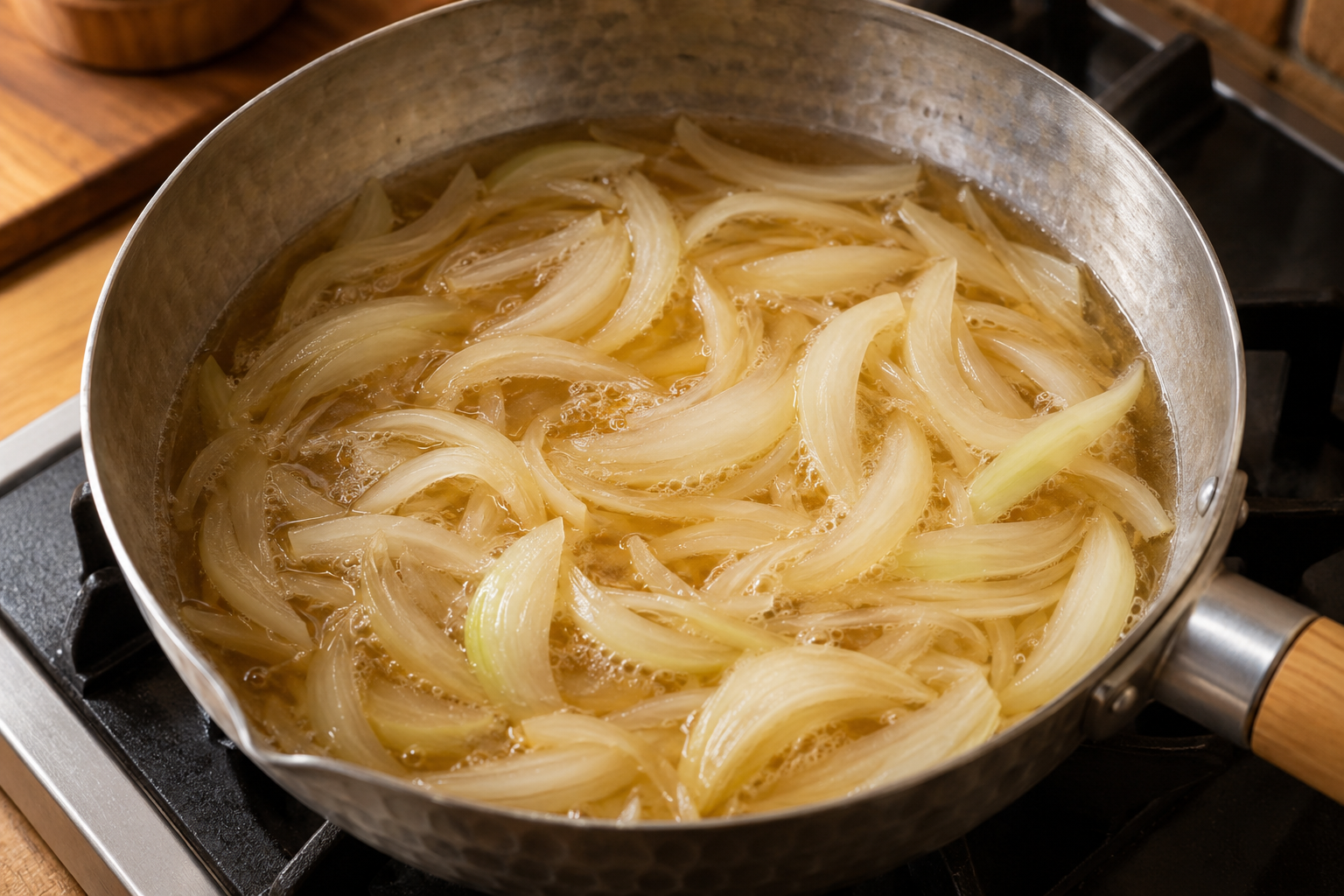
2. Simmer the onion
Add the seasoning mixture and sliced onion to a wide skillet or shallow saucepan. Bring to a gentle simmer over medium heat, then cook for 5 to 7 minutes until the onion is translucent and starting to soften.
3. Add the beef
Separate the beef slices and spread them over the onions rather than dropping them in one clump. Return the liquid to a gentle simmer. Skim off excess foam if desired.
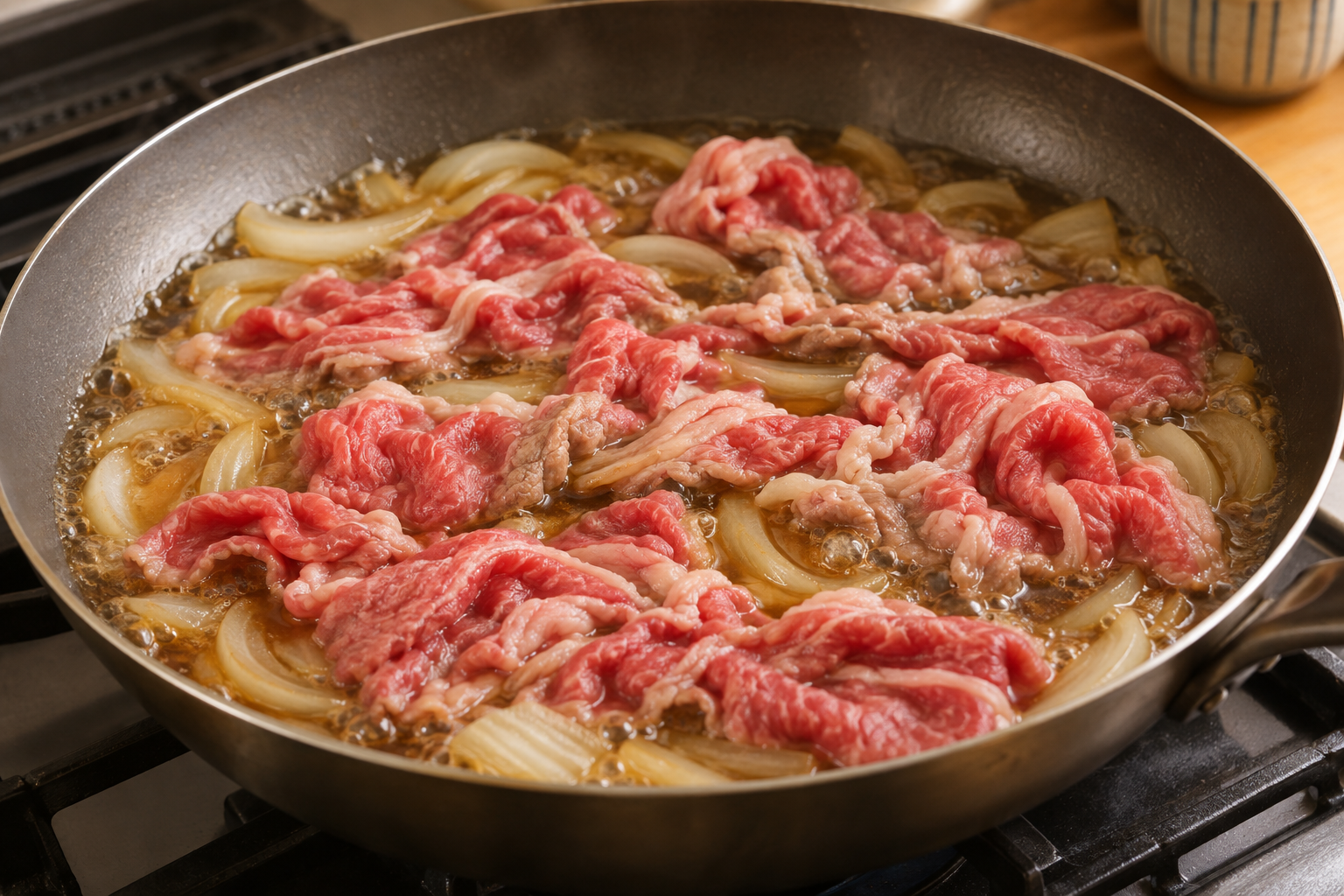
4. Simmer until tender
Cook for 4 to 6 minutes, turning the beef once or twice, until no pink remains and the onion is tender. Keep the heat moderate; a hard boil can make thin beef tough. Taste the sauce and add a teaspoon of water if it is too salty.
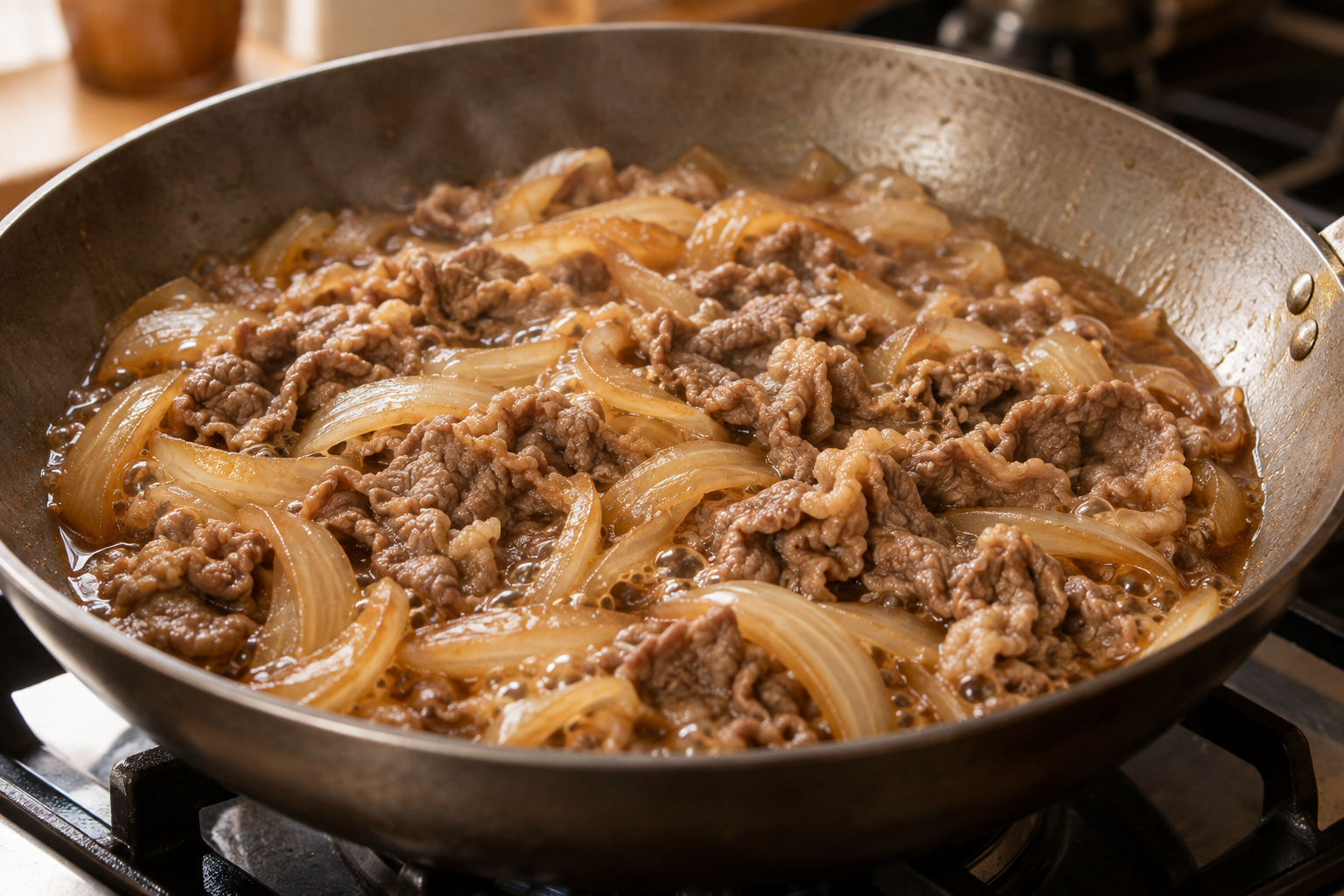
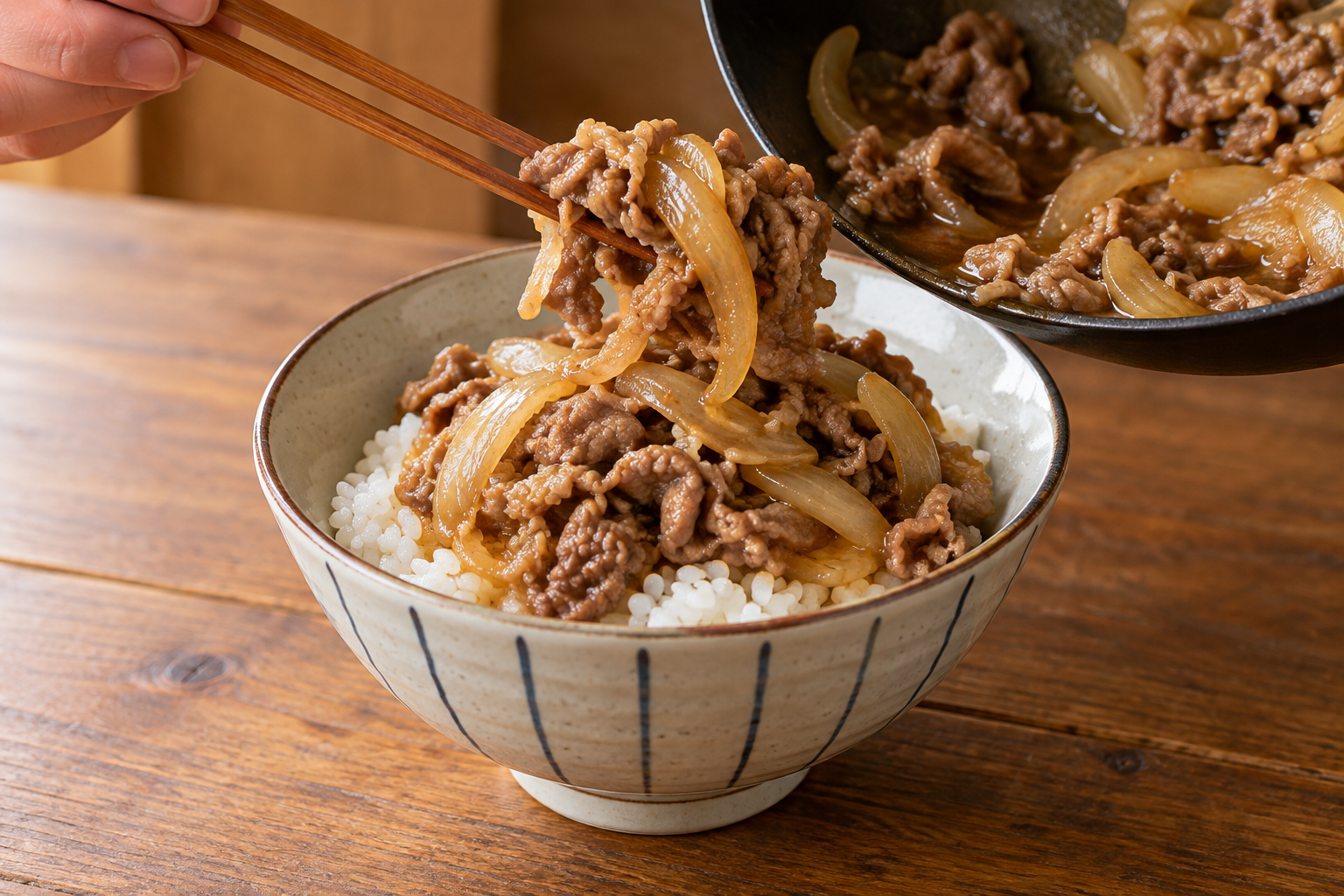
5. Serve over rice
Divide hot rice between two donburi bowls. Spoon the beef and onion over the rice, then add enough sauce to season the rice without flooding it. Finish with green onion and beni shoga if you like.
Tips for First-Time Cooks
- Slice the beef across the grain and as thinly as possible.
- Separate the slices before adding them so they cook evenly.
- Simmer gently rather than boiling hard.
- Use a wide pan so the beef forms a thin layer.
- Taste before adding salt; soy sauce brands vary.
- Serve immediately because thin beef becomes firmer as it sits in hot liquid.
Substitutions and Variations
No dashi
Use water. The flavor will be lighter but still balanced by beef, onion and soy sauce. An instant dashi prepared according to its label also works.
No sake
Replace it with water. Do not use a strongly flavored cooking wine containing salt.
No mirin
Use 2 tablespoons water plus 2 teaspoons sugar, then reduce the recipe's separate sugar to 2 teaspoons.
Different beef cuts
Thinly sliced chuck has good flavor and value. Ribeye is richer and more tender. Lean round can work but becomes tough more quickly, so avoid overcooking it.
Add an egg
Top each bowl with an onsen egg or a fully cooked fried egg. Keep raw or undercooked egg away from anyone who is pregnant, elderly, very young or immunocompromised unless a local food-safety authority says the product is suitable.
What to Serve with Gyudon
Gyudon is satisfying on its own, but it pairs naturally with miso soup, a quick cucumber pickle or a small green salad. Learn which staples to keep on hand in our Japanese pantry essentials guide, or browse 25 everyday Japanese home meals.
Storage and Reheating
Cool leftover beef and onion promptly, refrigerate in a covered container and use within 3 days for best quality. Store rice separately. Reheat the beef mixture gently until steaming hot throughout, adding a spoonful of water if the sauce has concentrated.
Follow the USDA guidance for cooling and reheating leftovers.
Frequently Asked Questions
What is the difference between gyudon and sukiyaki?
Gyudon is a quick beef-and-onion topping served over rice. Sukiyaki is a communal hot pot with beef, tofu, vegetables and other ingredients cooked at the table or in a shared pot.
Why is my beef tough?
It was probably too thick, boiled too hard or cooked too long. Slice across the grain, use a gentle simmer and stop as soon as no pink remains.
Can I make gyudon ahead?
Yes. The beef topping can be refrigerated separately from the rice. Reheat gently with a splash of water.
Is gyudon very sweet?
It should be savory with gentle sweetness. Reduce the sugar to 2 teaspoons if you prefer a less sweet bowl, but keep the mirin for balance.
Can I use ground beef?
You can, but the texture will not be traditional. Brown and crumble the beef thoroughly, drain excess fat, then simmer it briefly with the onion and sauce.
Did you try this recipe? Leave a comment with the beef cut available in your country or any substitution you used.
Build Your Japanese Pantry
Not sure which rice, miso, soy sauce or dashi to buy outside Japan? Start with our practical guide to the 12 most useful staples.