Easy Japanese Curry Rice Recipe for Beginners
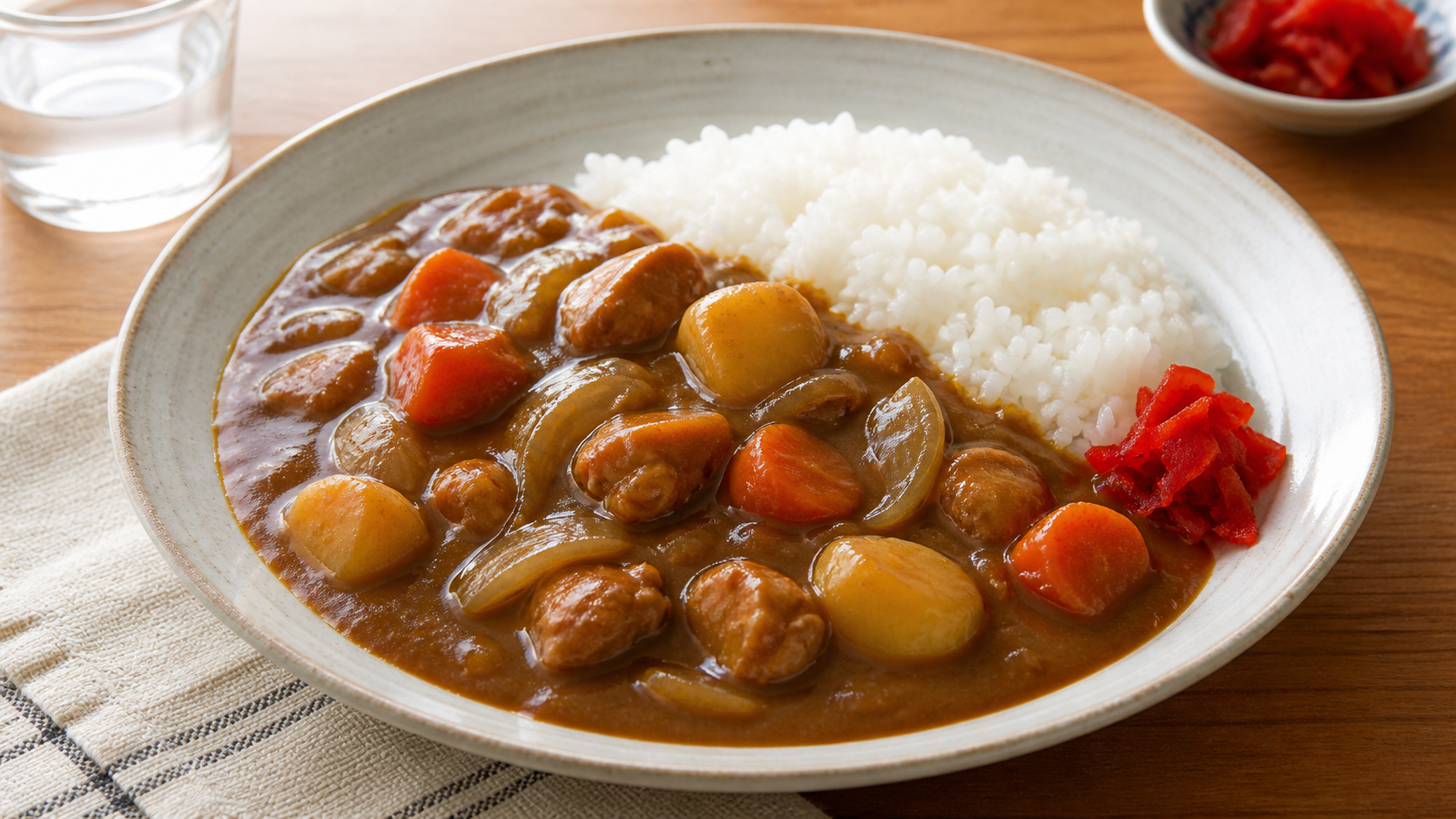
This easy Japanese curry rice recipe brings one of Japan’s most familiar home-cooked meals to your kitchen. The sauce is thick, mild and savory, with tender chicken, potatoes, carrots and onions served beside steamed rice.
Japanese curry is especially approachable for first-time cooks because packaged curry roux provides the characteristic flavor and texture. If you can chop vegetables and simmer a pot, you can make this comforting weeknight dinner.
Japanese Curry Rice at a Glance
- Servings: 4
- Prep time: 15 minutes
- Cook time: 40 minutes
- Total time: About 55 minutes
- Difficulty: Beginner-friendly
Ingredients
- 2 cups uncooked Japanese short-grain rice, cooked according to the package directions
- 1 tablespoon neutral cooking oil
- 1 pound (450 g) boneless, skinless chicken thighs, cut into bite-size pieces
- 1 large onion, sliced into wedges
- 2 medium carrots, cut into bite-size pieces
- 2 medium potatoes, peeled and cut into bite-size pieces
- 3 cups (720 ml) water, or the amount specified on your curry roux package
- 3.5 to 4 ounces (100 to 115 g) Japanese curry roux, usually about half of a standard box
- Salt and black pepper, to taste
- Fukujinzuke pickles, optional, for serving
Important: Curry roux brands vary in concentration and package size. Check the box and follow its water-to-roux ratio if it differs from the quantities above.
How to Make Japanese Curry Rice
1. Cook the Rice
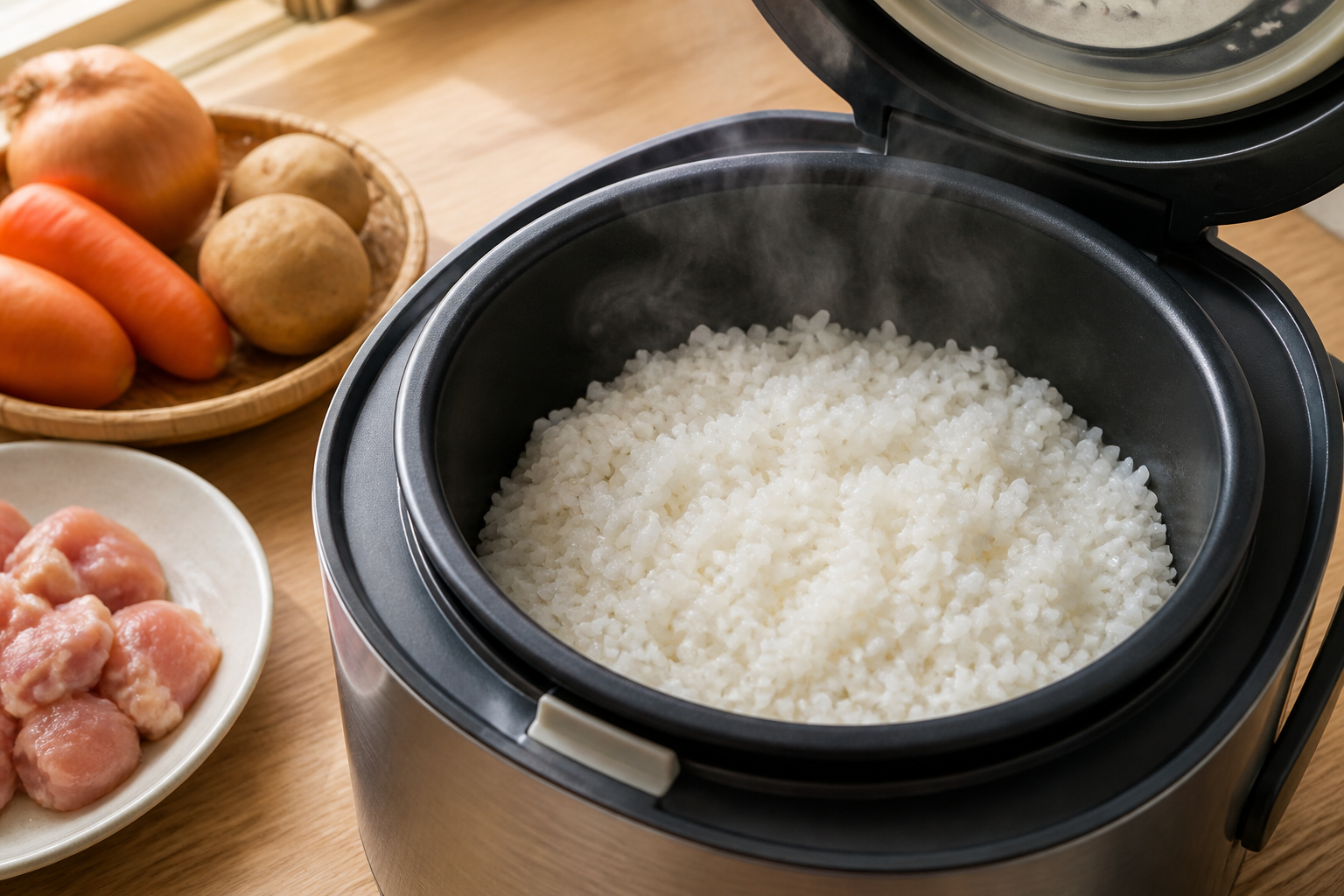
Rinse and cook the rice using a rice cooker or the stovetop method on its package. Keep it covered and warm while you make the curry.
2. Prepare the Ingredients
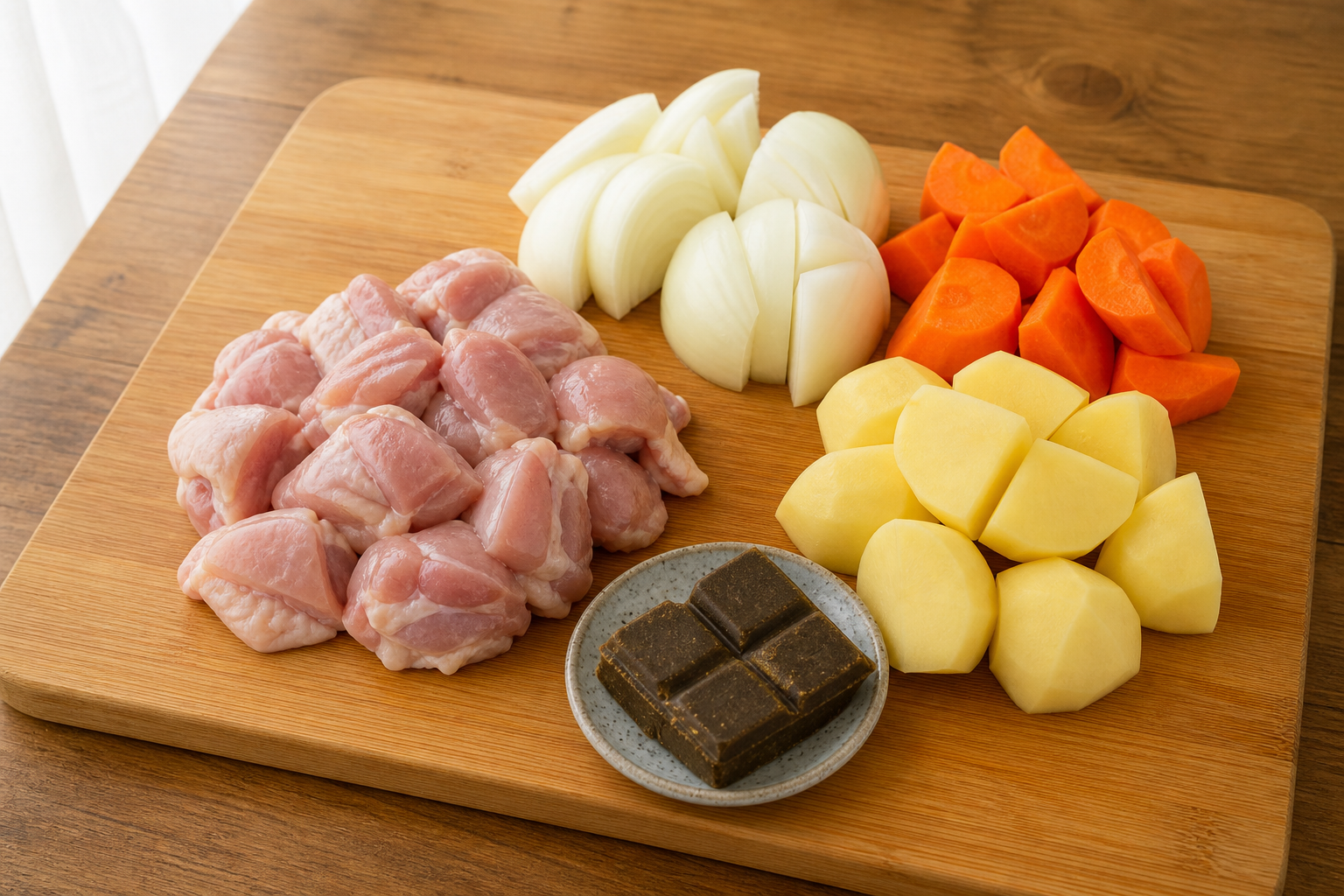
Cut the chicken, onion, carrots and potatoes into similar bite-size pieces so they cook evenly. Lightly season the chicken with salt and pepper.
3. Brown the Chicken
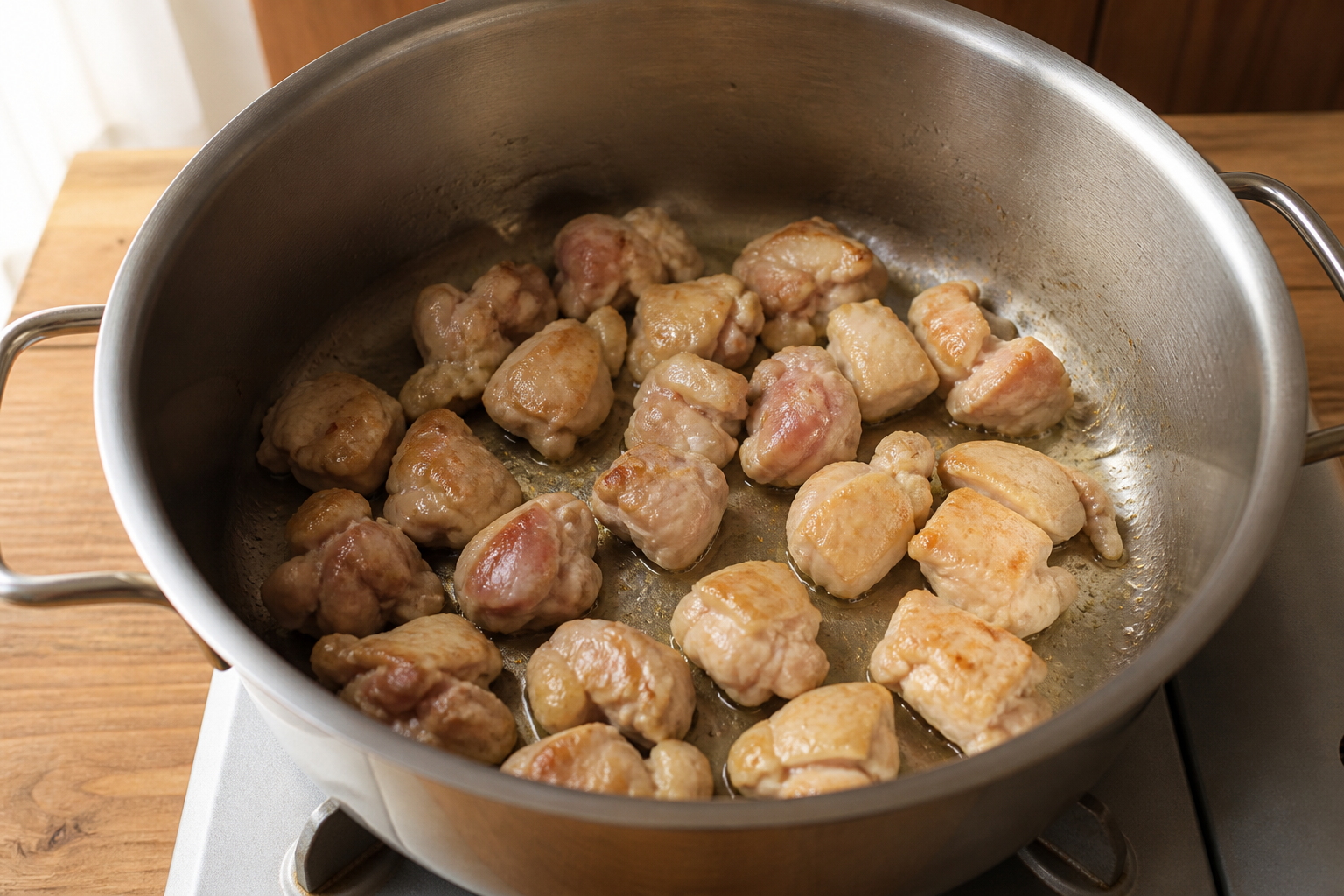
Heat the oil in a large, heavy-bottomed pot over medium heat. Add the chicken and cook for 4 to 5 minutes, stirring occasionally, until the outside is lightly browned.
4. Cook the Onion
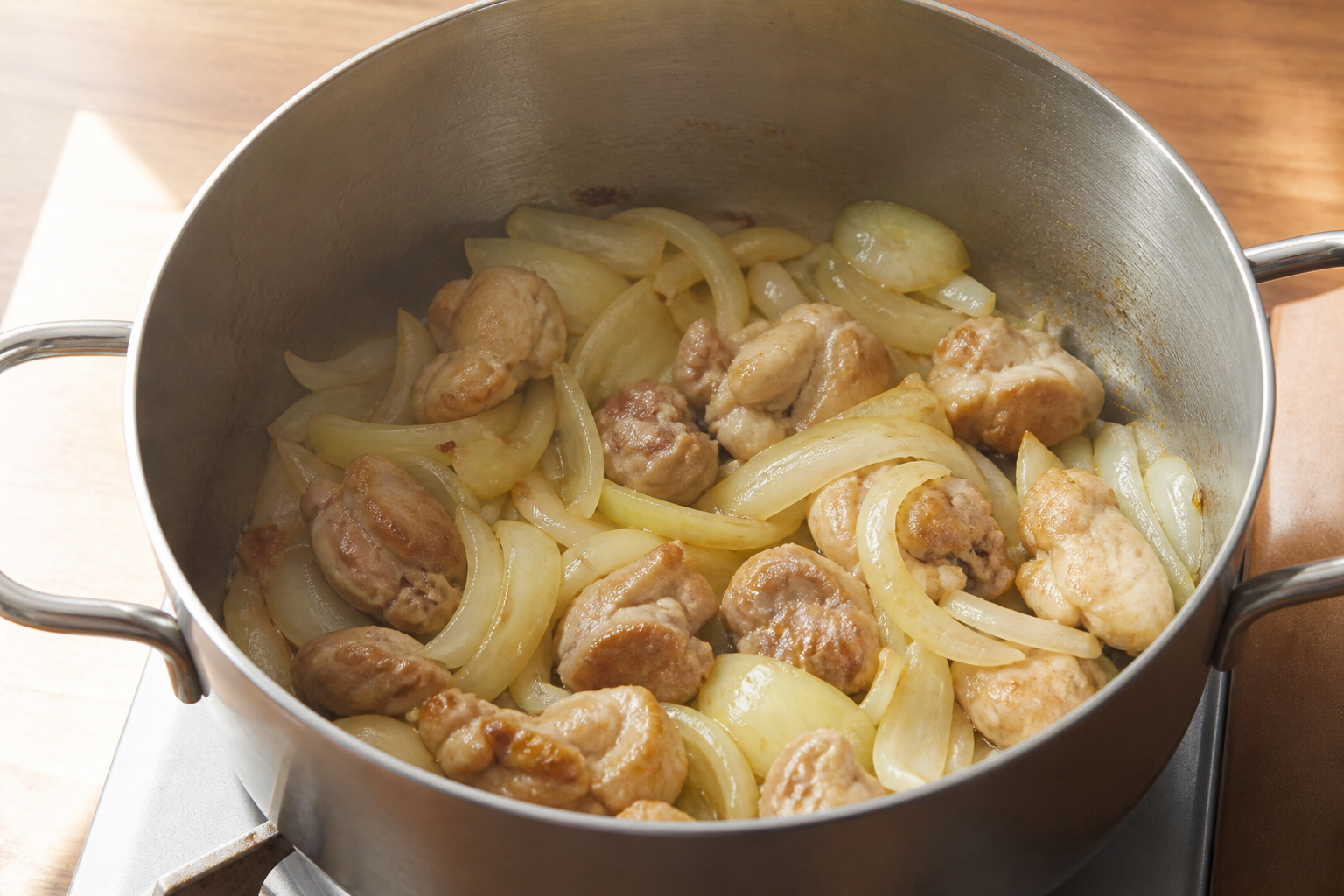
Add the onion and cook for about 5 minutes, stirring, until it begins to soften and turn translucent.
5. Simmer the Vegetables
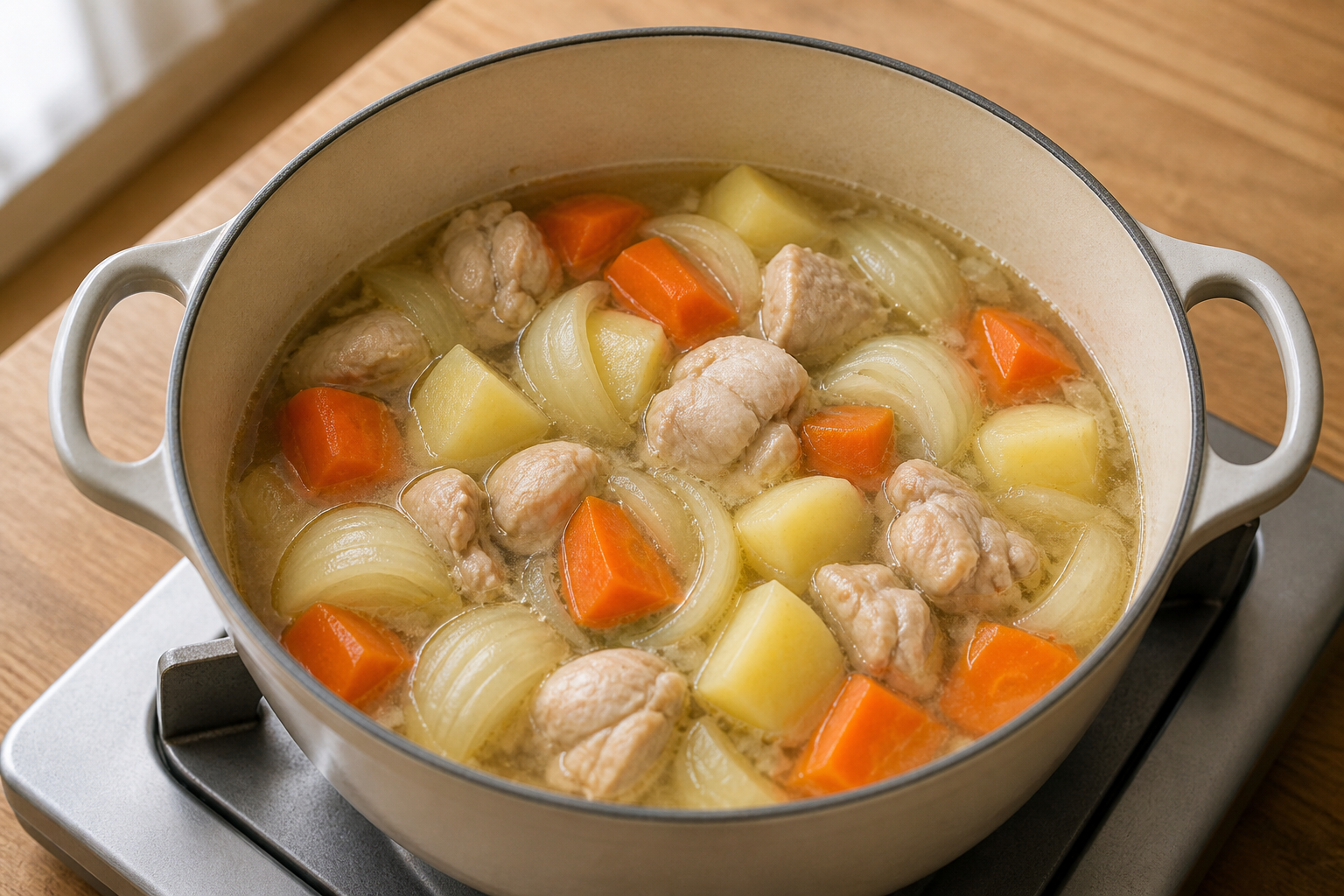
Add the carrots, potatoes and water. Bring the pot to a gentle boil, then reduce the heat to low. Skim off any foam from the surface. Cover partially and simmer for 15 to 20 minutes, or until the vegetables are tender and the chicken is cooked through.
6. Dissolve the Curry Roux
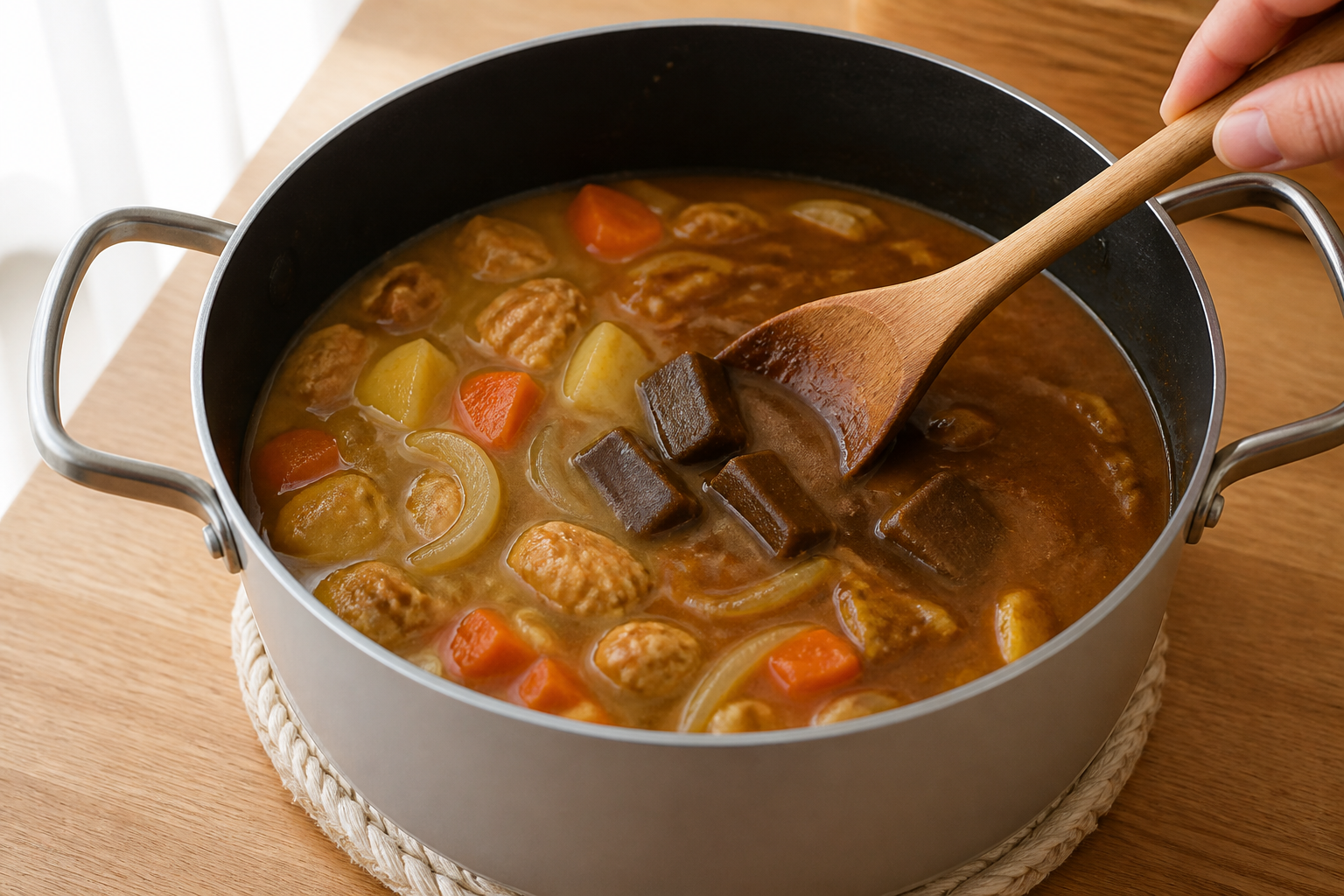
Turn off the heat. Break the curry roux into small pieces and add them a little at a time, stirring until each piece is completely dissolved. Turning off the heat first helps the roux dissolve smoothly without sticking to the bottom.
7. Thicken the Curry
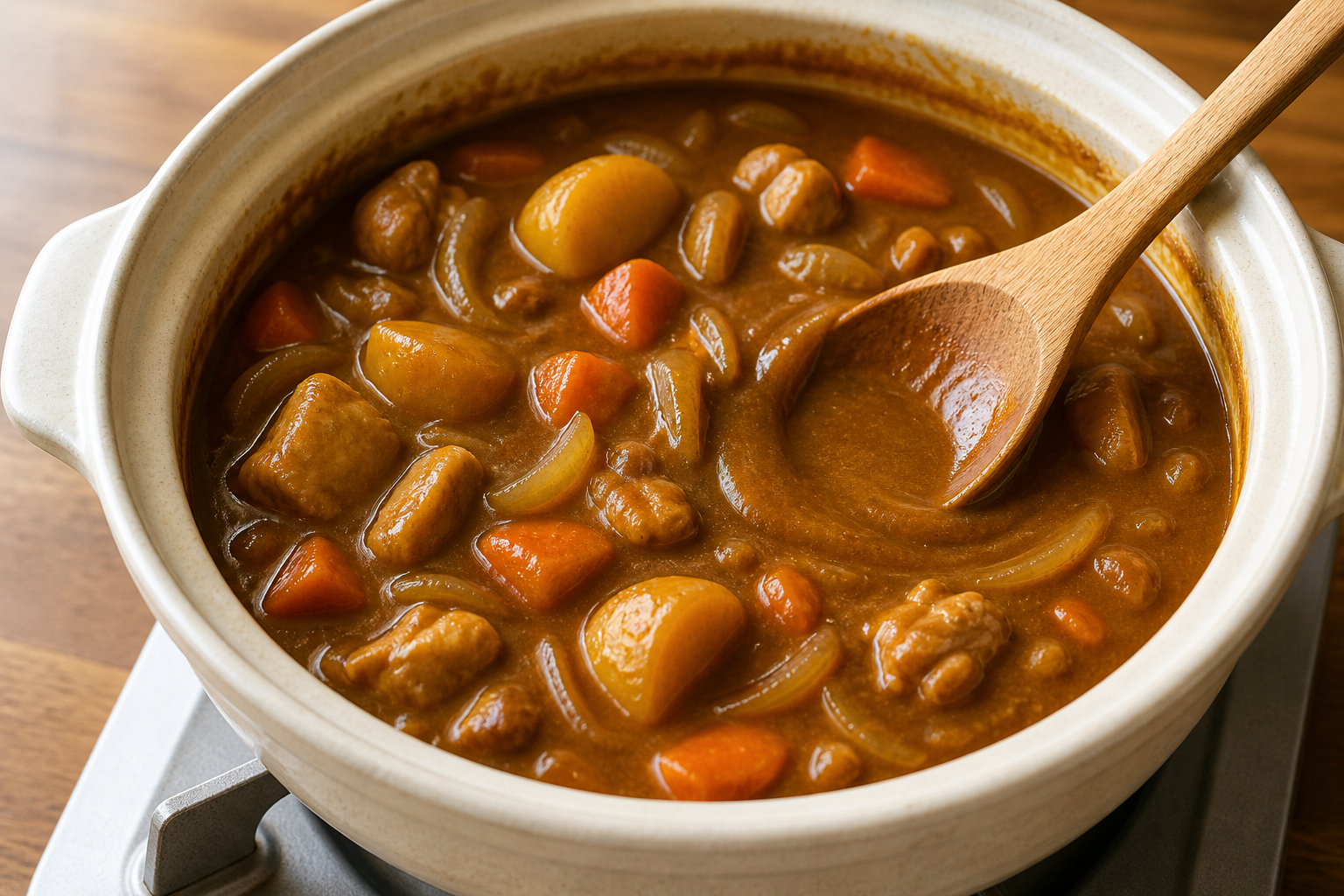
Return the pot to low heat and simmer uncovered for 5 to 10 minutes. Stir frequently as the sauce thickens. If it becomes too thick, add a small splash of water.
8. Serve
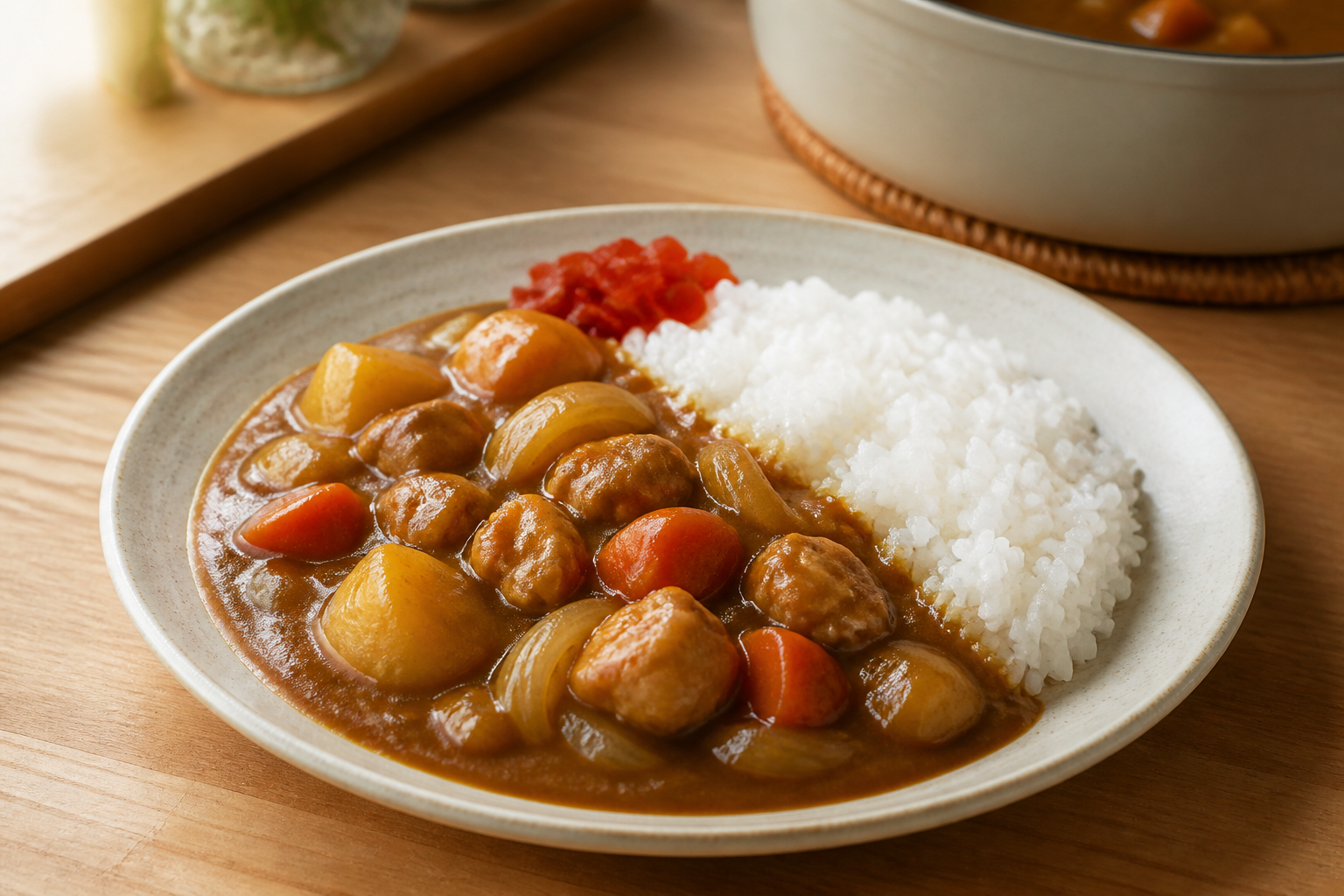
Spoon steamed rice onto one side of each plate and ladle the curry beside it. Add fukujinzuke pickles if you like.
Ingredient Substitutions
- Chicken: Use thinly sliced beef, pork, or firm tofu. Adjust the cooking time as needed.
- Japanese short-grain rice: Medium-grain rice is the closest substitute. Long-grain rice will still work, but the texture will be less typical.
- Potatoes: Yukon Gold or another waxy all-purpose potato holds its shape well.
- Curry roux: Choose mild, medium-hot or hot according to your preference. Japanese “hot” curry is often milder and sweeter than many South Asian curries.
- Fukujinzuke: This garnish is optional. A small crisp pickle provides a pleasant contrast.
Where to Buy Japanese Curry Roux
Look for boxed curry roux in Japanese or other Asian grocery stores, usually near sauces and seasonings. Many large supermarkets and online grocery shops also carry it. The package normally contains break-apart blocks and printed directions for the correct amount of water.
Tips for First-Time Cooks
- Cut the vegetables evenly so the potatoes do not fall apart before the carrots soften.
- Do not add the roux while the curry is rapidly boiling. Remove the pot from the heat and dissolve it gradually.
- Stir the bottom of the pot frequently after adding the roux because the thick sauce can scorch.
- Make the sauce slightly looser than you think you need. It continues to thicken as it cools.
- Taste before adding extra salt. Packaged curry roux is already well seasoned.
Storage and Reheating
Cool leftover curry promptly and refrigerate it in a covered container. Reheat gently on the stovetop or in the microwave, stirring well and adding a splash of water if the sauce is too thick. Store the rice separately for the best texture.
Potatoes can become grainy after freezing, so remove them before freezing the curry or use less potato if you plan to freeze a batch.
Frequently Asked Questions
Is Japanese curry very spicy?
Usually not. Mild and medium-hot curry roux tends to be gently spiced, savory and slightly sweet. Choose the heat level printed on the box.
Why is my curry too thick?
The roux continues to thicken as it cooks and cools. Stir in warm water a little at a time until the sauce reaches your preferred consistency.
Can I make Japanese curry without meat?
Yes. Use firm tofu, mushrooms, squash or additional vegetables. Check the curry roux ingredients if you need the entire dish to be vegetarian or vegan.
A Reliable Japanese Weeknight Meal
Japanese curry rice is forgiving, adaptable and satisfying. Once you learn the basic rhythm—brown the protein, simmer the vegetables, dissolve the roux and thicken the sauce—you can adjust the ingredients to suit your household.
For more context about where curry fits into everyday meals, read What Do Japanese People Actually Eat at Home?
Editorial Note:
This recipe was developed with an AI-assisted editorial workflow and reviewed for clarity, practicality and consistency. Always follow the directions on your curry roux package when its ingredient ratios differ.
Made This Recipe? Share Your Experience
Did you cook this dish at home? Leave a comment below and tell us what you changed, which ingredients you used, and how it turned out. Your experience can help other home cooks.
Build Your Japanese Pantry
Not sure which rice, miso, soy sauce or dashi to buy outside Japan? Start with our practical guide to the 12 most useful staples.
Which Curry Roux Should You Buy?
Compare heat levels, flavor styles, ingredients and package sizes before choosing a box overseas.