Easy Japanese Miso Glazed Eggplant Recipe (Nasu Dengaku)
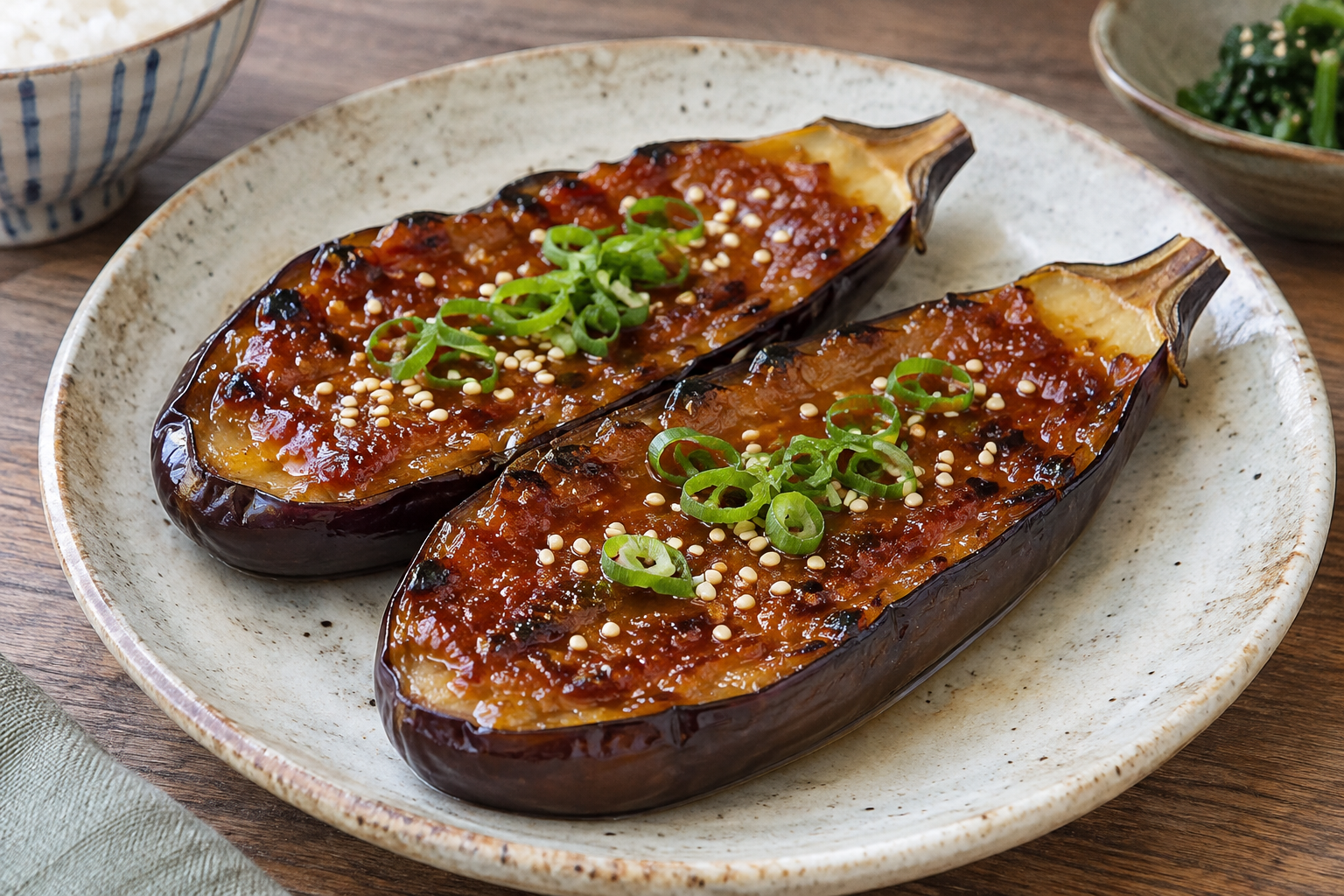
Sweet, savory, and deeply satisfying, Japanese miso glazed eggplant turns a few pantry staples into a glossy home-style side dish. The eggplant becomes creamy inside while the miso topping caramelizes under the broiler. This beginner-friendly version uses an oven, so you do not need a grill or special equipment.
Recipe at a Glance
- Servings: 4 side-dish servings
- Prep time: 10 minutes
- Cook time: 25 minutes
- Total time: 35 minutes
- Difficulty: Easy
Ingredients
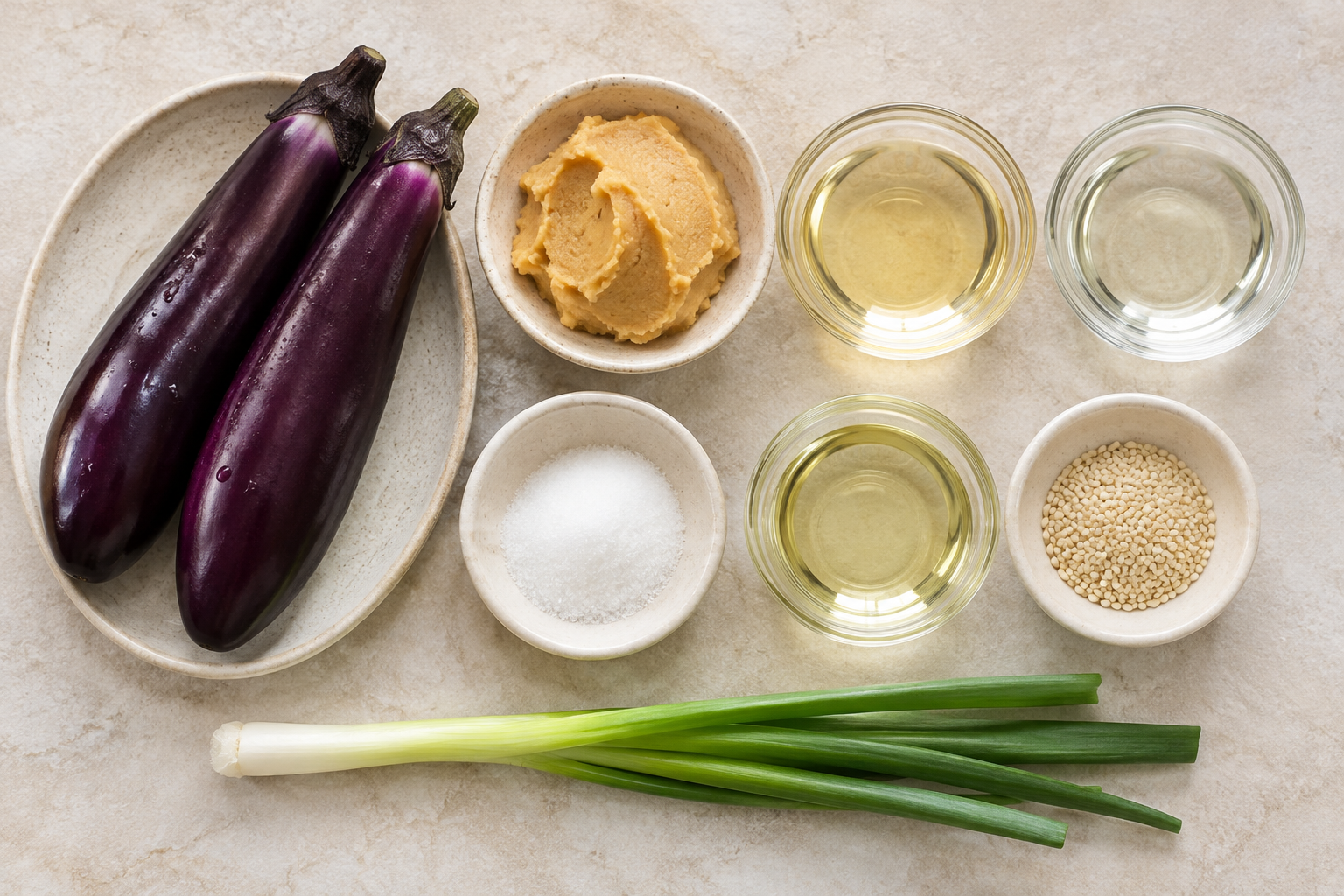
- 2 medium Japanese or Chinese eggplants, about 12 oz (340 g) total
- 1 tablespoon neutral oil
- 3 tablespoons white miso
- 1 tablespoon mirin
- 1 tablespoon sake or water
- 1 tablespoon sugar
- 1 teaspoon toasted white sesame seeds
- 1 scallion, thinly sliced
White miso gives the mildest, sweetest glaze. Yellow miso also works, but reduce the sugar slightly if your miso is already sweet. If these ingredients are new to you, start with the Japanese pantry essentials guide.
How to Make Miso Glazed Eggplant
1. Slice the eggplants
Rinse the eggplants under running water before cutting. See the FDA guide to handling fresh produce.
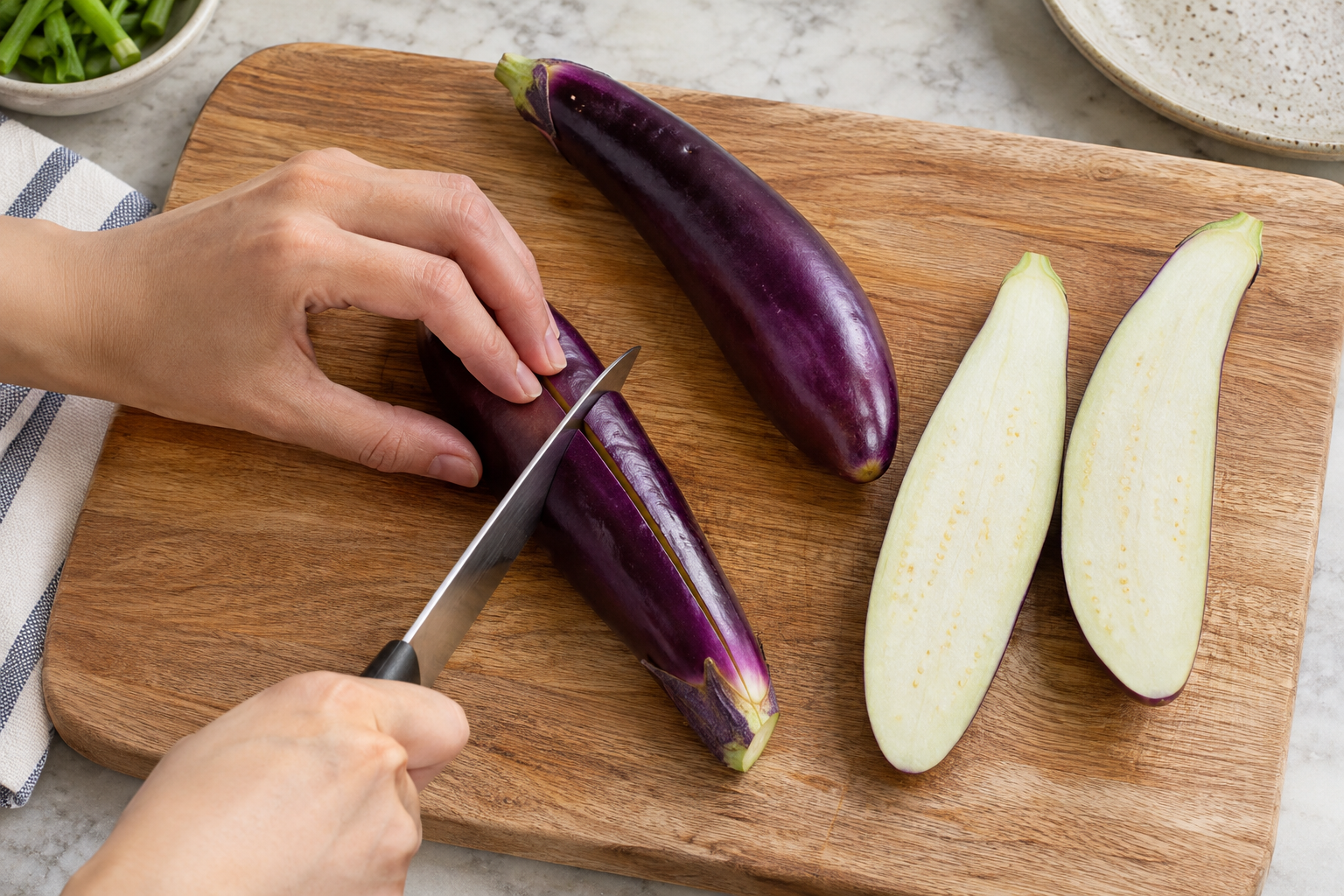
Heat the oven to 425°F (220°C). Line a rimmed baking sheet with parchment paper. Trim only the dry end of each stem, then slice the eggplants in half lengthwise.
2. Score and oil
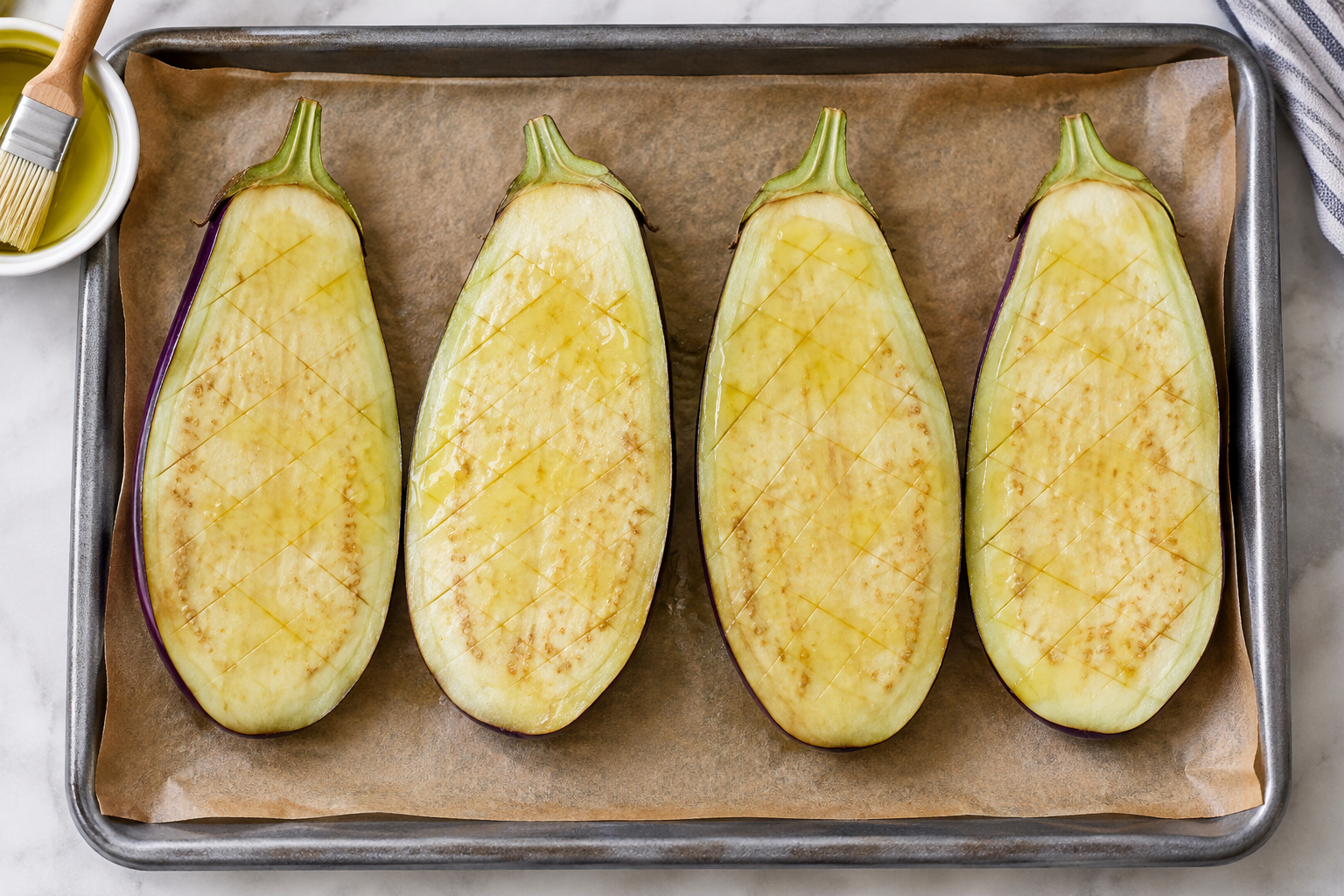
With a small knife, score the flesh in a shallow crosshatch pattern about 1/2 inch (1.3 cm) apart. Do not cut through the skin. Brush the cut surfaces and skins lightly with neutral oil.
3. Roast until tender
Place the eggplants cut-side down on the prepared tray. Roast for 15 minutes, turn them cut-side up, and continue roasting for 5 to 8 minutes. They are ready when the flesh yields easily to a fork.
4. Make the miso glaze
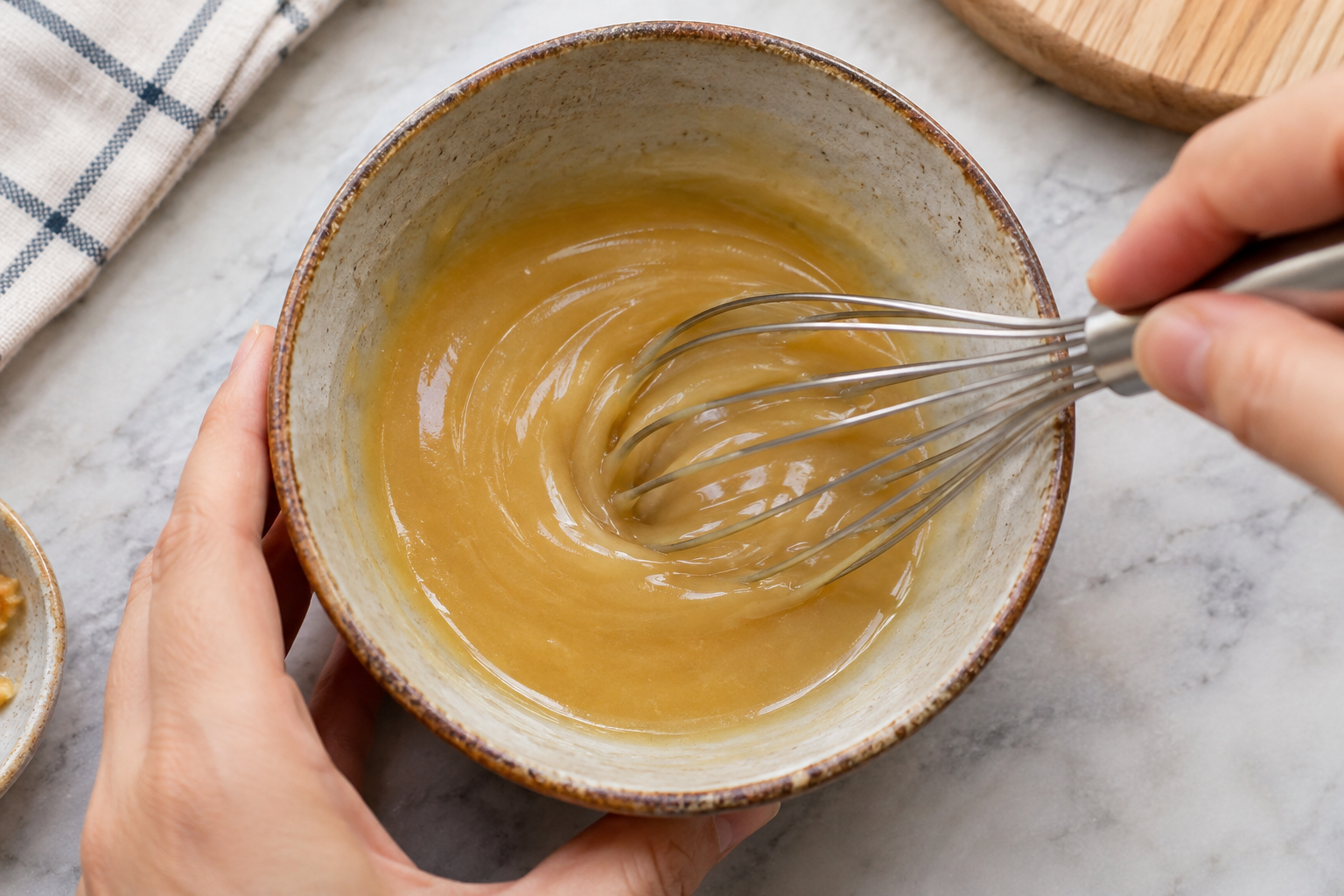
While the eggplant roasts, whisk the miso, mirin, sake or water, and sugar in a small bowl until smooth. If the glaze is too stiff to brush, add water 1 teaspoon at a time.
5. Glaze the eggplant
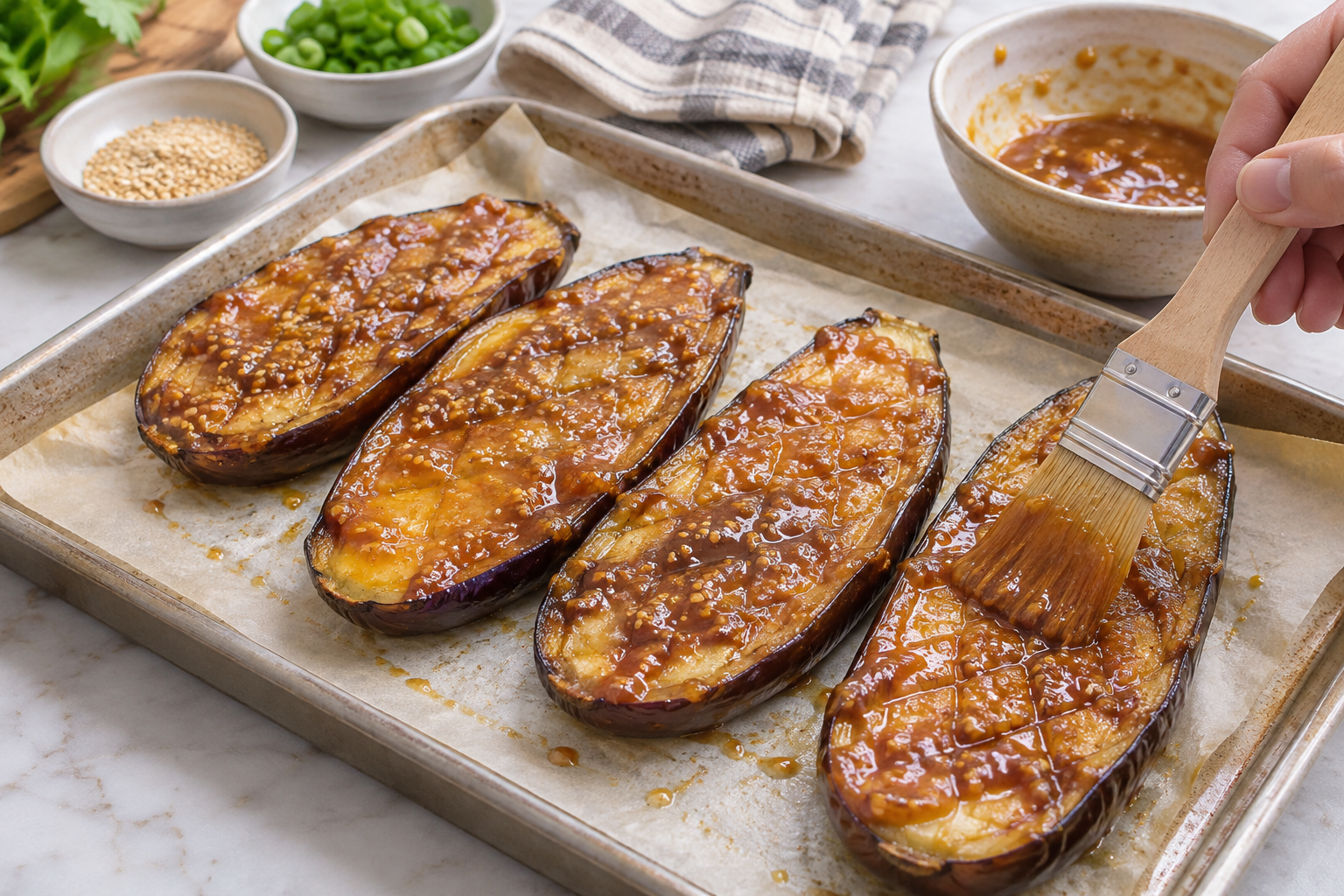
Spread the miso mixture evenly over the soft cut surfaces, working some glaze into the shallow cuts. Keep the glaze away from the parchment where it can burn.
6. Broil and serve
Transfer the eggplant to an unlined broiler-safe metal tray before broiling. Place the tray about 6 inches (15 cm) below the heating element. Broil for 2 to 4 minutes, watching continuously, until the glaze bubbles and develops small caramelized spots. Garnish with sesame and scallion, then serve hot.
Beginner Tips
- Choose slender, glossy eggplants that feel heavy and firm. They usually have fewer seeds and tender skins.
- Roast until fully soft before adding the glaze. Broiling browns the topping but will not finish a firm center.
- Keep the broiler door closed unless your oven manual says otherwise, and never leave the tray unattended.
- Taste your miso before mixing. Saltiness and sweetness vary between brands.
- Use parchment only for roasting and remove it completely before broiling.
Substitutions
- Eggplant: Use one medium globe eggplant, cut into 3/4-inch (2 cm) rounds. Cooking time may be slightly shorter.
- White miso: Yellow miso works well. Red miso is stronger and saltier, so use 2 tablespoons red miso plus 1 tablespoon water.
- Mirin: Replace with 1 tablespoon water plus 1 additional teaspoon sugar.
- Sake: Use water or unsalted vegetable stock.
- Sugar: Maple syrup works, though the glaze will brown faster.
Common Problems and Fixes
Why is the eggplant firm?
It was not roasted long enough before glazing. Return it to the oven, loosely cover the surface if already browned, and roast until a fork slides in easily.
Why did the glaze burn?
The tray was too close to the broiler or left too long. Broilers vary dramatically, so begin checking after 60 seconds and rotate the tray if needed.
Why is the dish too salty?
Miso brands differ. Add 1 to 2 teaspoons water and a little extra sugar to the remaining glaze. Next time, use white miso or a smaller amount of stronger miso.
Why is the glaze watery?
The eggplant surface may have released moisture, or too much water was added. Blot the roasted flesh lightly before glazing and add liquid gradually.
Storage and Reheating
Cool leftovers promptly and refrigerate them in an airtight container for up to 3 days. Reheat at 350°F (175°C) for about 8 minutes or microwave in short intervals. The texture softens after freezing, so freezing is not recommended.
What to Serve with Nasu Dengaku
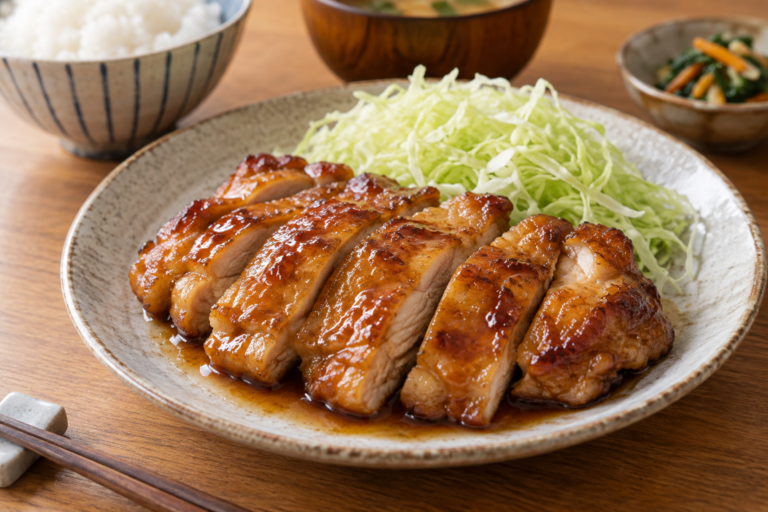
Serve this eggplant with chicken teriyaki, Japanese gyoza, spinach goma-ae, or a bowl of easy miso soup. The sweet miso glaze also pairs nicely with plain Japanese rice.
Frequently Asked Questions
What does nasu dengaku mean?
Nasu means eggplant. Dengaku commonly refers to foods coated with a sweet miso glaze and grilled or broiled.
Do I need to salt the eggplant first?
Usually not for slender Japanese or Chinese eggplants. Modern varieties are generally mild, and roasting them directly keeps the preparation quick.
Can I make this recipe vegan?
Yes. The listed ingredients are plant-based, but check the labels on your miso and mirin if you follow a strict vegan diet.
Can I prepare it ahead?
You can mix the glaze up to 3 days ahead. For the best texture and shine, roast and broil the eggplant shortly before serving.
Have You Tried This Recipe?
Leave a comment with the miso you used and any substitutions that worked for you. Your notes help other home cooks make this recipe confidently.