Easy Japanese Katsu Curry Recipe
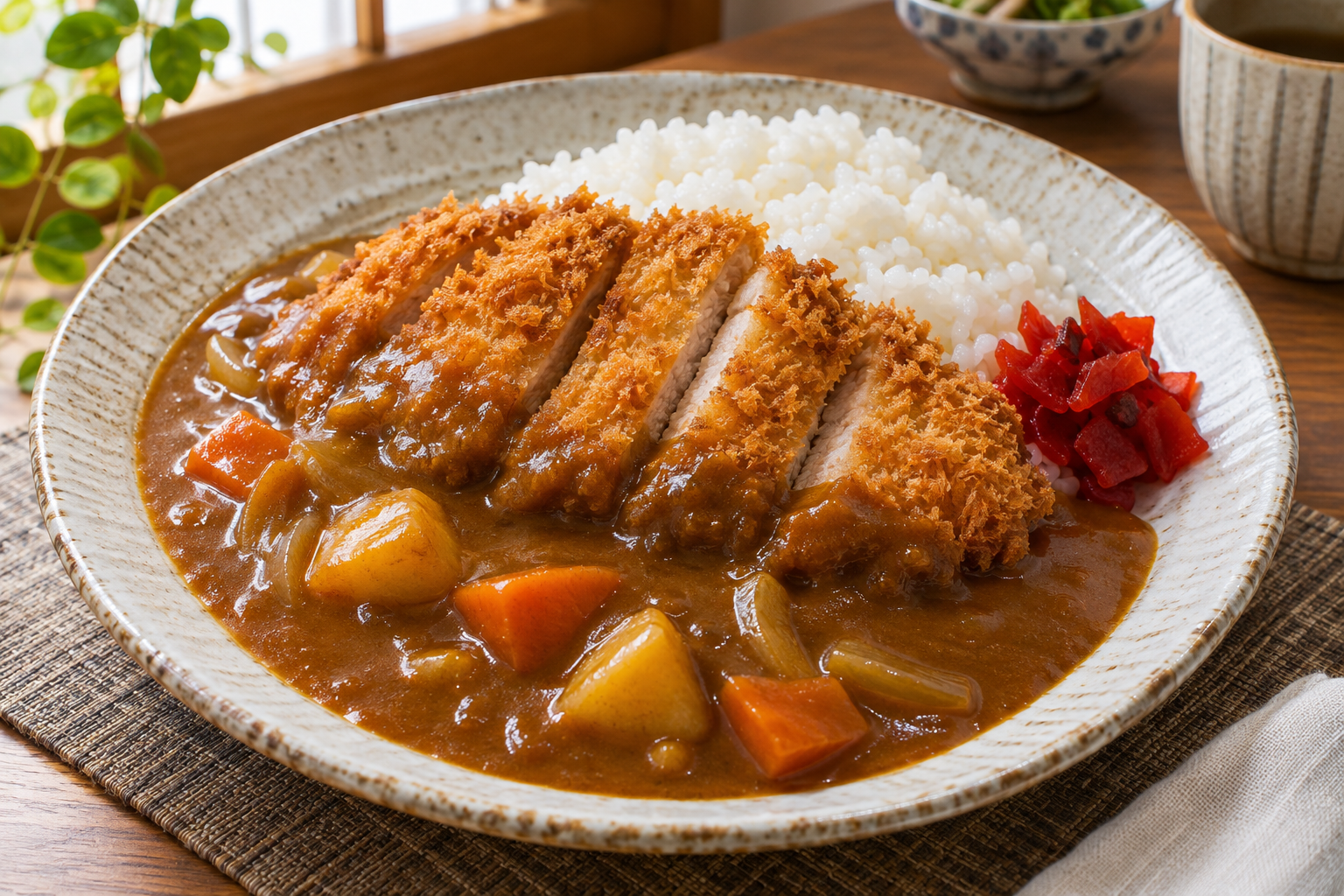
Japanese katsu curry combines a crisp pork cutlet with mild, rich curry sauce and steamed rice. This beginner-friendly version uses Japanese curry roux for dependable flavor and explains how to keep the cutlet crunchy through serving.
Recipe at a Glance
- Serves: 4
- Prep time: 20 minutes
- Cook time: 35 minutes
- Total time: 55 minutes
- Difficulty: Beginner to intermediate
Ingredients
Curry
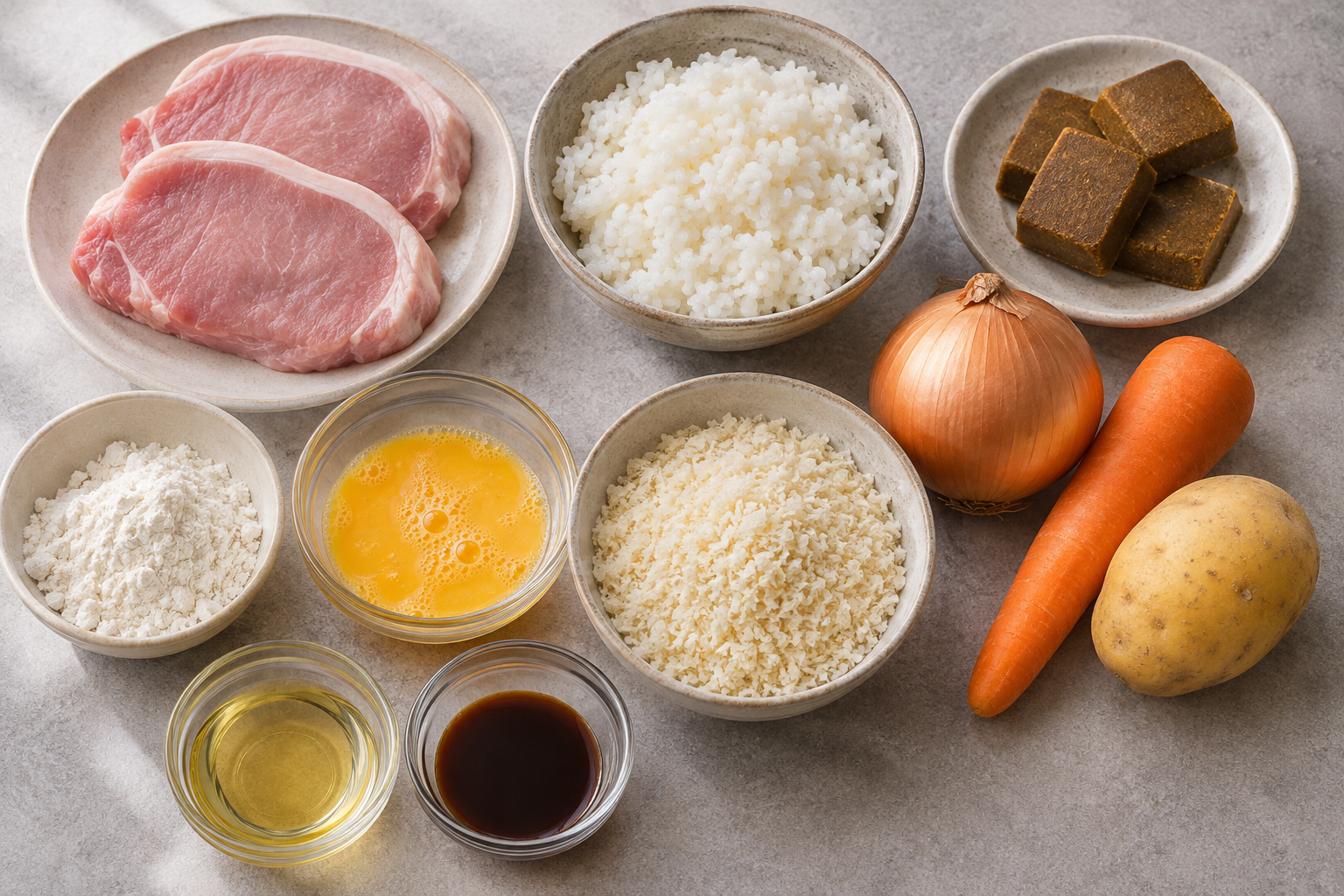
- 1 tablespoon neutral oil
- 1 medium onion, thinly sliced
- 1 medium carrot, cut into small chunks
- 1 medium Yukon Gold potato, cut into 3/4-inch chunks
- 3 cups (720 ml) water or unsalted chicken stock
- 3.5 oz (100 g) Japanese curry roux, about half a standard box
- 1 teaspoon Worcestershire sauce, optional
Pork katsu
- 4 boneless pork loin chops, about 4 to 5 oz (115 to 140 g) each
- 1/2 teaspoon salt
- 1/4 teaspoon black pepper
- 1/3 cup (45 g) all-purpose flour
- 2 large eggs, beaten
- 1 1/2 cups (90 g) Japanese panko breadcrumbs
- Neutral oil, for shallow frying
For serving
- 4 bowls hot cooked Japanese short-grain rice
- Fukujinzuke pickles, optional
How to Make Japanese Katsu Curry
1. Cook the vegetables
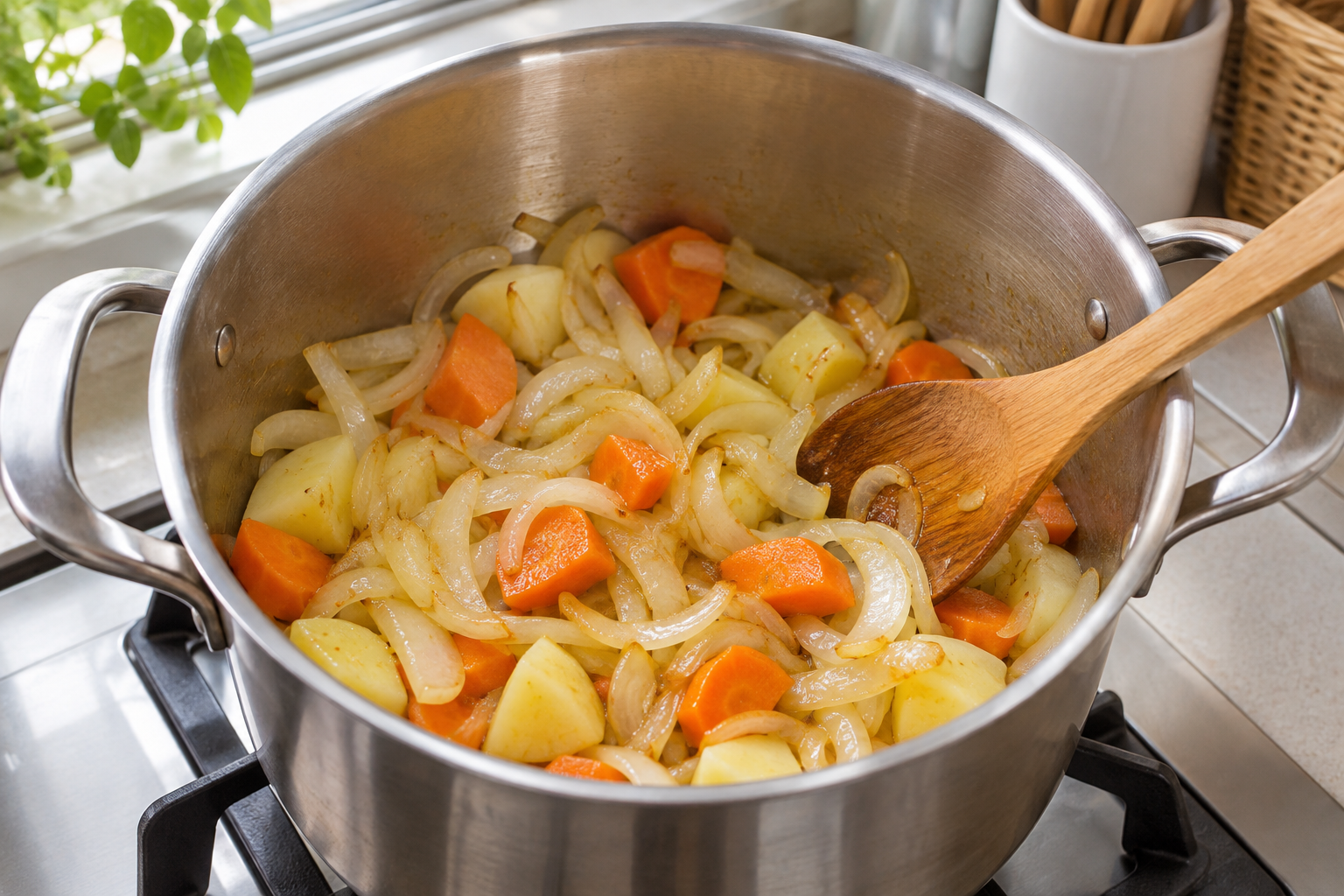
Heat 1 tablespoon oil in a pot over medium heat. Add the onion and cook for 6 to 8 minutes until soft and lightly golden. Add the carrot and potato, stir for 2 minutes, then add the water or stock.
2. Simmer and add the curry roux
Bring to a gentle boil, reduce the heat, cover partially and simmer for 15 minutes until the vegetables are tender. Turn off the heat. Add the curry roux a few pieces at a time and stir until completely dissolved. Return to low heat for 5 minutes, stirring frequently. Add Worcestershire sauce if desired.
3. Bread the pork
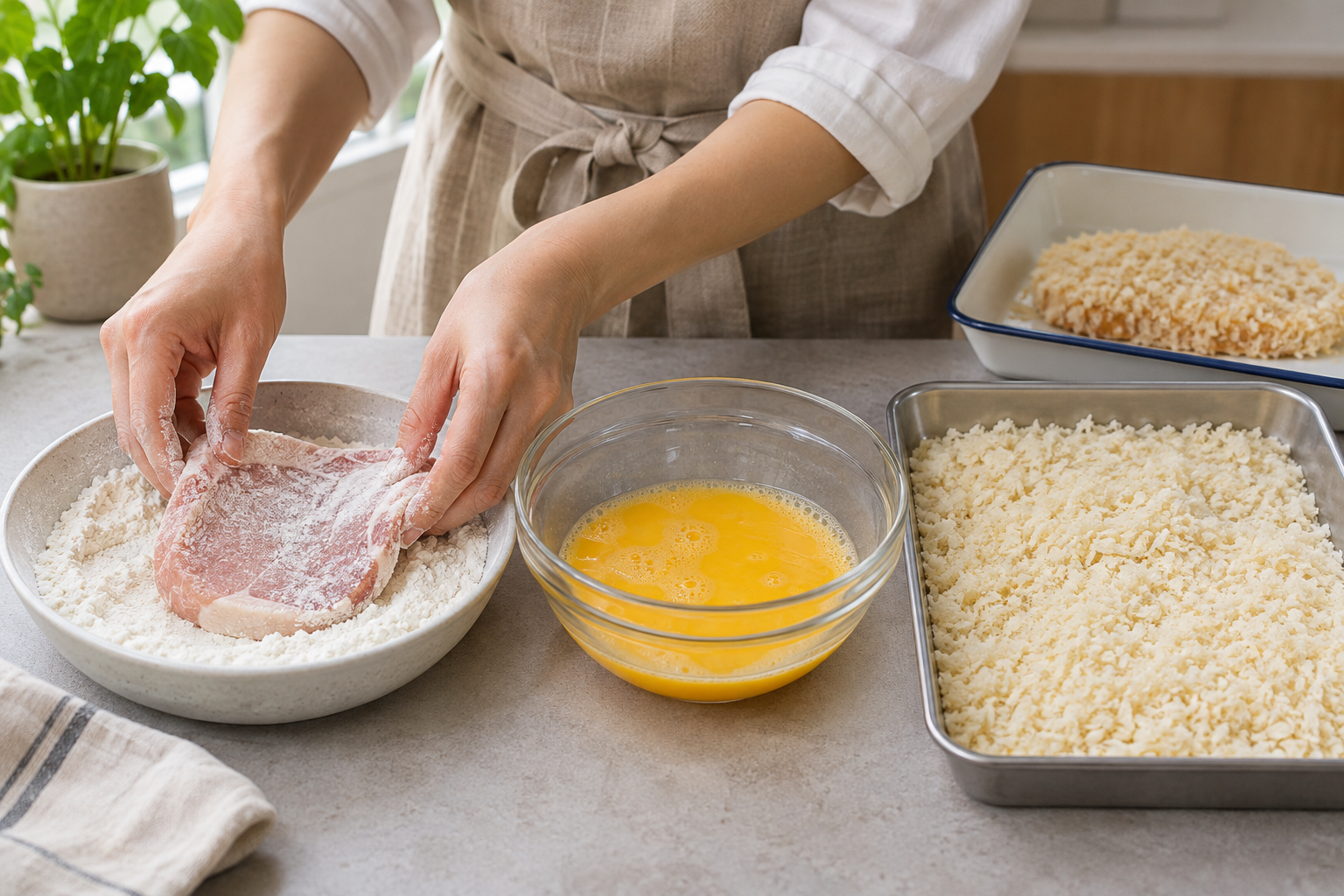
While the curry simmers, make shallow cuts around the fatty edges of the pork so the chops stay flat. Season with salt and pepper. Coat each chop in flour, dip in egg and press firmly into panko.
4. Fry the cutlets
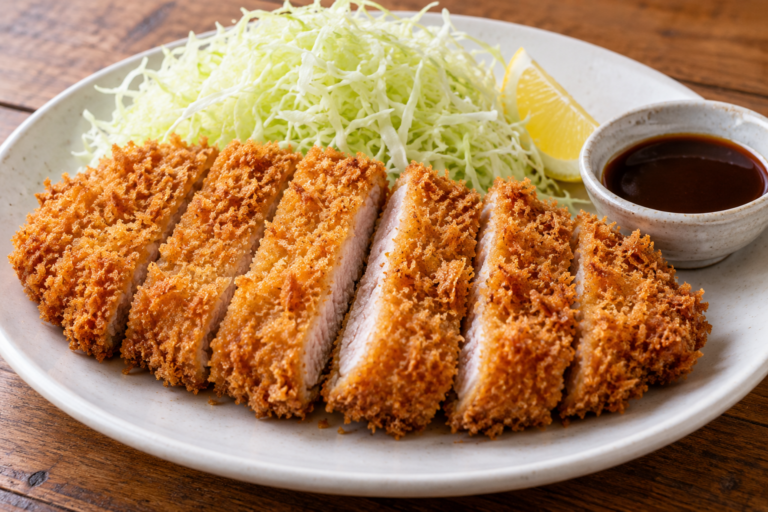
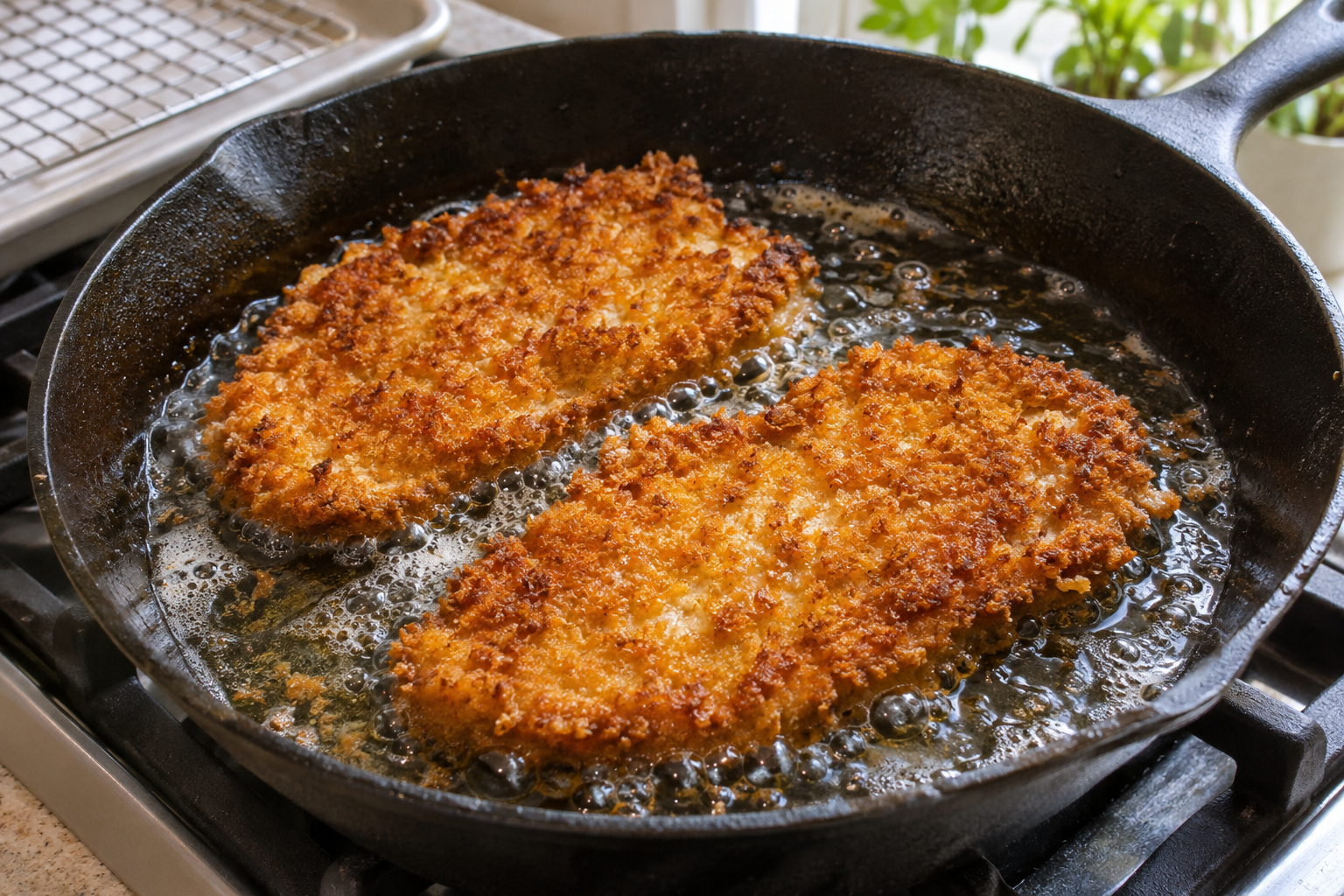
Pour 1/2 inch of neutral oil into a heavy skillet and heat to 340°F (170°C). Fry two cutlets at a time for about 3 minutes per side until deeply golden and cooked through. Transfer to a wire rack, not paper towels, and rest for 5 minutes.
5. Slice and assemble
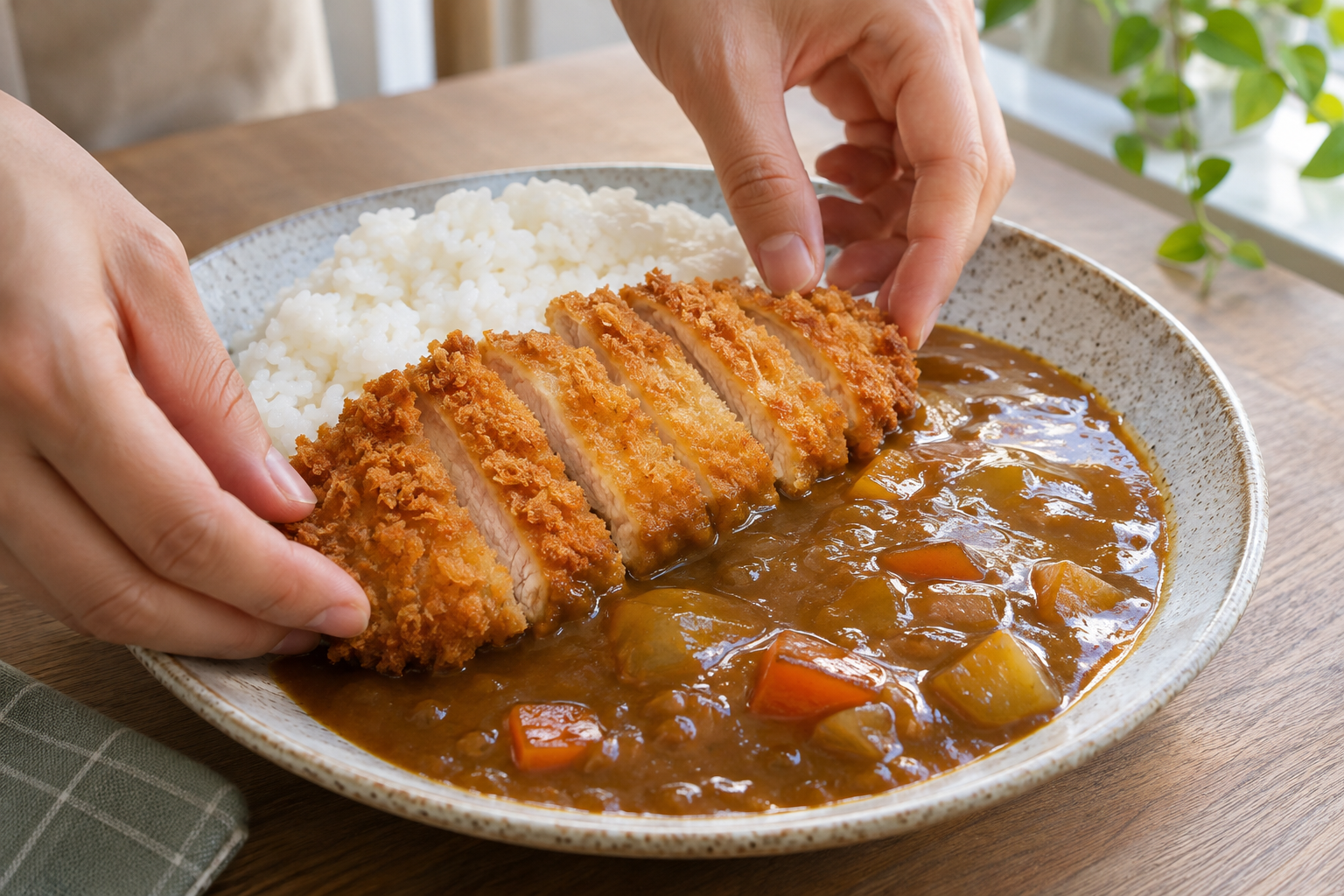
Cut each pork cutlet into strips. Place rice on one side of each plate, spoon curry beside it and arrange the sliced katsu so part of the crust stays above the sauce.
How to Keep Katsu Crispy
- Drain fried cutlets on a wire rack so steam can escape.
- Rest the cutlets before slicing so the coating stays attached.
- Use a sharp knife and cut with firm downward strokes.
- Spoon curry beside the cutlet instead of covering the entire crust.
- Assemble only when everyone is ready to eat.
Choosing Japanese Curry Roux
Most boxed roux comes in mild, medium-hot and hot versions. For a family-style meal, medium-hot provides balanced flavor without overwhelming heat. Compare brands and spice levels in our Japanese curry roux guide. Use only the amount specified for 3 cups of liquid because brands vary in salt and thickening power.
Substitutions
- **Pork loin:** Use boneless chicken breast or thigh pounded to an even thickness.
- **Potato:** Substitute sweet potato for a sweeter curry.
- **Panko:** Coarse fresh breadcrumbs work, but the crust will be less airy.
- **Curry roux:** Use a comparable Japanese curry sauce mix and follow its liquid ratio.
- **Deep frying:** Shallow frying works well as long as the oil reaches halfway up the cutlets.
Common Problems and Fixes
Why is the curry too thick?
Stir in hot water 1 tablespoon at a time over low heat until it reaches a spoonable consistency.
Why is the curry too thin?
Simmer uncovered for several minutes while stirring. The sauce thickens further as it cools.
Why did the breading fall off?
Pat the pork dry, shake off excess flour and press the panko firmly in place. Let the breaded chops rest for 5 minutes before frying and avoid moving them too soon.
How do I know the pork is cooked?
The center should reach 145°F (63°C), followed by a 3-minute rest. See the USDA safe minimum internal temperature chart.
Storage and Reheating
Refrigerate curry and cutlets in separate airtight containers for up to 3 days. Reheat curry gently on the stovetop with a splash of water. Reheat katsu in a 375°F (190°C) oven or air fryer until hot and crisp. Freeze the curry for up to 1 month, but freeze the cutlets separately for best texture.
What to Serve with Katsu Curry
Add a crisp side such as Japanese potato salad or a simple cabbage salad. If you want to master the components separately, see our easy tonkatsu recipe and Japanese curry rice recipe.
Frequently Asked Questions
Can I prepare katsu curry ahead?
Yes. Make the curry up to 3 days ahead. Bread and fry the cutlets shortly before serving for the best crust.
Can I use an air fryer?
Yes. Spray the breaded cutlets evenly with oil and air-fry at 390°F (200°C), turning once, until golden and the pork reaches a safe internal temperature.
Is Japanese curry spicy?
It is usually mild, savory and slightly sweet. Choose a mild roux if cooking for children or spice-sensitive guests.
Should curry go over or beside the cutlet?
Either is traditional, but placing it beside the katsu preserves more crunch.
Have You Tried This Recipe?
Leave a comment and tell us which curry roux and spice level you used.