Easy Japanese Karaage Recipe (Crispy Fried Chicken)
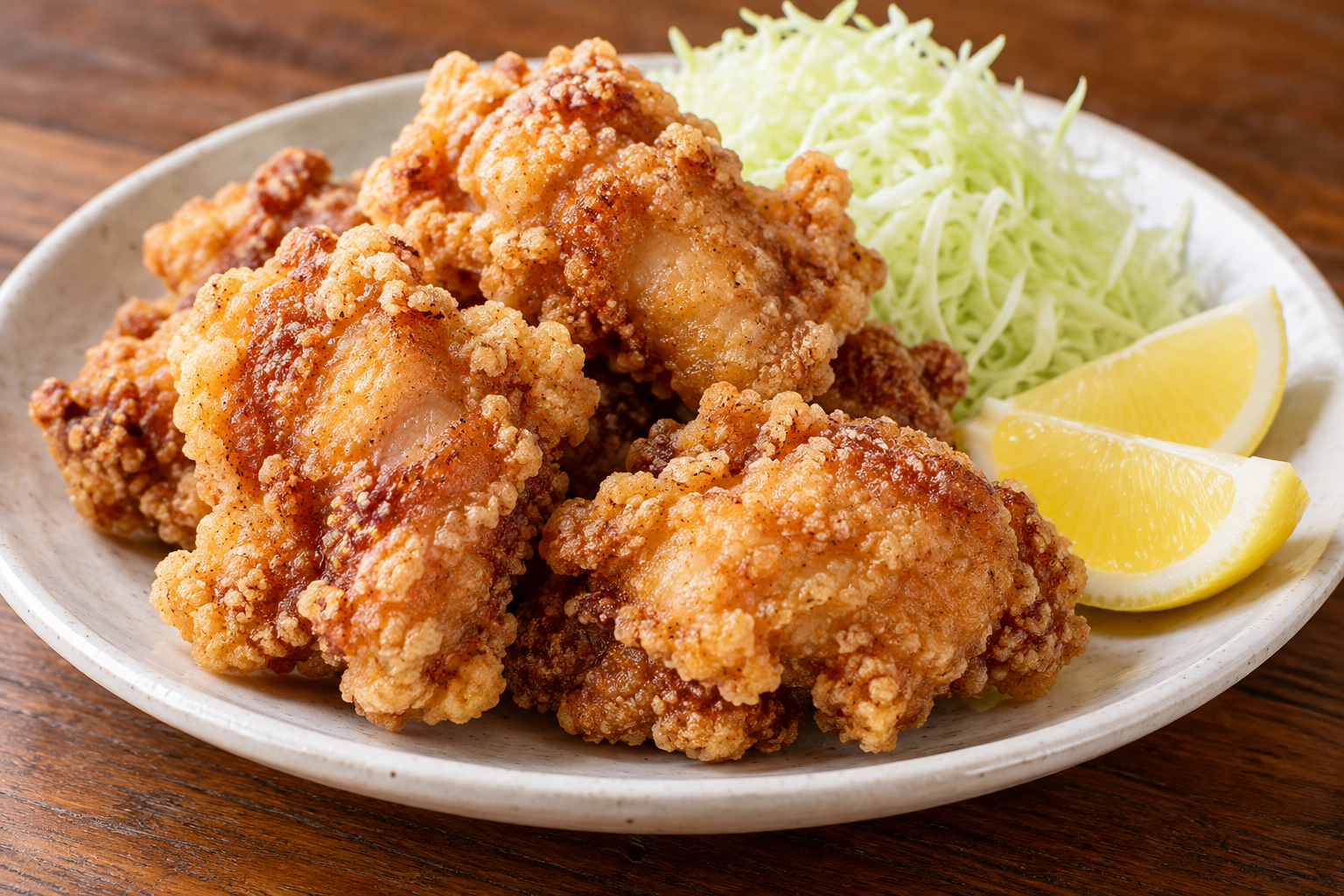
Japanese karaage is juicy, soy-ginger marinated chicken with a light, craggy potato-starch crust. This beginner method uses chicken thighs and a short double-fry for reliable crunch without drying the meat.
Recipe at a Glance
- Serves: 4
- Prep time: 20 minutes
- Marinating time: 30 minutes
- Cook time: 15 minutes
- Total time: 1 hour 5 minutes
- Difficulty: Beginner
Ingredients
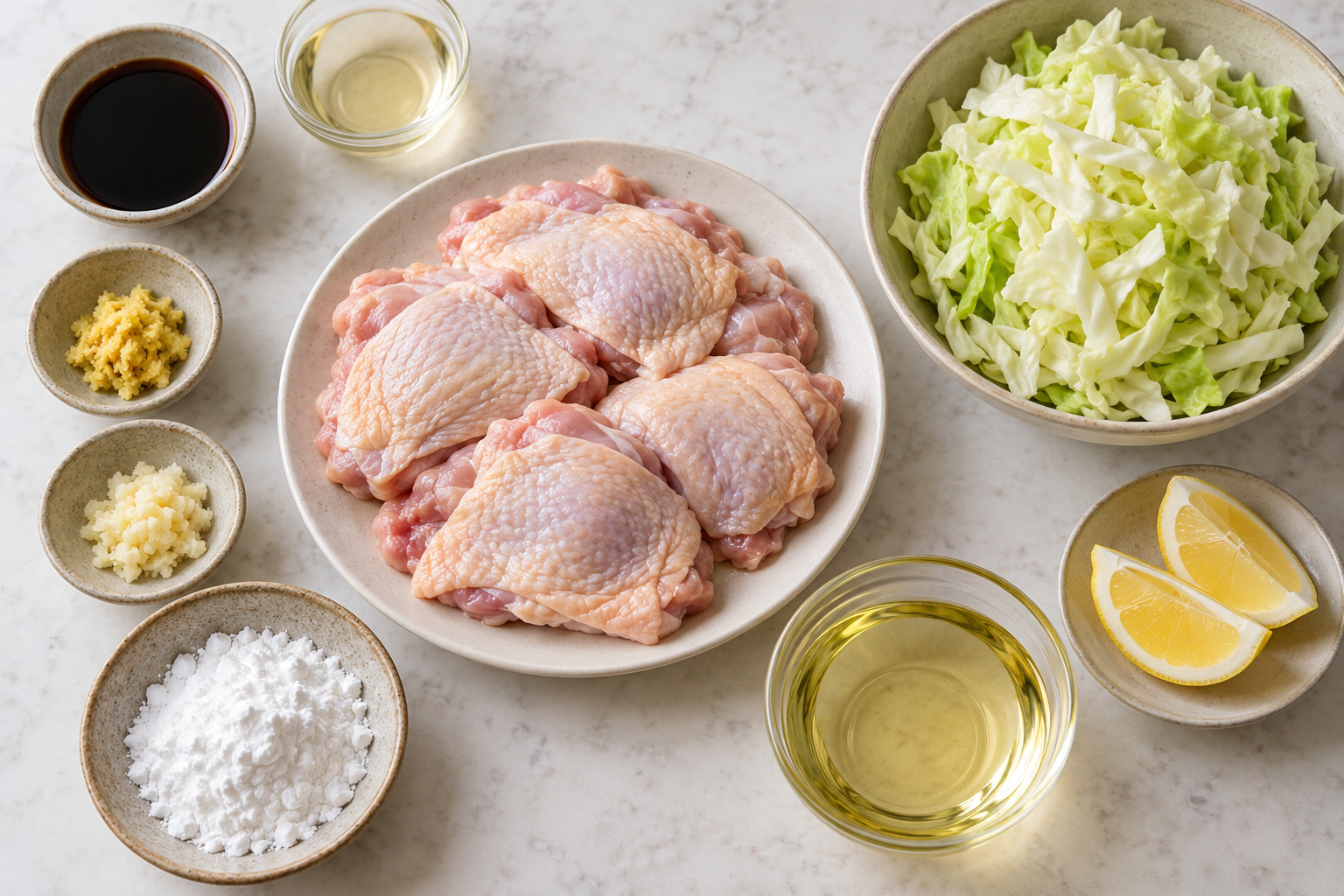
- 1 1/2 lb (680 g) boneless skin-on chicken thighs
- 2 tablespoons soy sauce
- 2 tablespoons sake or dry sherry
- 2 teaspoons freshly grated ginger
- 1 small garlic clove, grated
- 3/4 cup (90 g) potato starch, plus more as needed
- Neutral high-heat oil for frying
- Lemon wedges and shredded cabbage, for serving
How to Make Japanese Karaage
1. Cut the chicken
Pat the thighs dry and cut them into roughly 1 1/2-inch (4 cm) pieces. Keep the pieces similar in size so they finish together.
2. Marinate
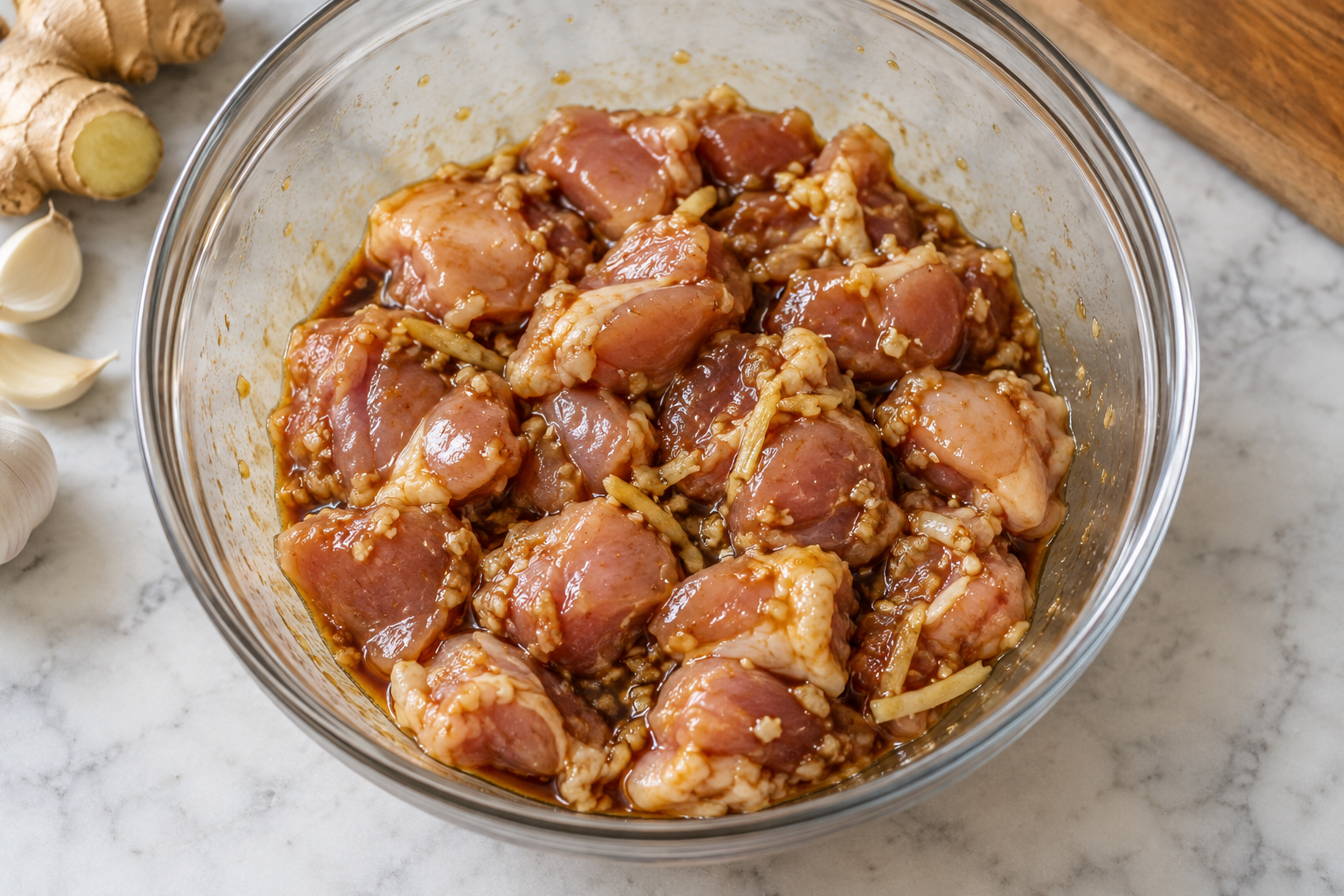
Combine soy sauce, sake, ginger and garlic in a bowl. Add the chicken, mix well, cover and refrigerate for 30 minutes. Avoid marinating longer than 2 hours because the soy sauce can make the exterior too salty.
3. Coat with potato starch
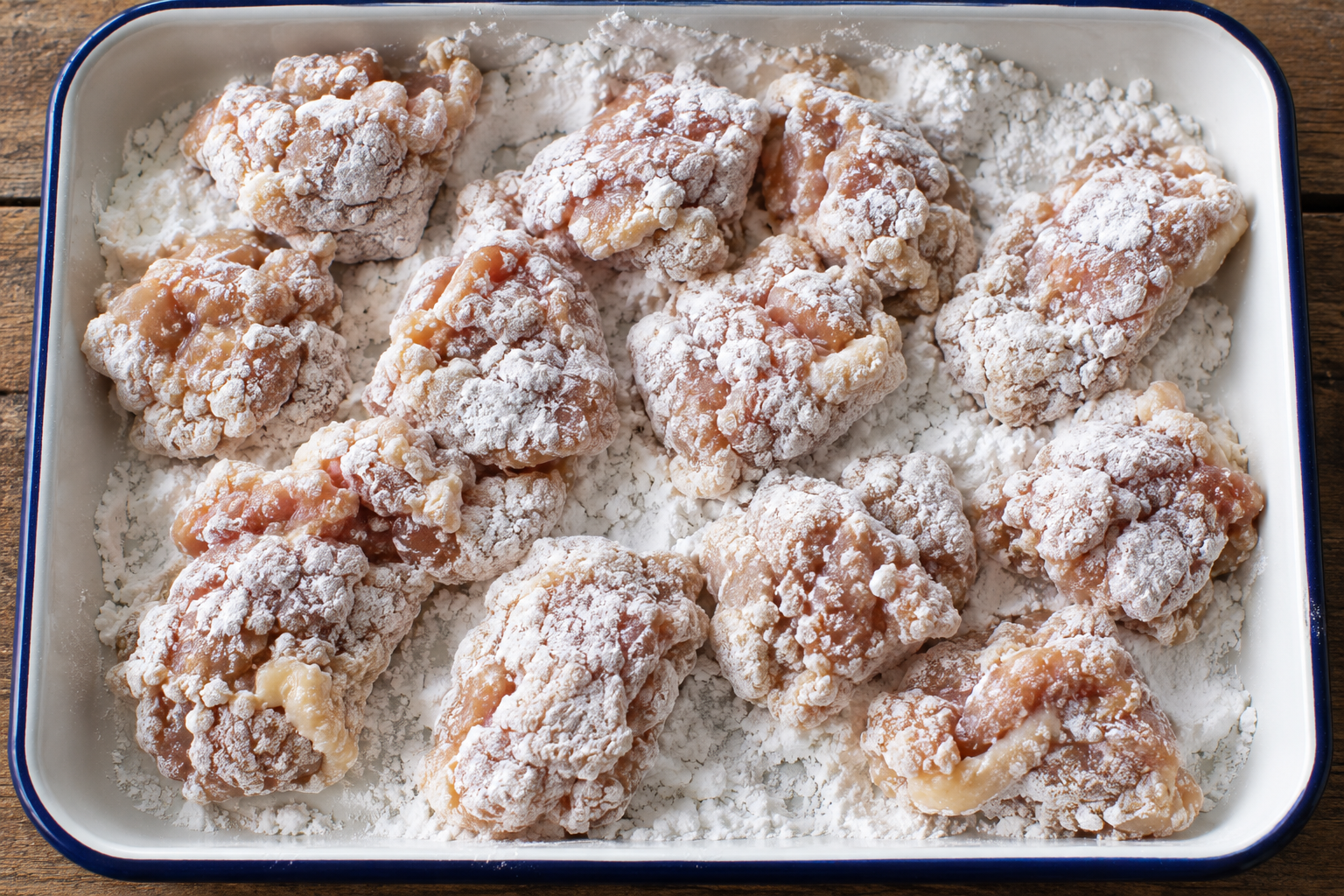
Drain off excess marinade. Put the potato starch in a shallow tray and coat each piece thoroughly, pressing it into folds and corners. Shake off loose starch, then rest the coated pieces for 5 minutes.
4. Heat the oil
Pour oil into a heavy saucepan to a depth of about 1 1/2 inches (4 cm). Heat to 325°F (165°C). Prepare a wire rack over a tray.
5. First fry
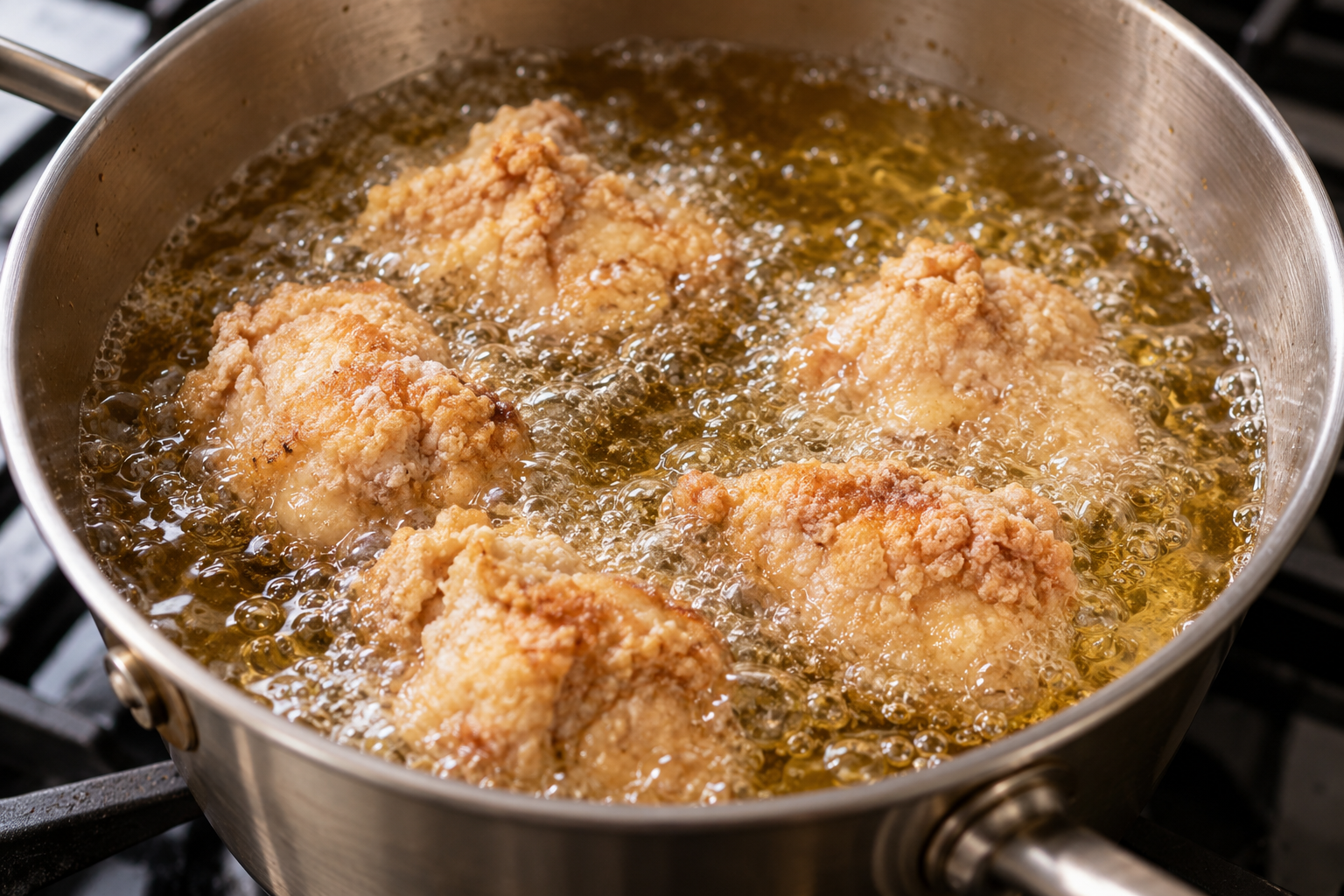
Fry in small batches for about 3 minutes, turning occasionally. The chicken should be pale golden and nearly cooked. Transfer it to the rack and rest for 3 minutes while the oil reheats.
6. Second fry and serve
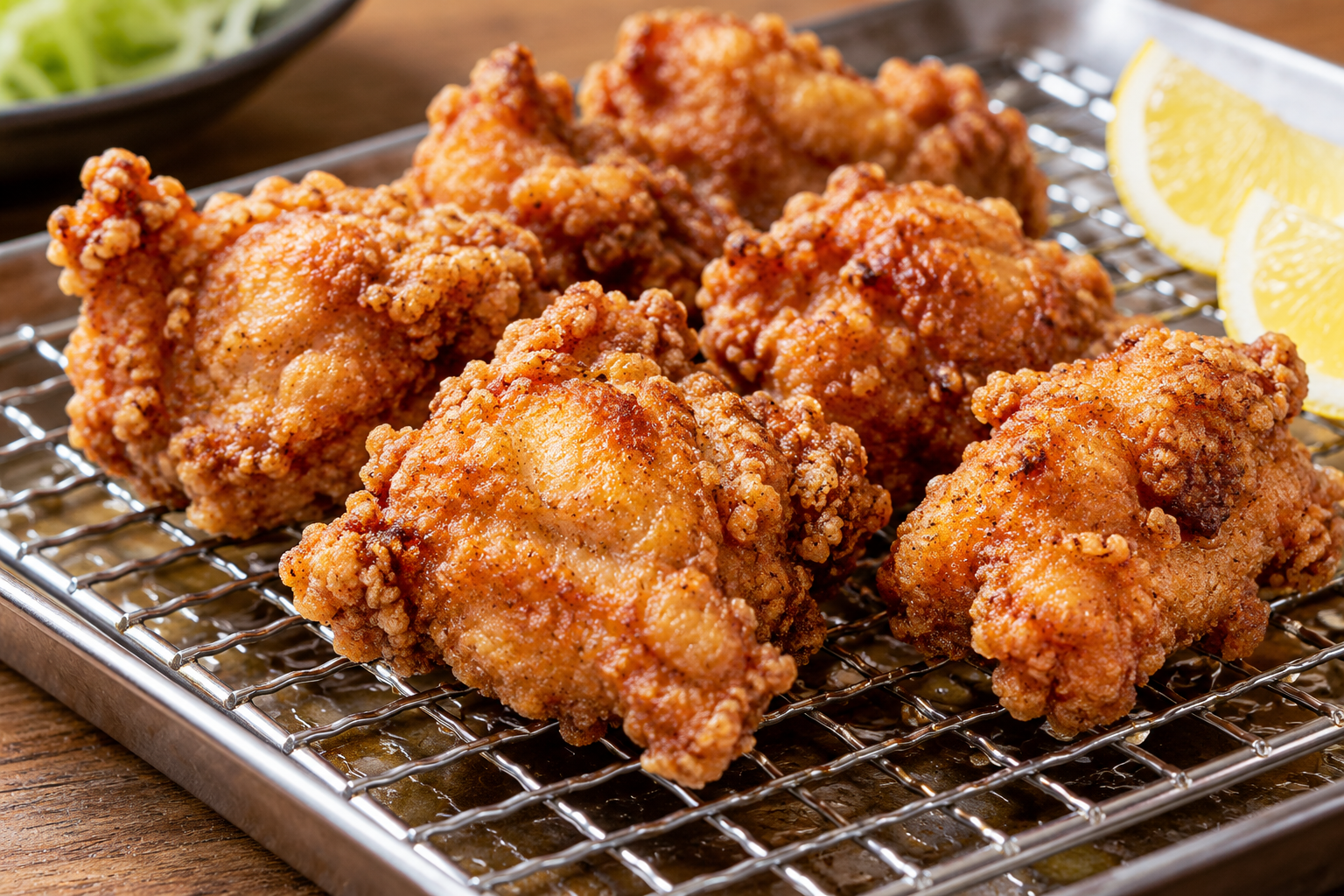
Raise the oil to 375°F (190°C). Return each batch for 45–60 seconds until deep golden and crisp. Drain on the rack. Confirm the thickest pieces reach 165°F (74°C), then serve immediately with lemon and cabbage.
Beginner Tips and Troubleshooting
Why is the coating falling off?
Drain excess marinade before coating, press starch into every surface, and let the coating hydrate for 5 minutes. Do not crowd or stir the chicken aggressively during the first minute.
Why is my karaage greasy?
The oil temperature probably dropped. Fry small batches, use a thermometer, and allow the oil to recover before adding more chicken.
How do I keep it juicy?
Use thighs, cut evenly, and stop when the center reaches 165°F (74°C). Follow USDA safe-temperature guidance for poultry.
Substitutions
- Cornstarch works if potato starch is unavailable, though the crust will be slightly finer.
- Use dry sherry or water instead of sake.
- Skinless thighs work well; breast meat cooks faster and dries more easily.
- Use tamari for a gluten-free version and confirm all seasonings are certified gluten-free.
Storage and Reheating
Refrigerate cooled karaage in an airtight container for up to 3 days. Reheat on a rack in a 400°F (200°C) oven or air fryer until hot and crisp. Freeze cooked pieces for up to 1 month. Do not leave cooked chicken at room temperature for more than 2 hours.
Frequently Asked Questions
Is karaage the same as regular fried chicken?
Karaage is usually boneless bite-size chicken marinated before being coated in starch. The crust is thinner and lighter than many flour-based fried chicken coatings.
Can I fry it only once?
Yes, but a brief second fry makes the exterior noticeably crisper while the resting period allows heat to move toward the center.
What goes with karaage?
Serve it with rice, shredded cabbage, lemon and easy miso soup. Potato starch, soy sauce and other staples are explained in our Japanese pantry guide.
More Japanese Home Cooking
Try chicken teriyaki, Japanese potato salad, or browse everyday Japanese dishes.
Have You Tried This Recipe?
Leave a comment with your results, substitutions or questions. Mentioning your oil temperature and starch choice can help other readers.
Build Your Japanese Pantry
Not sure which rice, miso, soy sauce or dashi to buy outside Japan? Start with our practical guide to the 12 most useful staples.