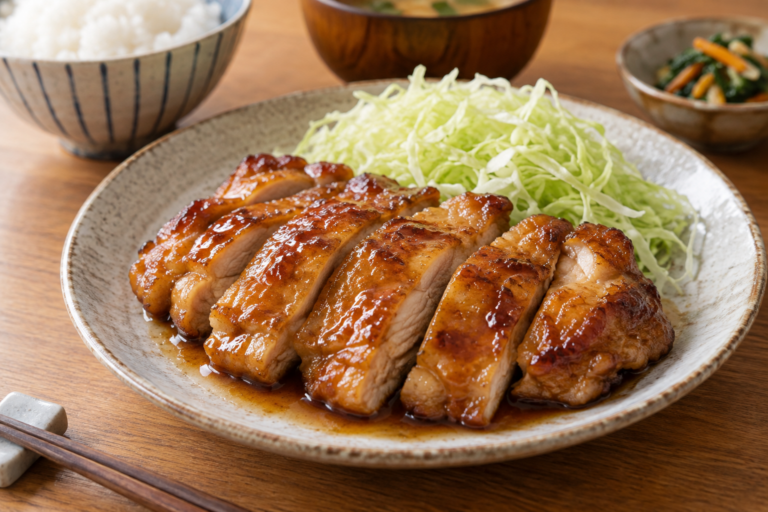
Easy Tonkatsu Recipe (Japanese Pork Cutlet)
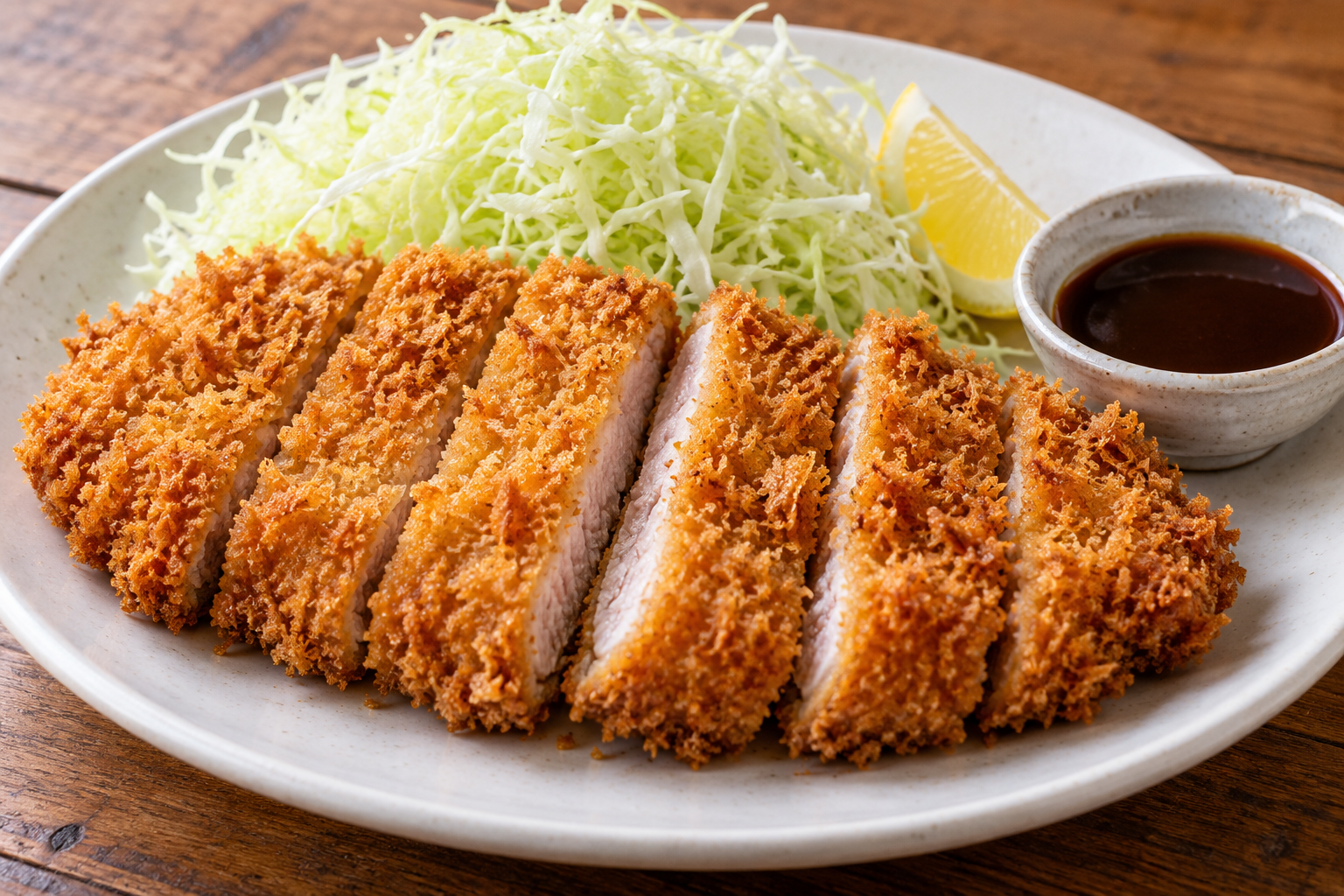
Tonkatsu is a juicy pork cutlet wrapped in an exceptionally crisp panko crust. This beginner-friendly method explains oil temperature, doneness and breading so you can make a Japanese restaurant favorite confidently at home.
Recipe at a Glance
- Serves: 2
- Prep time: 15 minutes
- Cook time: 15 minutes
- Total time: 30 minutes
- Difficulty: Beginner
Ingredients
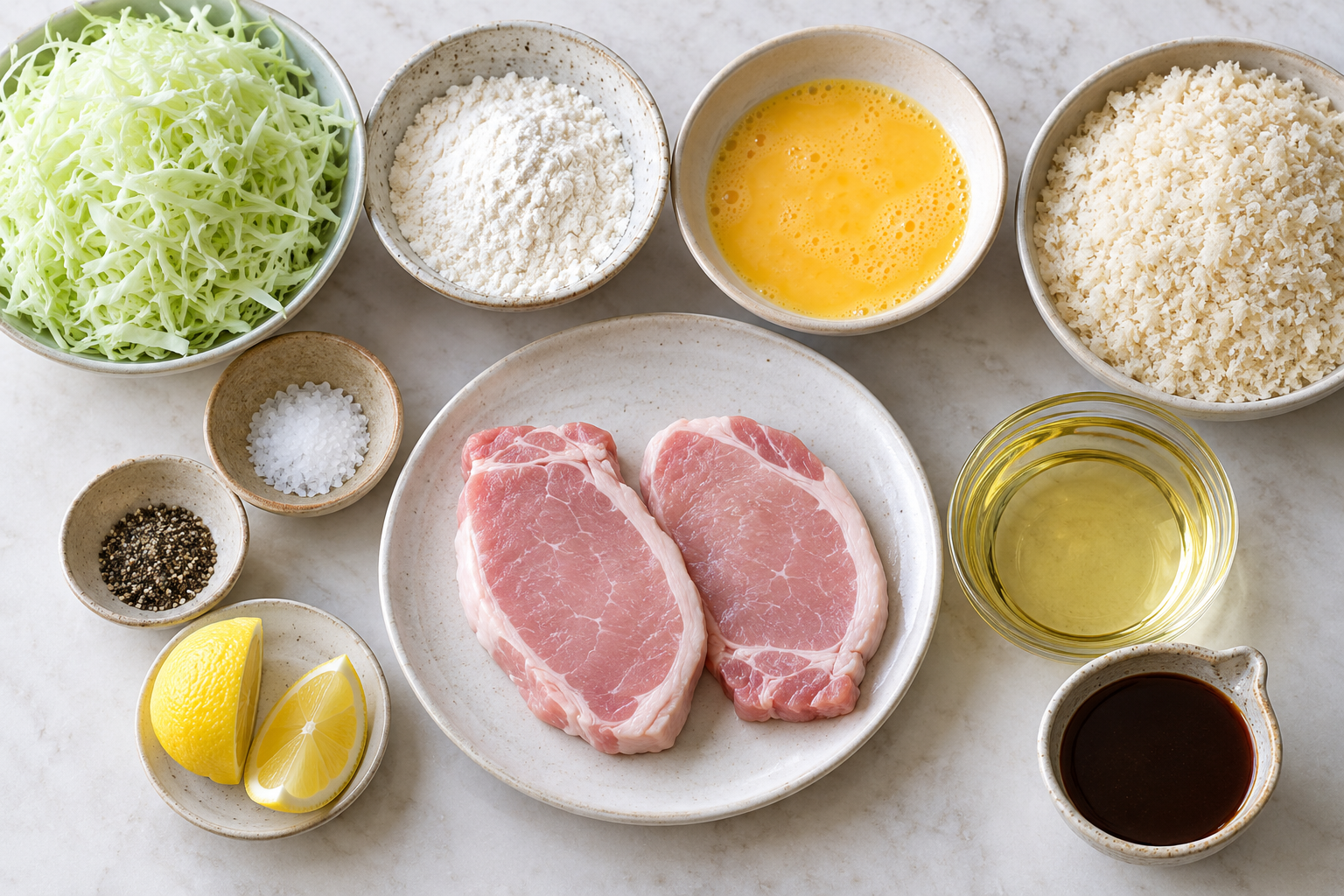
- 2 boneless pork loin chops, 3/4 inch (2 cm) thick, about 5–6 oz (140–170 g) each
- 1/2 teaspoon salt
- 1/4 teaspoon black pepper
- 1/4 cup (30 g) all-purpose flour
- 1 large egg
- 1 teaspoon water
- 1 cup (60 g) Japanese panko breadcrumbs
- Neutral oil for frying, enough for 1 inch (2.5 cm) depth
- Finely shredded cabbage, lemon wedges and tonkatsu sauce, for serving
How to Make Tonkatsu
1. Prepare the pork
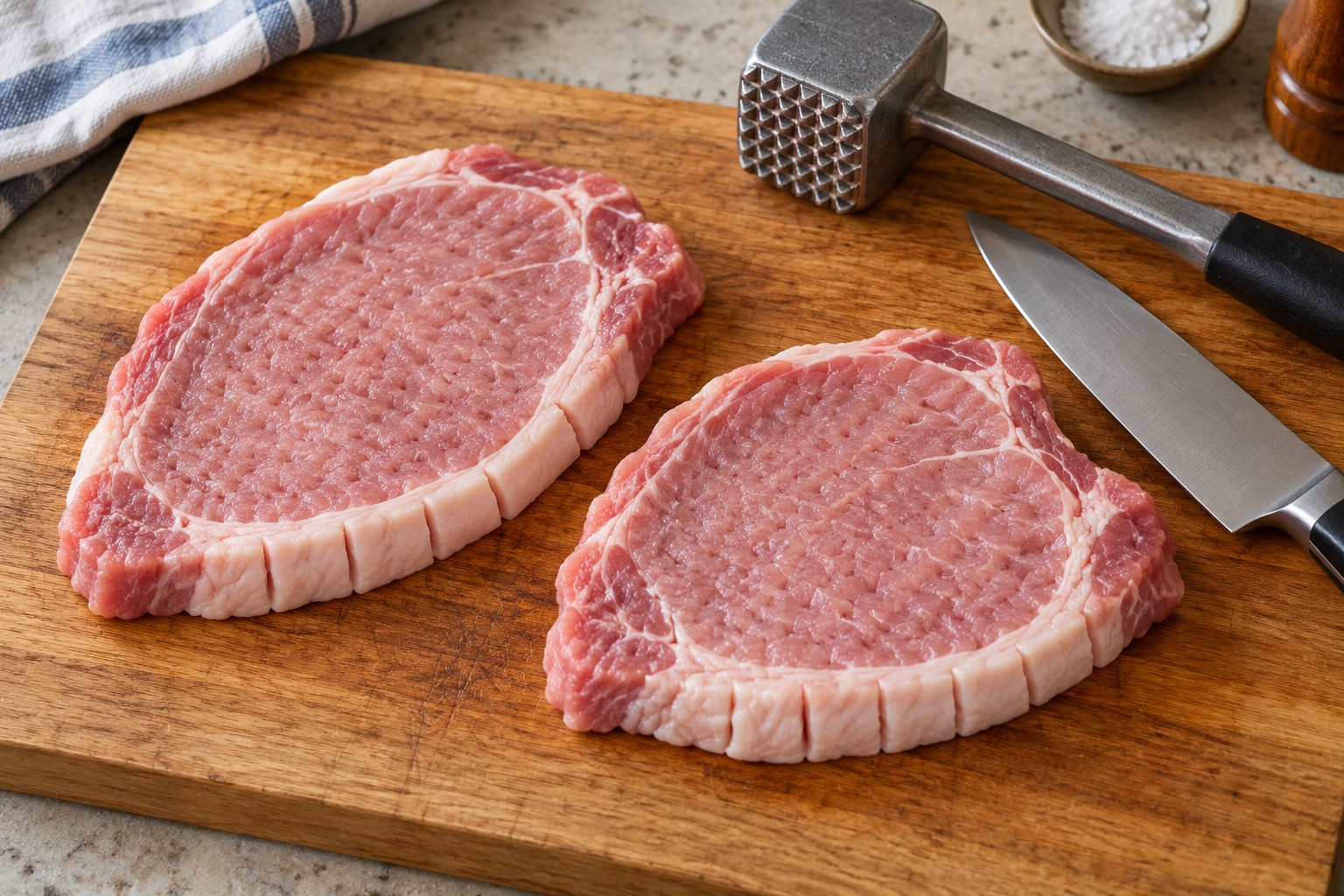
Pat the chops dry. Make several shallow cuts through the fat and connective tissue along the edge to prevent curling. Gently pound to an even 3/4-inch thickness, reshape, then season both sides with salt and pepper.
2. Set up the breading station
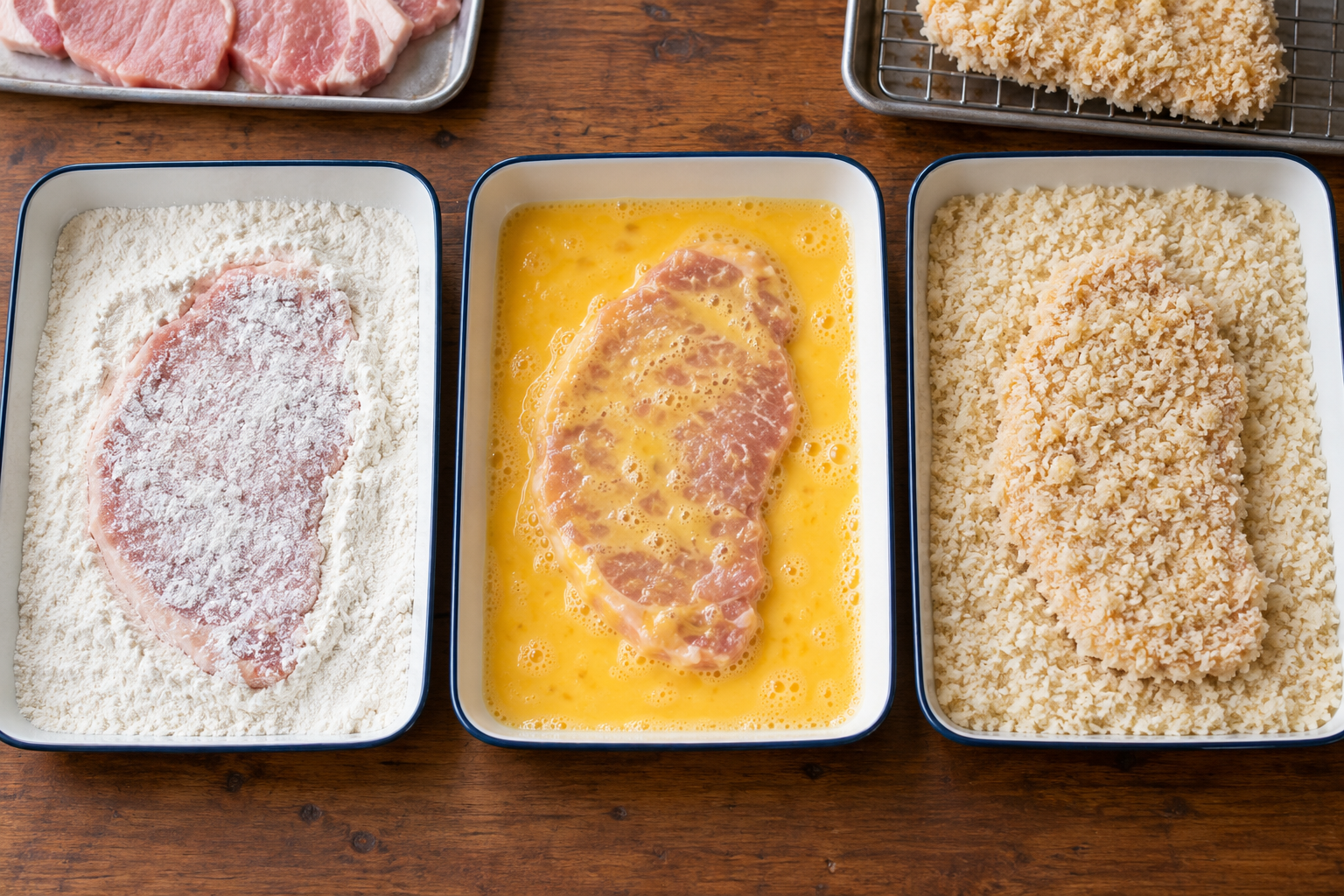
Place flour, egg beaten with water, and panko in three separate shallow dishes. Keep one hand for dry ingredients and one for egg to reduce clumping.
3. Bread the cutlets
Coat each chop lightly in flour and shake off the excess. Dip fully in egg, then press gently into panko until every surface is covered. Let the breaded cutlets rest for 5 minutes so the coating adheres.
4. Heat the oil
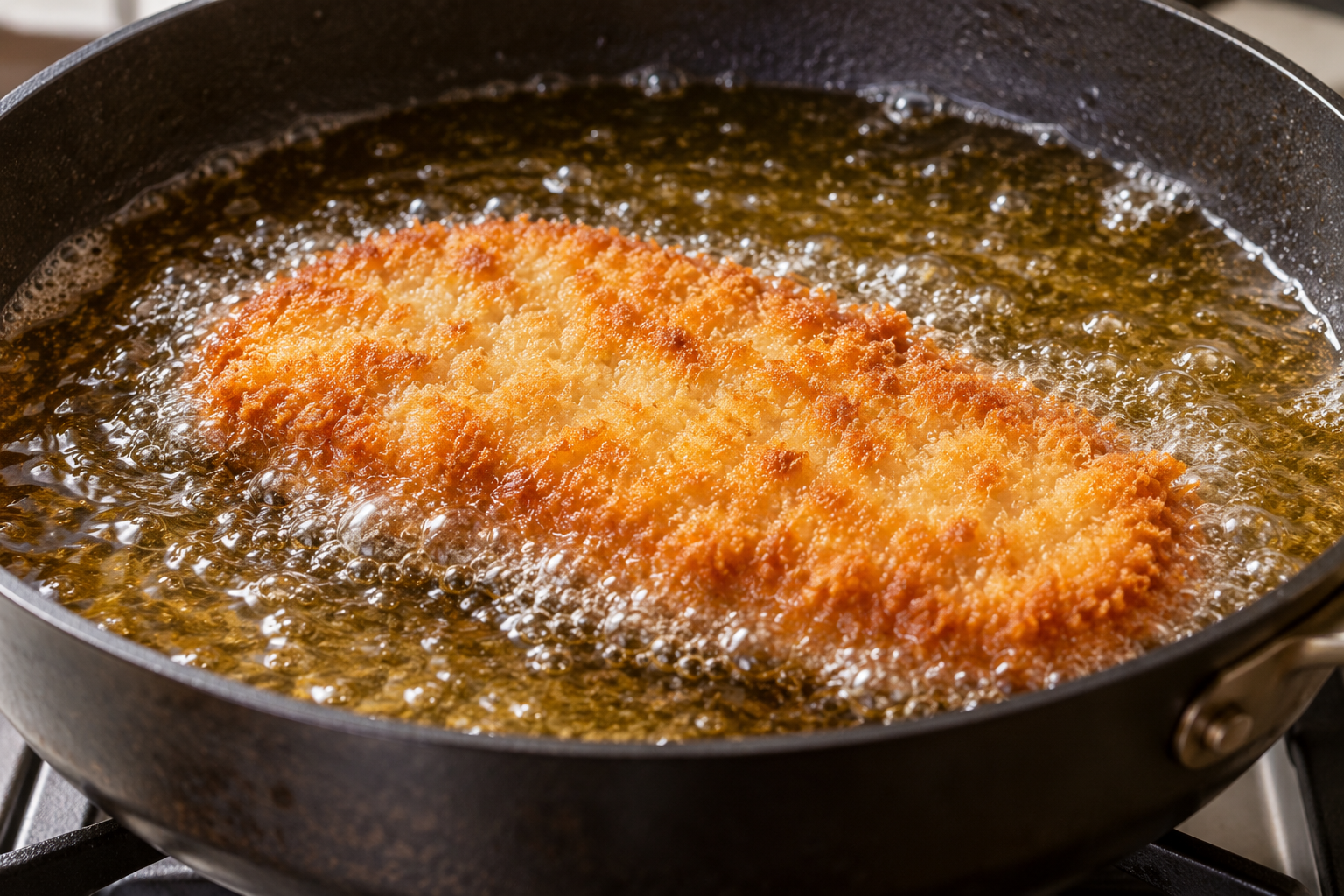
Add oil to a heavy skillet to a depth of about 1 inch. Heat it to 340°F (170°C). If you do not have a thermometer, a few panko crumbs should rise immediately with steady bubbles without burning.
5. Fry until golden
Lower one cutlet carefully into the oil away from you. Fry for about 2–3 minutes per side, turning once, until deep golden and the center reaches 145°F (63°C). Keep the oil near 340°F and fry in batches so it does not cool sharply.
6. Drain, rest and slice
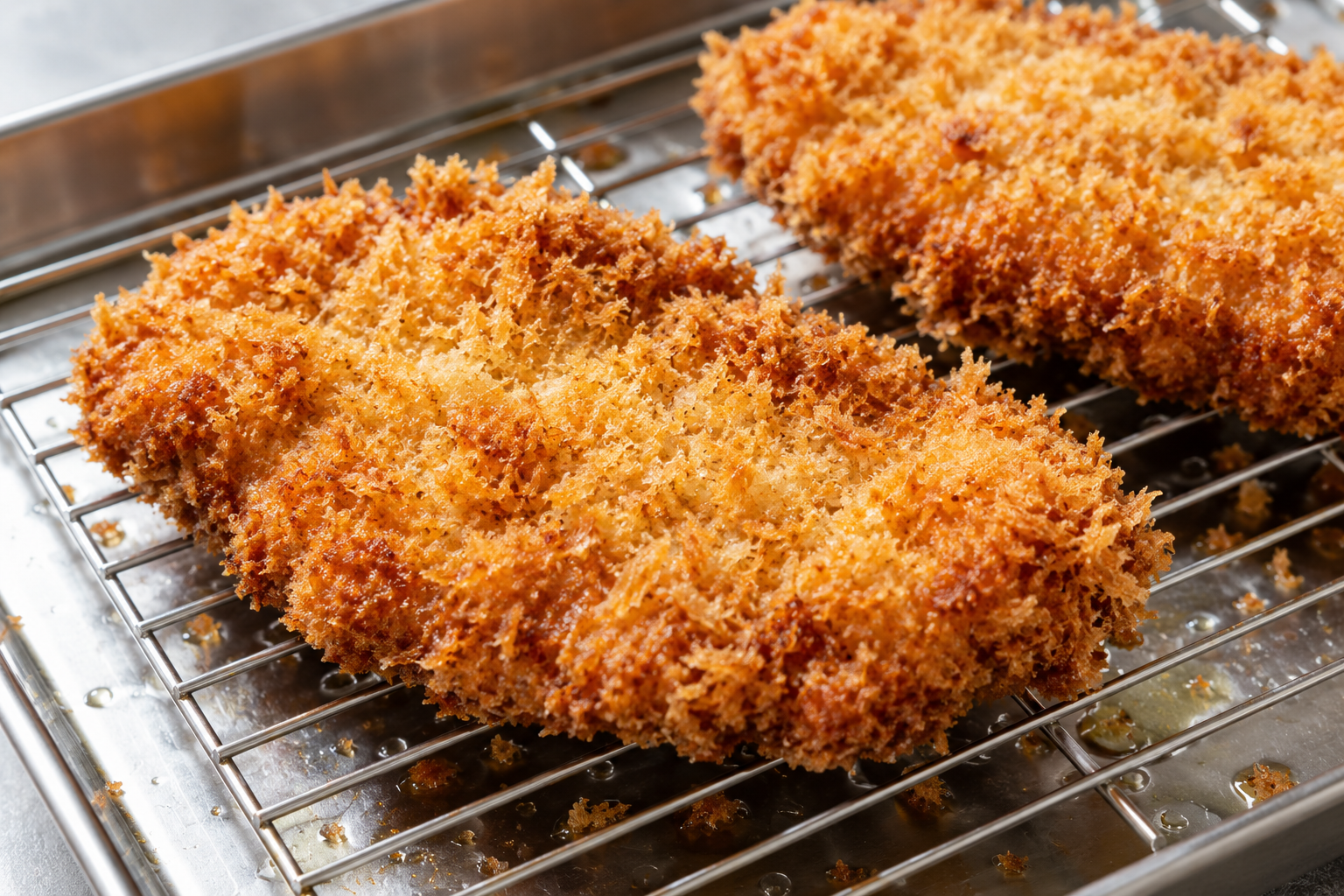
Transfer the cutlet to a wire rack, not paper towels, and rest for 3 minutes. Slice across the width with a sharp knife. Serve immediately with cabbage, lemon, rice and tonkatsu sauce.
Beginner Tips and Troubleshooting
Why did the breading fall off?
Dry the pork well, shake off excess flour, press on the panko and allow the breaded cutlet to rest before frying. Turn it only once and avoid moving it during the first minute.
Why is my tonkatsu oily?
The oil was probably too cool. Fry one cutlet at a time and allow the oil to return to 340°F (170°C) between batches.
How do I keep it juicy?
Use evenly thick chops and stop cooking when the center reaches 145°F (63°C), followed by a short rest. See the USDA safe temperature guidance for pork.
Substitutions
- Use pork tenderloin medallions for smaller hire-katsu.
- Gluten-free flour and gluten-free panko work well.
- If tonkatsu sauce is unavailable, mix 2 tablespoons ketchup, 1 tablespoon Worcestershire sauce and 1 teaspoon soy sauce.
- Chicken breast can be prepared the same way but must reach 165°F (74°C).
Storage and Reheating
Refrigerate cooled tonkatsu in an airtight container for up to 3 days. Reheat on a rack in a 375°F (190°C) oven or air fryer until hot and crisp. Avoid microwaving when possible because it softens the crust. Freeze cooked cutlets for up to 1 month.
Frequently Asked Questions
What is Japanese panko?
Panko consists of larger, airier flakes than many standard breadcrumbs, producing tonkatsu's characteristic light crunch. Our Japanese pantry essentials guide explains other useful staples.
Can I make tonkatsu without deep-frying?
You can shallow-fry with 1 inch of oil as described here. Oven or air-fryer versions are possible but will differ in browning and texture.
What do I serve with tonkatsu?
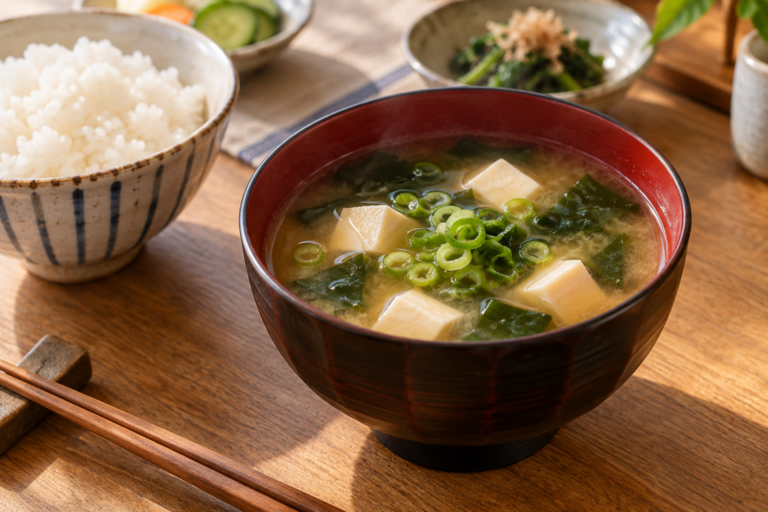
The classic plate includes shredded cabbage, rice, miso soup, lemon and tonkatsu sauce. Try our easy miso soup.
More Japanese Home Cooking
Try Japanese potato salad, chicken teriyaki, or browse everyday Japanese dishes.
Have You Tried This Recipe?
Leave a comment with your results or questions. Details such as the pork thickness and oil temperature you used can help other readers succeed.
Build Your Japanese Pantry
Not sure which rice, miso, soy sauce or dashi to buy outside Japan? Start with our practical guide to the 12 most useful staples.