Easy Japanese Egg Sandwich Recipe (Tamago Sando)
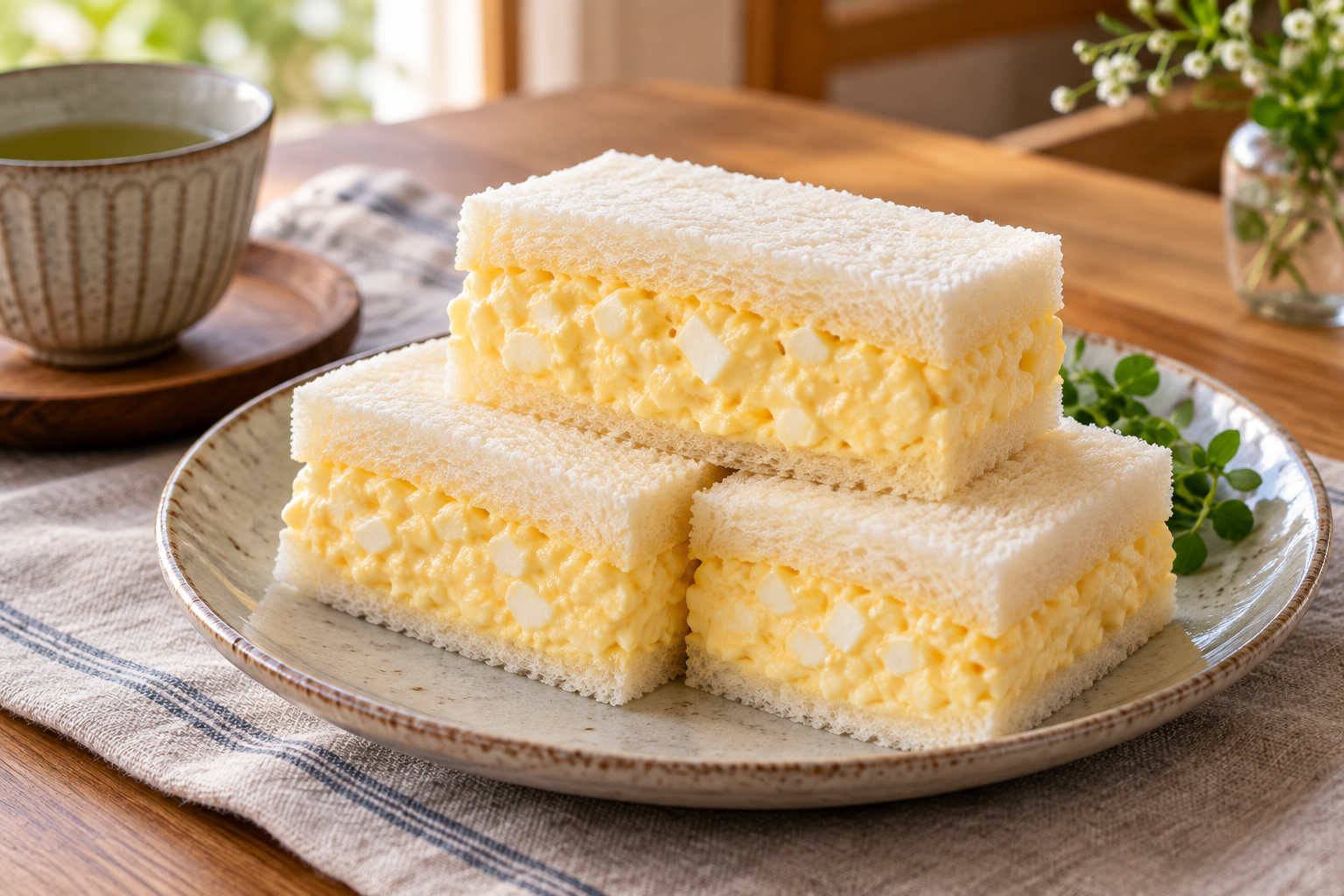
Japanese tamago sando combines soft milk bread with a rich but balanced egg salad. This beginner version keeps the filling chunky, creamy and easy to prepare with supermarket ingredients.
Recipe at a Glance
- Makes: 3 sandwiches
- Prep time: 15 minutes
- Cook time: 12 minutes
- Chilling time: 10 minutes
- Total time: 37 minutes
- Difficulty: Beginner
Ingredients
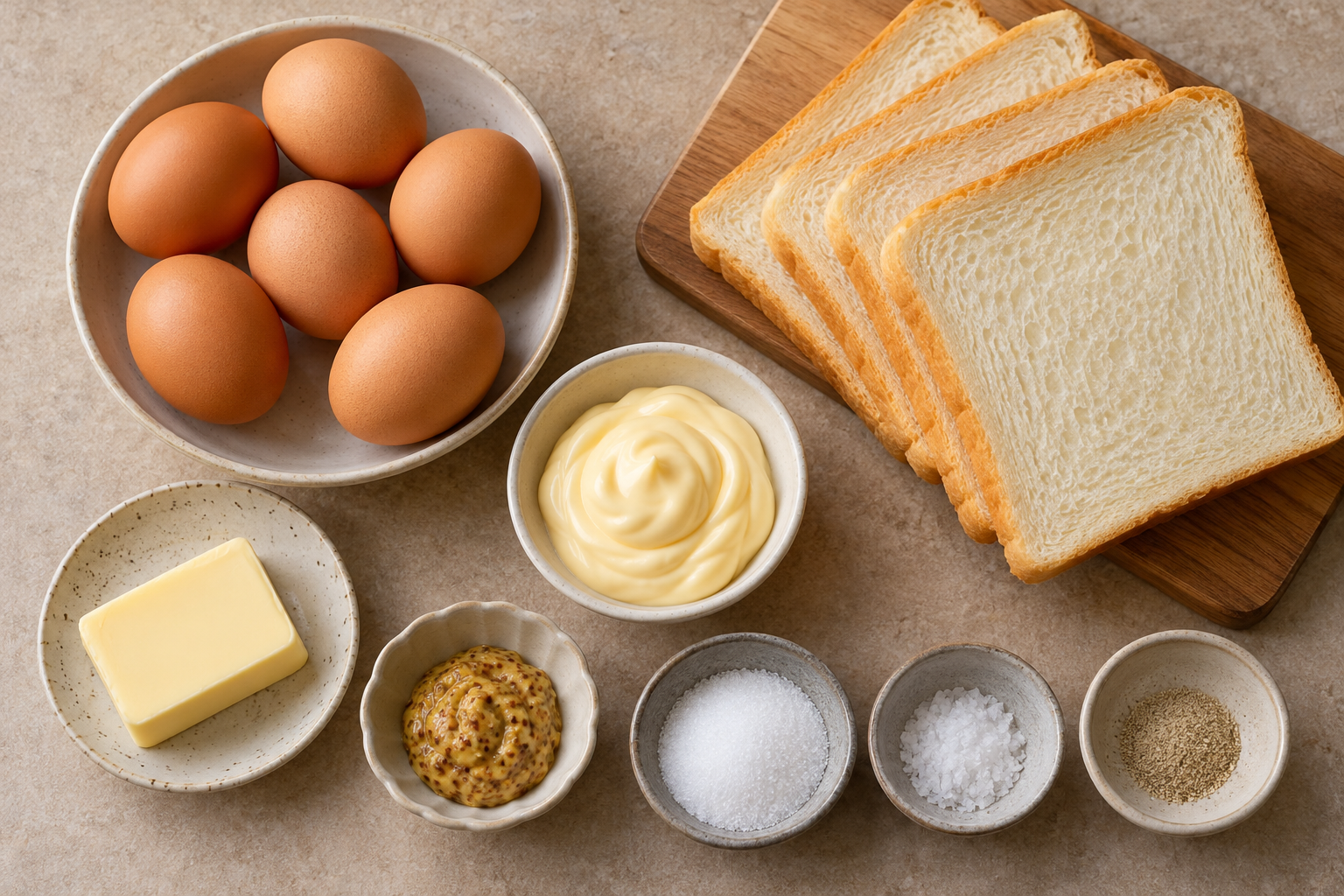
- 6 large eggs
- 6 slices Japanese milk bread or soft white sandwich bread
- 1/3 cup (75 g) Japanese mayonnaise
- 1 teaspoon Dijon mustard, optional
- 1/2 teaspoon sugar
- 1/4 teaspoon salt, plus more to taste
- Pinch of white pepper
- 1 tablespoon softened unsalted butter
How to Make Tamago Sando
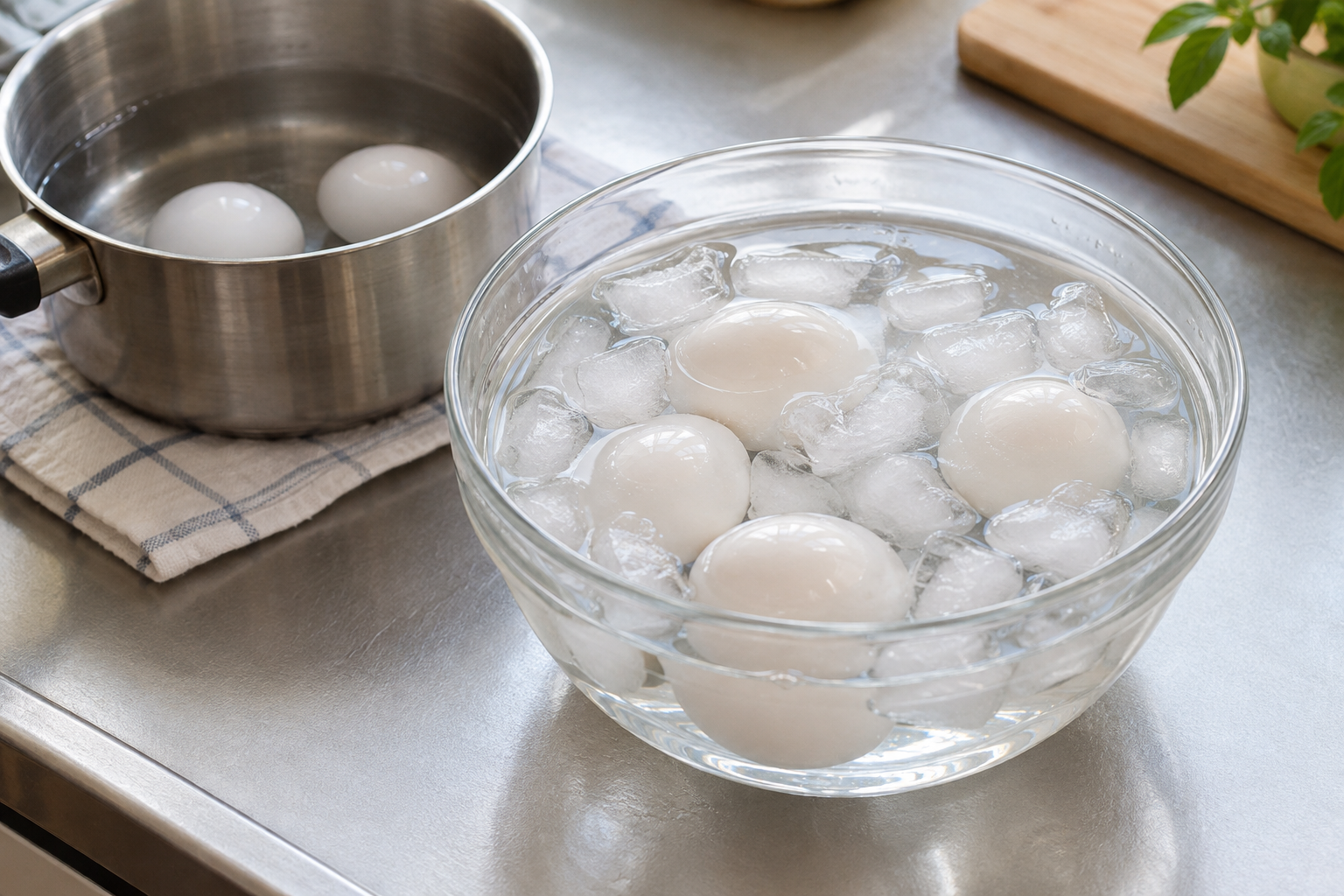
1. Boil and cool the eggs
Lower the eggs into gently boiling water and cook for 10 minutes. Transfer immediately to ice water for 10 minutes, then peel.
2. Mash the eggs
Put the peeled eggs in a bowl. Mash with a fork, leaving a mixture of fine crumbs and small pieces for texture.
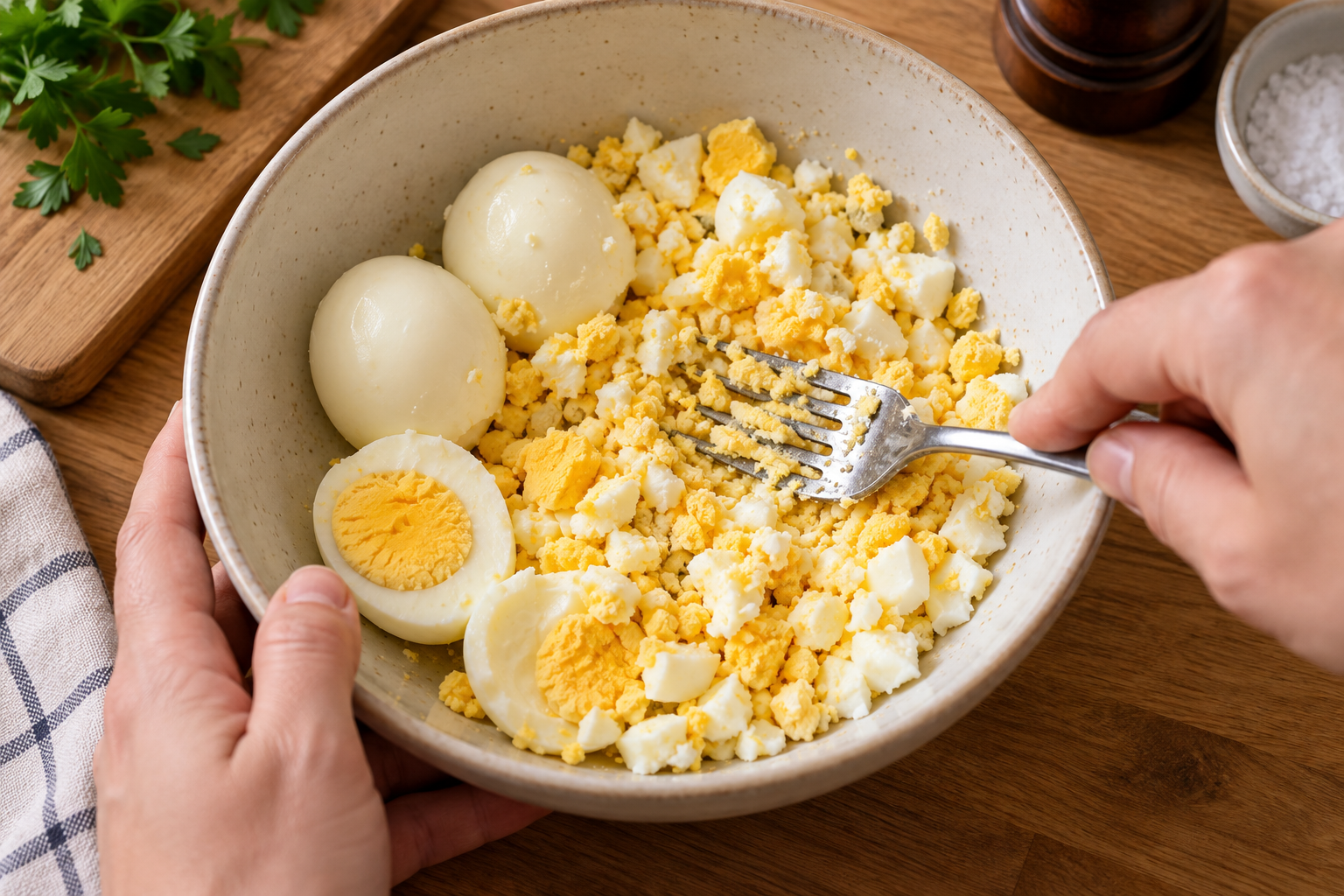
3. Make the egg salad
Add mayonnaise, mustard, sugar, salt and white pepper. Fold until creamy. Taste and adjust the salt, then chill for 10 minutes if the filling feels warm or loose.
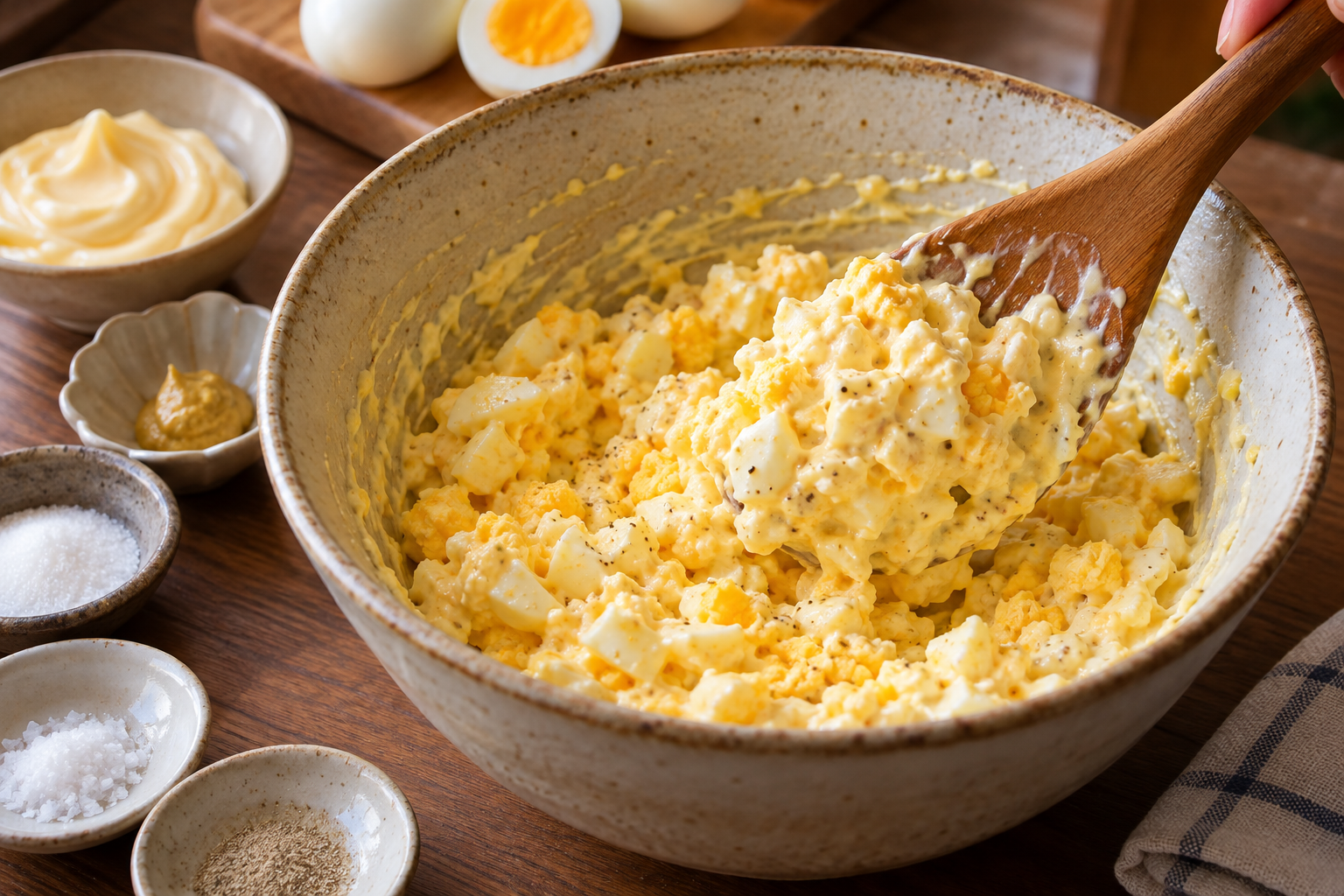
4. Assemble
Spread a thin layer of butter on one side of every bread slice. Divide the egg salad among three slices and spread it evenly to the edges. Close with the remaining bread.
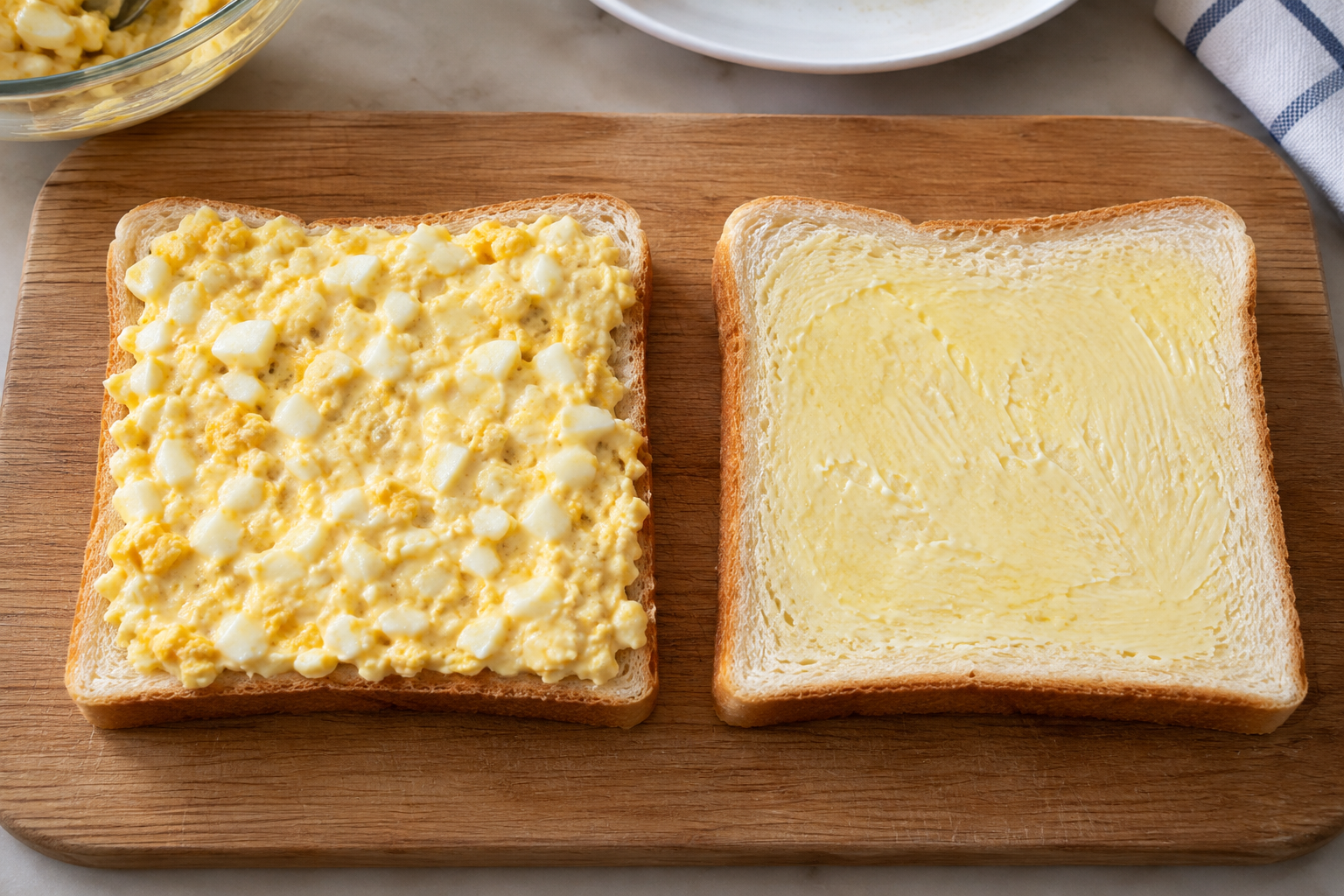
5. Trim and cut
Wrap each sandwich and rest it for 5 minutes. Trim the crusts with a sharp serrated knife, then cut each sandwich into two or three neat pieces.
Beginner Tips and Troubleshooting
Why is the filling watery?
Cool and dry the eggs before mashing, measure the mayonnaise, and chill the mixture before assembling. Freshly boiled warm eggs can loosen mayonnaise.
How do I keep the bread soft?
Use thick, fresh bread and spread butter edge to edge as a moisture barrier. Keep the sandwiches wrapped until serving.
Are cooked eggs safe for meal prep?
Refrigerate promptly and keep the sandwiches cold. Follow USDA guidance for egg storage and safety.
Substitutions
- Use regular mayonnaise plus 1/2 teaspoon rice vinegar if Japanese mayonnaise is unavailable.
- Brioche or pullman bread works in place of Japanese milk bread.
- Yellow mustard can replace Dijon; use half as much initially.
- Add finely chopped chives, cucumber or pickles, but keep additions dry.
- Use plant-based mayonnaise for a dairy-free filling and omit the butter or use a dairy-free spread.
Storage
Wrap sandwiches tightly and refrigerate for up to 24 hours. For lunch boxes, use an insulated bag and ice pack. Egg salad can be refrigerated separately for up to 3 days. Do not freeze assembled sandwiches.
Frequently Asked Questions
What makes tamago sando Japanese?
The combination of pillowy milk bread, finely mashed eggs and rich Japanese-style mayonnaise creates its characteristic soft, creamy texture.
Should the crusts be removed?
Japanese convenience-store versions are usually crustless, but leaving the crusts on is perfectly fine and reduces waste.
What should I serve with it?
Serve with fruit, salad or easy miso soup. Learn about Japanese mayonnaise and other staples in our Japanese pantry guide.
More Easy Japanese Food
Try tamagoyaki, Japanese potato salad, or browse everyday Japanese dishes.
Have You Tried This Recipe?
Leave a comment with the bread and mayonnaise you used or any filling variation that worked well.
Build Your Japanese Pantry
Not sure which rice, miso, soy sauce or dashi to buy outside Japan? Start with our practical guide to the 12 most useful staples.